Safa’s failures threaten South Africa’s football progress
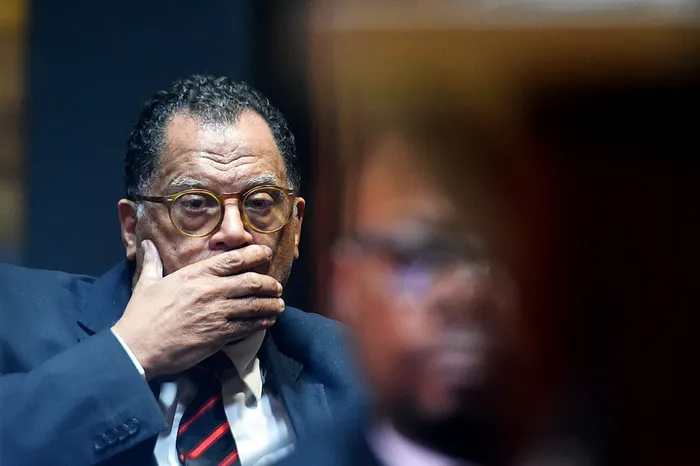
Safa president Danny Jordaan continues to be subject of criticism as the association show no signs of growth.
Image: Itumeleng English/ Independent Newspapers
The South African Football Association (Safa) are their own worst enemy. They have mastered the art of being all talk and no action.
Safa have gloated about the national teams’ upward trajectory in recent months, with Banyana Banyana, Amajimbos, Amajita, and Bafana Bafana all qualifying for their respective World Cups.
Yet, amid the celebrations, Safa have done little to support the feeder structures of these teams, watching them sweat on the pitch while basking in the glory of their hard work.
Bafana Bafana’s B-team captain, Neo Maema, recently made a shocking revelation, claiming that the players have not been paid their money for competing at the last Chan tournament, which was hosted across Uganda, Tanzania, and Kenya last year.
Maema spoke with confidence, stating that he knew CAF had already paid the funds to the mother body. This assertion is supported by the fact that CAF would not have staged AFCON late last year without clearing its financial obligations.
Granted, Chan has since been removed from the continental calendar, with CAF president Patrice Motsepe suggesting it carried little significance. However, the fact remains that some players benefited from the tournament, using it as a springboard to national team or club breakthroughs.
Thabiso Kutumela and Malibongwe Khoza are prime examples. Kutumela impressed in East Africa, scoring three goals in the group stage, which earned him a move to AmaZulu after the tournament.
Khoza, meanwhile, enjoyed the biggest return from Chan. He broke into the Mamelodi Sundowns first team and was eventually rewarded with his first call-up by Hugo Broos for the 2026 Fifa World Cup qualifiers against Zimbabwe and Rwanda late last year.
The undervaluing of feeder teams by Safa did not begin at senior level. It has lamentably become the norm in the junior ranks, where teams are often subjected to hostile living, travelling, and working conditions.
Amajita reportedly endured poor conditions while camping for the Youth Championships, including a lack of running water at Safa’s technical centre, Fun Valley. The team also faced inadequate resources at the tournament in Egypt, while head coach Raymond Mdaka was reportedly underpaid by the association.
Despite these challenges, Amajita punched above their weight and delivered a professional performance, winning the continental showpiece – the team’s first title since entering the competition.
Their resilience and commitment have not gone unnoticed. Tylon Smith earned a move to English Championship side Queens Park Rangers (QPR) and, importantly, a call-up to Bafana Bafana for AFCON.
As South African football heads into a crucial year, with Bafana returning to the global showpiece, I would assume that issues around non-payment of players and staff – whether for qualification bonuses, performances, or tournament success – would be firmly in the past.
But here we are. With just four months before the start of the tournament in the United States, uncertainty remains over whether Bafana will receive full support from the association, from the opening match to the final whistle of their campaign.
To Safa’s credit, the association has taken one positive step by organising two international friendly matches against Panama during next month’s Fifa international window on home soil, with dates and venues yet to be confirmed.
Panama may not be a footballing powerhouse, but they are expected to provide a stern test. They are ranked 33rd by Fifa – 27 places above Bafana – and recently suffered a narrow defeat to Mexico, South Africa’s opening opponents at the World Cup, in a friendly match.
Given all these strides, I can only hope that Maema’s revelation is the last of its kind from a player who has served the country, and that Safa will act swiftly to ensure everyone is fairly rewarded for their efforts – big or small.