How much grunt does F1’s new combustion engine actually pack?
Formula 1
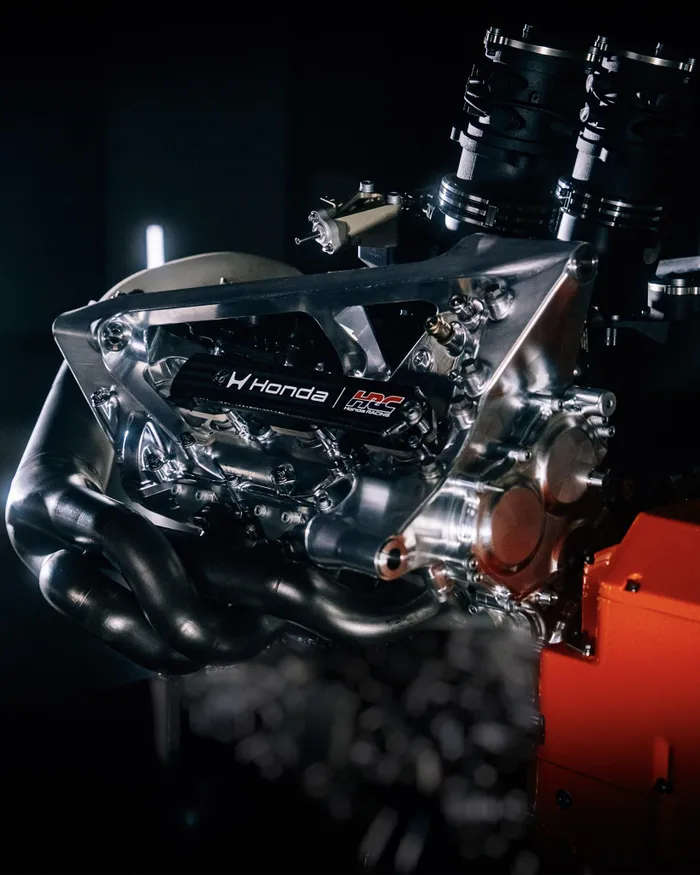
Honda's 2026 F1 1.6L V6 turbo internal combustion engine Honda's 2026 F1 1.6L V6 turbo internal combustion engine
Image: Honda
Formula One’s 2026 regulation reset is one of the most significant technical shake-ups the sport has seen in decades. While much of the public focus has landed on electrification and sustainability, the heart of the car remains an internal combustion engine, and this season, the FIA has been explicit about how much work that engine is allowed to do on its own.
From 2026, F1 teams will continue to use a 1.6-litre turbocharged V6 internal combustion engine. There is no increase in displacement, no move to four cylinders, and no return to V8s. Instead, the governing body has capped the contribution of the ICE far more tightly than before. Based on fuel energy flow limits and efficiency targets written into the regulations, the six-cylinder unit is expected to produce around 400 kilowatts, roughly 530 to 540 horsepower, on its own.
That figure represents a notable reduction compared to the current generation of power units, where the combustion engine alone is believed to be producing well over 700 horsepower. In 2026, the ICE is no longer the dominant source of propulsion. It is one half of a carefully balanced system.
The decision to retain a V6 layout was deliberate. The FIA and Formula One management wanted continuity, cost control, and relevance. A six-cylinder engine remains familiar territory for manufacturers, both in racing and in high-performance road cars.
It also avoids the complexity and expense of designing an all-new architecture at a time when teams are already being asked to invest heavily in electrification and sustainable fuels. Crucially, the V6 still delivers the sound, speed, and mechanical character expected of Formula One, even if outright combustion power is reduced.
Where the lost power is recovered is through the hybrid system. The 2026 regulations dramatically increase the output of the electric side of the power unit. The MGU-K alone will be capable of delivering up to 350 kilowatts, close to 470 horsepower, under certain conditions. The MGU-K recovers kinetic energy during braking and assists with acceleration.
That means the overall power split moves to nearly 50 per cent combustion and 50 per cent electrical, a complete reversal of the current philosophy where the ICE does most of the heavy lifting. Combined, the total system output is expected to remain in the region of 1,000 horsepower, ensuring that performance levels stay extreme despite the lower contribution from the engine itself. Energy deployment and recovery will also play a much bigger strategic role, with drivers managing when and how electric power is released during a lap.
Fuel is the final pillar of the new package. From 2026, Formula One engines will run on 100 per cent advanced sustainable fuel. This is not ethanol-based and not hydrogen. It is a synthetic, fossil-free fuel made using captured carbon dioxide, waste products, and advanced bio-feedstocks. Chemically, it behaves very much like high-octane petrol, according to the FIA. It burns in a similar way, supports high boost pressures, and allows engineers to pursue aggressive combustion strategies without compromising performance.
The key difference is that the carbon released during combustion has already been taken from the atmosphere, making the process carbon neutral at the point of use. The result is an engine that still looks, sounds, and feels like Formula One, but fits into a future where outright performance and sustainability are no longer mutually exclusive.