Ferrari's SF26 weight: A game-changer for Hamilton in the 2026 F1 season?
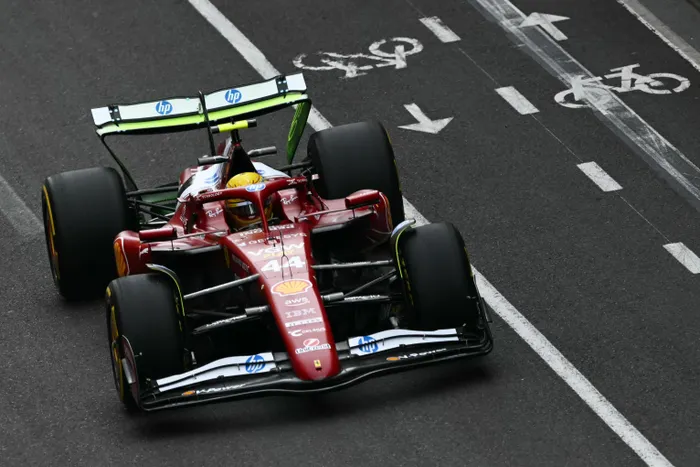
Ferrari’s ultra light SF26 has ignited excitement ahead of the 2026 Formula 1 season, boosting belief among fans that Lewis Hamilton and the Scuderia could finally challenge for regular podium finishes again.
Image: AFP
THE COUNTDOWN lights are almost on, and if you listen closely, you can already hear the hum of a new Formula 1 season creeping into February.
As a Ferrari fan, this is the dangerous time of year when hope takes over logic, when every rumour feels like a promise, and every number tells a bigger story. This week, Ferrari gave us fans a number that feels anything but ordinary.
Seven hundred and seventy kilograms. That is it. Just two kilos above the minimum limit for 2026. On paper it looks harmless. In reality, it is a thunderclap.
In a paddock where teams have been quietly sweating over weight targets, Ferrari has calmly submitted its homologation data and walked away. While others are still chiselling grams and compromising designs, Maranello has turned up early, luggage light, and confidence heavy. That alone tells you something has changed.
Weight in Formula 1 is never just weight. It is freedom. It is flexibility. It is the difference between adding performance later or spending a season hiding weaknesses under clever excuses. With the new power unit regulations leaning heavily on electrical energy, mass is the enemy. Batteries are heavy, systems are complex, and most teams are bracing for penalties before the first race even starts. Ferrari, somehow, is not.
What makes this more intriguing is how quietly it has been done. No wild shapes, no headline-grabbing design philosophy, no obvious gamble. The SF26 appears almost conservative in its thinking, which might be the most aggressive move of all. This is not a car screaming for attention. It is one whispering confidence.
Of course, there is always a cost. Cars do not shed weight without trade offs, and the paddock is already asking what Ferrari may have sacrificed. Durability? Development headroom? Comfort margins? Those questions will linger until the first long runs expose the truth. But here is the thing. Ferrari has not just built a light car. They have built a light car in an era where lightness is gold.
Then there is Lewis Hamilton.
At 41, he is not here to make up the numbers or collect a farewell cheque. You do not grind through simulator sessions and push engineers for detail if your ambition is nostalgia. Hamilton has smelled opportunity before, and he knows what a real one feels like. His fingerprints are already on this project, and that matters. Experience cannot make a slow car fast, but it can turn a good one into a weapon.
For Ferrari fans, this is the dangerous cocktail of belief and logic finally lining up. The team looks prepared. The rules look favourable. The driver looks hungry. Suddenly, podium talk does not feel like wishful thinking. It feels earned.
When the SF26 rolls out at Barcelona for its shakedown, the lap times will matter, but not as much as the body language. Formula 1 dominance rarely announces itself with fireworks. It usually slips in quietly, disguised as preparation done better than everyone else.
This season has not even begun, yet something already feels different. Ferrari has moved first, moved smart, and moved with intent. The weight of expectation is still there, as it always is in red. But for once, the weight of the car is not holding them back.
And for a Ferrari fan staring down another long year of hope, that might be the most exciting sign of all.