Red Bull targets internal combustion engine as key performance differentiator
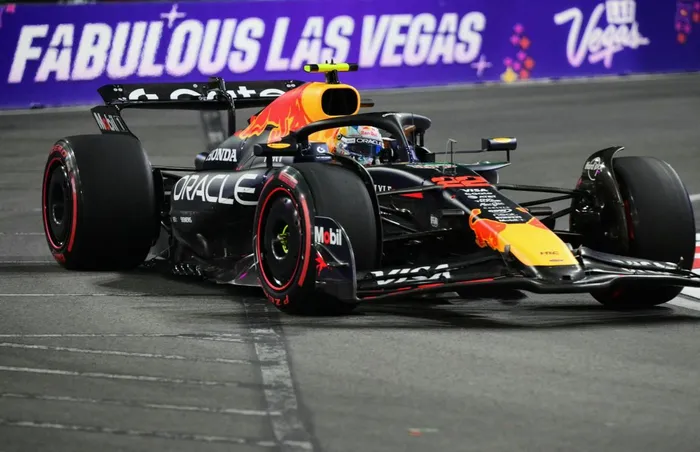
Red Bull believes Formula 1’s 2026 engine performance gap could be defined by internal combustion engine development, as sustainable fuels and strict regulations create a new technical battleground for manufacturers in the sport’s next hybrid era.
Image: AFP
Red Bull believes the fiercest battle in Formula 1’s new engine era may be fought inside the internal combustion engine, despite sweeping regulations designed to tightly control power unit development from 2026 onwards.
With Formula 1 preparing for one of the most radical technical resets in its history, manufacturers are finalising their new generation 1.6 litre V6 hybrid power units ahead of homologation in early March. The regulations introduce a near 50/50 split between electrical power and the internal combustion engine, supported by a 350-kilowatt battery that represents a significant leap from the current hybrid systems.
While the rule book strictly defines where and when upgrades are allowed during the upcoming five-year cycle, Red Bull Powertrains technical director Ben Hodgkinson believes there is still room for meaningful performance separation. In his view, that gap is most likely to emerge from the internal combustion side of the equation.
Speaking ahead of Red Bull’s season launch in Detroit, Hodgkinson suggested that energy recovery systems will quickly converge across the grid.
“The electrical side will be extremely efficient for everyone,” he explained. “Power electronics and motors will be close to the limit very quickly. Where the differences are more likely to appear is in the internal combustion engine.”
Under the 2026 regulations, manufacturers must submit full technical documentation to the FIA by March 1, locking in their designs before entering a tightly managed development cycle. Any additional progress outside that framework will only be possible through the FIA’s separate safety net, which allows underperforming manufacturers limited extra development opportunities.
Within those constraints, Red Bull sees fuel and combustion technology as a critical performance lever. Hodgkinson highlighted the importance of the team’s partnership with Exxon Mobil, noting that fuel development is now inseparable from engine performance.
“The internal combustion engine works hand in hand with your fuel partner,” he said. “Our collaboration has been vital in extracting performance and understanding where the gains are.”
That challenge is intensified by Formula 1’s shift to fully sustainable fuels in 2026, a cornerstone of the sport’s plan to reach net zero carbon emissions by 2030. While environmentally driven, the move presents complex engineering hurdles.
Unlike traditional fossil fuels, sustainable fuels are composed of multiple elements that evaporate at different temperatures. This makes achieving clean and consistent combustion far more difficult and places additional thermal stress on the engine.
“The old fuels vaporised in a very narrow and predictable window,” Hodgkinson explained. “With sustainable fuels, some elements evaporate later than others, which complicates combustion and forces us to run much hotter chambers than ever before.”
Despite the challenges, he described the process as an engaging engineering problem, one that has reshaped how engines are designed for the next era.
Red Bull Powertrains is preparing to run its first in-house power unit on track later this month, marking the sixth generation developed under Hodgkinson’s leadership. Since his move from Mercedes in 2022, the department has expanded rapidly, evolving from a startup into a full-scale manufacturer.
Former team boss Christian Horner played a central role in building the operation before stepping away from the project in mid-2025. His contribution continues to be recognised within Red Bull’s senior leadership, including chief executive Oliver Mintzlaff. Hodgkinson also credited current team principal Laurent Mekies for maintaining continuity during the final stages of development.
“Red Bull has given us everything we need in terms of facilities and resources,” Hodgkinson said. “The people are exceptional. There is something unique about a group building something from the ground up. The ownership and commitment across the department is incredible.”
As for where Red Bull Powertrains currently stands relative to its rivals, Hodgkinson was cautious. Comparing development to a 400 metre sprint run in isolation, he admitted that true performance can only be measured once everyone lines up together.
“All I know is that we are running as fast as we possibly can,” he said. “I have been designing F1 engines since the V10 era, so I know what a strong organisation looks like. Here, I have had the rare chance to shape what the ideal power unit manufacturer should be.”
With homologation looming and the 2026 reset fast approaching, Red Bull’s confidence rests on one belief: in an era of controlled electrification, the internal combustion engine may still decide who wins and who follows.