TGRSA crews endure puncture plagued stage 12 to stay in Dakar fight
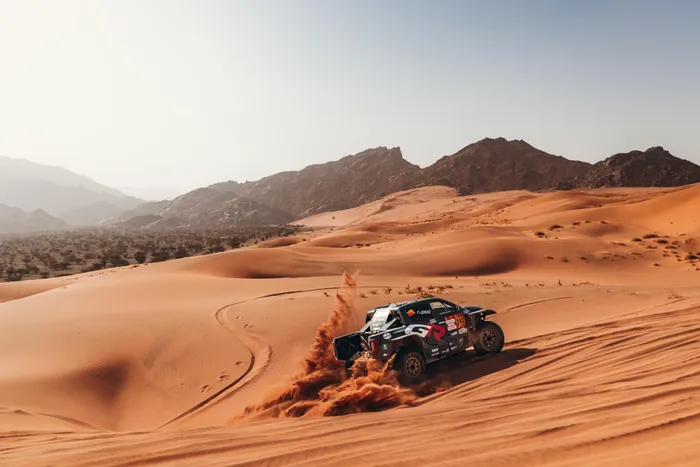
Toyota Gazoo Racing South Africa’s Dakar crews battled punctures and mechanical setbacks on Stage 12, reaching the finish and staying classified ahead of the final Yanbu stage, with Saood Variawa holding 11th overall.
Image: Supplied
TOYOTA GAZOO Racing South Africa’s Dakar Rally challenge was tested to its limits on Friday as all three GR Hilux crews pushed through a bruising Stage 12 marked by punctures, mechanical repairs, and high speed attrition on the road to the 2026 finale.
With just one stage remaining before the finish in Yanbu, survival was the priority. Despite repeated setbacks across the day, all three South African entries reached the end of the penultimate stage and remain classified, underlining the resilience that defines the Dakar.
Saood Variawa and François Cazalet produced one of the grit filled drives of the rally to hold onto 11th overall. Their day unravelled early with a puncture inside the opening 60 kilometres, followed soon after by a broken CV joint that forced an on stage driveshaft change. Another puncture late in the stage compounded the damage, but the pair refused to relent.
“Today was quite horrible,” Variawa said after the stage. “We had a puncture within about 60 kilometres, then a broken CV, so we had to change the driveshaft halfway through the stage. After that we had another puncture closer to the end. Overall, it was just a very tough day for me.”
Guy Botterill and Oriol Mena were on course for a strong result after running inside the top six for most of the stage, only to see their momentum halted in the closing kilometres. A slight deviation from the route led to contact with a rock on the far side of a dune, damaging the drivetrain and forcing another driveshaft change. They eventually finished 47th on the stage and head into the final day in 14th overall.
“All the way to the end we were going really well, around fifth or sixth. The car felt amazing,” Botterill said. “Then with about 15 kilometres to go we deviated slightly and hit a rock. We had to change the driveshaft, but these cars are very strong, and we made it through. We get to fight another day.”
For João Ferreira and Filipe Palmeiro, Stage 12 became a calculated exercise in damage control. Two early punctures left them without spare tyres for a large portion of the route, forcing a drastic reduction in pace to ensure they reached the finish. They ended the day 19th on the stage and remain 19th overall.
“It was a very tough day,” Ferreira said. “Two early punctures again, and then we had to do around 200 kilometres without spare tyres. We drove at about 20 to 30 percent just to make sure we arrived. We lost a lot of time, but arriving was the most important thing.”
At the front of the field, Nasser Al Attiyah and Fabian Lurquin extended their grip on the rally by winning Stage 12 for the Dacia Sandriders, further strengthening their overall lead heading into the final test.
Stage 13 will bring Dakar 2026 to a close with a 105 kilometre selective loop around Yanbu. While short by Dakar standards, the final stage is expected to be fast and intense, with dirt tracks, sand, and stony sections offering little margin for error as competitors make the last push to the finish.
After 13 relentless stages across Saudi Arabia, the rally will conclude on Saturday, once again reaffirming Dakar’s reputation as the ultimate test of endurance, precision, and mechanical strength.