Dakar Rally 2026: TGRSA crews battle navigation, punctures and fatigue on brutal marathon stage 9
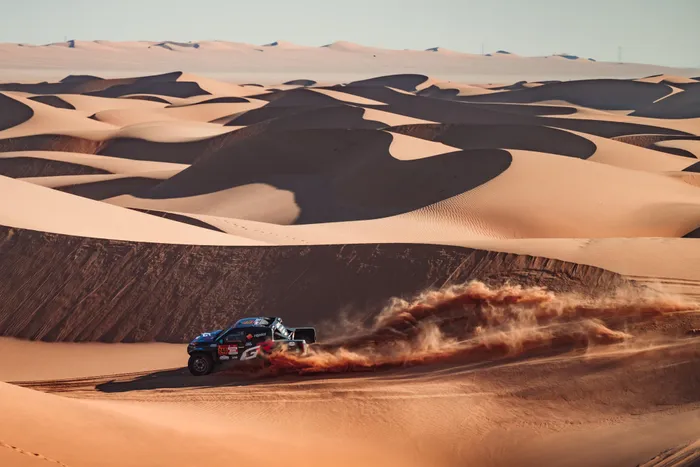
Toyota Gazoo Racing South Africa endured one of its toughest days at Dakar 2026 as Stage 9 tested navigation, tyre management and endurance, with all three crews reaching the Marathon Refuge despite setbacks.
Image: Supplied
Toyota Gazoo Racing South Africa (TGRSA) was pushed to their limits on Stage 9 of the Dakar Rally 2026, the opening leg of the second Marathon Stage, as crews ventured deep into remote terrain with no external assistance and minimal margin for error.
The marathon format once again placed the spotlight firmly on precision driving, navigation accuracy, and mechanical sympathy, with competitors required to service their own cars overnight at the Marathon Refuge.
Guy Botterill and Oriol Mena delivered a performance that underlined their growing confidence at the front of the field. The pair ran as high as second overall during the stage, showing impressive pace in demanding conditions. However, tricky navigation sections later in the day proved costly, dropping them down the order. They eventually completed Stage 9 in 15th place, 24 minutes and five seconds off the lead, and now sit 15th overall, 1 hour and 10 minutes behind the rally leader.
For Saood Variawa and Francois Cazalet, the challenge began from the opening kilometre. Tasked with opening the road after their Stage 8 victory, the duo faced the full burden of navigation while also managing tyre wear. Early punctures forced a strategic reset, but they responded with maturity, clawing their way back through the field to finish 18th on the stage, 27 minutes off the pace. They remain a solid 11th overall, still well positioned as the rally heads into its final phase.
Joao Ferreira and Filipe Palmeiro endured the harshest day of the three TGRSA crews. An early power steering issue was resolved at an authorised service point, but a later impact with a rock caused damage that resulted in significant time loss. With no assistance available, the focus shifted to survival, ensuring the car reached the Marathon Refuge. They are now classified 21st overall after Stage 9.
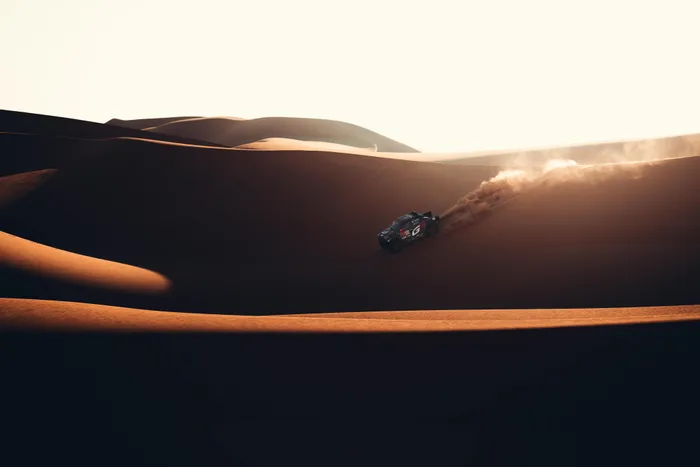
A Toyota Gazoo vehicle drives down one of the dunes.
Image: MARIAN CHYTKA (MCH)
TGRSA team manager Zaheer Bodhanya said the opening day of the marathon once again highlighted how unforgiving Dakar can be. He noted that punctures have been a recurring theme for the team and that the priority was simply getting all three cars safely to the refuge.
Stage 10 will conclude the second Marathon Stage, taking crews from the Marathon Refuge to the bivouac in Bisha. With around 420 kilometres of special stage, including fast dirt tracks, sand, dunes, and complex navigation, fatigue and car management are expected to play a decisive role as Dakar 2026 edges closer to its final chapters.