Toyota Gazoo Racing SA poised for second-half push as Dakar reaches crucial reset
2026 Dakar Rally
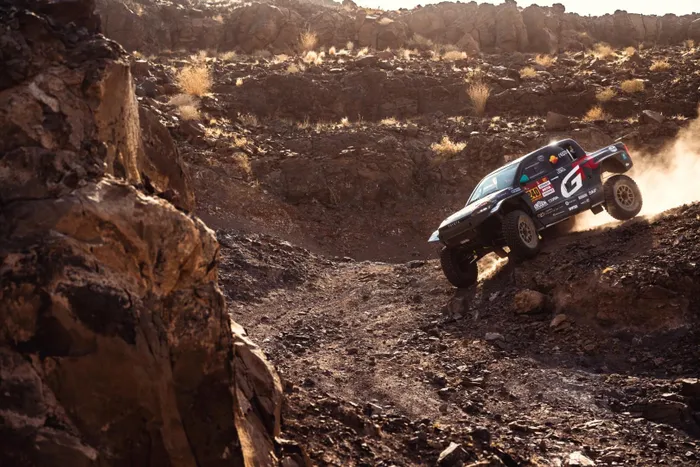
Toyota Gazoo Racing South Africa reaches the Dakar Rally Rest Day with all three crews in contention, as focus shifts to preparation, endurance, and attacking the demanding second half of the 2026 event.
Image: Supplied / Toyota South Africa DAKAR
ENDURANCE sport often rewards those who know when to hold back. From marathon runners who wait patiently before launching their final surge, to boxers who absorb pressure before striking late, the ability to manage effort across a long contest can decide the outcome. At the Dakar Rally, that same discipline is often tested not over minutes or rounds, but across thousands of kilometres.
Against that backdrop, Toyota Gazoo Racing South Africa arrived at the Rest Day of the 2026 Dakar Rally with all three crews still firmly in contention after a punishing opening week that demanded patience, resilience, and calculated restraint.
After six stages, Saood Variawa and Francois Cazalet hold 11th overall, João Ferreira and Filipe Palmeiro sit 12th, while Guy Botterill and Oriol Mena occupy 17th position as the rally pauses in Riyadh ahead of the decisive second half.
A pause for some, full pressure for others
While the Rest Day allows drivers and co-drivers a brief opportunity to recover physically and mentally, it represents anything but downtime for the technical team tasked with preparing the cars for what lies ahead.
“Although it’s a Rest Day for the drivers and co-drivers, it’s a full working day for the team,” said TGRSA Team Manager Zaheer Bodhanya. “The cars undergo a comprehensive strip-down, with drivelines checked, fasteners replaced, and everything prepared for the demands of the second week.”
The emphasis on preparation reflects the realities of Dakar’s second half, where fatigue compounds and mechanical reliability becomes increasingly decisive.
Variawa and Cazalet: speed shown, lessons learned
For Saood Variawa and Francois Cazalet in Car No.213, the opening week delivered both encouragement and frustration. The young South African demonstrated front-running pace, including time spent leading the field on Stage 2, but progress was repeatedly interrupted by punctures and, most recently, fuel management issues on Stage 6.
Despite those setbacks, the pairing remains just under half an hour from the overall lead heading into Week 2, a position that keeps them well within striking distance as the rally intensifies.
Ferreira and Palmeiro build consistency
João Ferreira and Filipe Palmeiro, competing in Car No.240, have produced one of the standout performances of the first half of the rally. Their campaign has been highlighted by a fifth-place finish on Stage 2 and another top-five result on Stage 6.
Time losses have largely been attributed to punctures rather than a lack of pace, with Ferreira’s clean run through the dunes on the final stage before the Rest Day offering a strong foundation as the rally resumes.
Botterill and Mena regain momentum
Guy Botterill and Oriol Mena’s Dakar began under pressure, with power steering issues on Stage 2 and a navigation penalty during the Marathon stage disrupting their early progress.
Their response, however, has been measured and effective. A podium finish on Stage 3, followed by a sequence of solid top-10 stage results, has seen Car No.218 steadily rebuild confidence and momentum heading into the second week.
Eyes firmly on the second half
Reflecting on the opening phase of the rally, Bodhanya acknowledged the factors that have shaped the event so far.
“Punctures have defined much of the first week, with many crews affected by tyre issues. For us, the priority was reaching the Rest Day intact. From here on, the focus shifts to attacking the second half of the rally.”
The Dakar resumes with Stage 7, taking competitors from Riyadh to Wadi Ad Dawasir. The route includes a demanding 462km special stage, supported by 414km of liaison sections, and is expected to introduce significantly more dune running.
As the rally heads south, navigation, tyre management, and endurance are set to play an even greater role, with the second week poised to deliver the sternest test yet.