TOYOTA GAZOO Racing South Africa starts Dakar 2026 strong with a controlled Prologue in Yanbu
2026 Dakar Rally
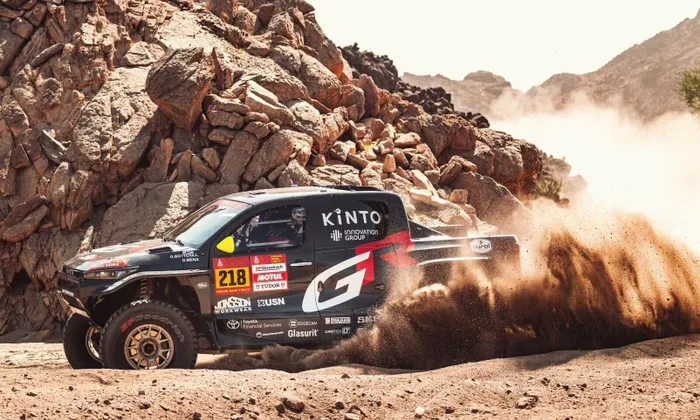
TOYOTA GAZOO Racing South Africa opened its Dakar 2026 campaign with a controlled Prologue in Yanbu, placing all three crews inside the top 20 while prioritising reliability.
Image: Supplied / Toyota South Africa DAKAR
HAVING never been much of a sprinter, I always admired those athletes who were agile or who had endurance. I suppose that’s why the Aesop's fable of the hare and the tortoise resonated with me.
The closing thought is one that I always bear in mind, whether it be on a hike, on a bike, or sitting at my desk: “Don’t show off with your speedy pace. Slow and steady wins the race”.
This mantra, though not of any value in a sprint dash, is wise counsel in a marathon or similar endurance race. And it appears to be the guiding principle behind the TOYOTA GAZOO Racing South Africa (TGRSA) team, who made a measured and encouraging start to their 2026 Dakar Rally campaign on Saturday.
A calm, controlled start in Yanbu
All three TGRSA crews completed the 22km Prologue around Yanbu without incident and, crucially, inside the top 20. With the Prologue designed to set the tone rather than decide the rally, the team adopted a sensible approach — securing competitive times while ensuring their GR Hilux IMT Evo cars emerged in perfect condition ahead of the first full stage.
Leading the way for the team was Saood Variawa, partnered by Francois Cazalet. The pair recorded the 10th-fastest time, finishing just 18 seconds off the outright pace. Their run came despite a brief technical concern before the start involving their ERCF tablets, but they maintained their composure to deliver a clean and controlled performance.
“Prologue was OK. We didn’t really push much,” said Variawa. “We had a decent pace from the start and, with all the panic just before the stage, I think we did a decent job. The car is in one piece and the team has done an amazing job from shakedown and throughout the year. I think we’re in a good position for the race.”
Close margins and early focus on reliability
Close behind them were Portuguese crew João Ferreira and Filipe Palmeiro, who completed the Prologue in 12th position, just one second behind Variawa. Starting early on the road, Ferreira pointed to both the speed and navigational demands packed into the short opening test.
“The Prologue was very nice, super fast, with tricky navigation for the co-drivers,” said Ferreira. “We managed quite well, finished 12th, and the most important thing is the car is in perfect shape. Everything is working perfectly and the real race just starts tomorrow.”
Guy Botterill and Oriol Mena rounded out the TGRSA effort, finishing 15th overall, 27 seconds off the lead. For Botterill, the priority on day one was always to settle into the rhythm of the rally and avoid unnecessary risk.
“I’m really happy with our position,” said Botterill. “We didn’t want to take too many chances in the Prologue. It’s important to get a few kilometres under our belt. The car felt great, and I think we’ve got a good race pace. We’re going to let the race come to us.”
Team perspective: exactly where they want to be
From a team standpoint, the opening day delivered exactly what was required. TGRSA Team Principal Shameer Variawa expressed satisfaction with the overall outcome as attention now shifts to the first major endurance test.
“It’s the first day of the Dakar and we’re quite happy, 10th, 12th and 15th is a good place to be,” he said. “The real racing starts tomorrow. The cars are fine, the drivers are happy, so let’s see what Stage 1 brings.”
Looking ahead, Stage 1 will see competitors face a demanding 305km special stage on Sunday, along with 213km of liaison, in a loop starting and finishing at the Yanbu bivouac. The route includes rocky and hard-packed sections before opening into faster sandy tracks and small dunes.
Dakar 2026 comprises six stages before the Rest Day in Riyadh, followed by seven more stages, with the rally concluding back in Yanbu on January 17 — a format that, from the outset, places a premium on patience, precision and consistency.