The rise of BYD: Is it time for Tesla to worry?
Motoring
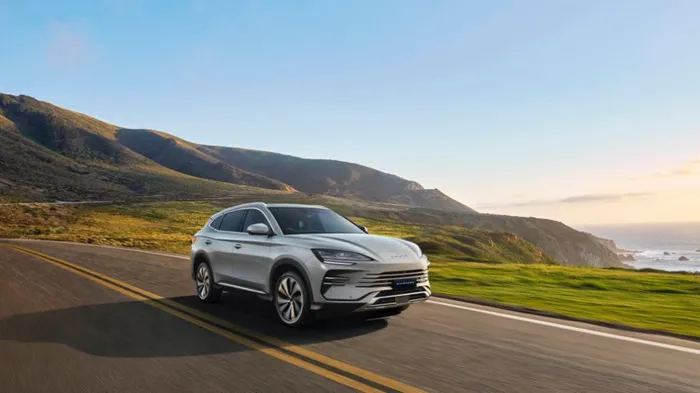
BYD’s rapid rise in global electric vehicle sales is narrowing the gap with Tesla, reshaping the EV market as Chinese manufacturers expand aggressively across Europe and beyond.
Image: Supplied / BYD Auto South Africa
It was during my first visit to Hong Kong in late 2023 that I almost fell on my back when I realised just how many Teslas there were in the city. Exotic sports cars and luxury German sedans still turned heads, but for every one of those, four or five Teslas would glide past.
As I followed my hosts through the city, I remarked that I had never imagined there could be a place so saturated with electric vehicles. Tesla, it seemed, had become part of the urban furniture.
Around that same time, I walked past a display featuring a sleek, strikingly designed electric car bearing the letters BYD on its bonnet. It was the first time I had seen a Build Your Dreams vehicle up close.
“These are amazing cars,” my brother-in-law said. “I wouldn’t be surprised if they surpassed Tesla in the next few years.”
I scoffed as another cluster of Teslas zipped by silently on the street beside us.
Just over two years later, that prediction no longer feels far-fetched. Back in Hong Kong now, Teslas are still everywhere, but so too are increasing numbers of BYD vehicles, blending seamlessly into the same streetscape.
That made it unsurprising to read a recent report suggesting that China’s BYD is on course to overtake Tesla as the world’s biggest seller of electric vehicles, potentially marking the first time it has surpassed its American rival in annual sales.
Sales momentum shifts
BYD said on Thursday that sales of its battery-powered cars rose by almost 28% last year, reaching more than 2.25 million units. The figures underline the scale of the company’s growth and its increasingly prominent position in the global EV market.
Tesla is due to release its full-year sales figures for 2025 later, but analyst estimates published last week suggest the company sold around 1.65 million vehicles over the year. While still substantial, that number highlights the narrowing gap between the two manufacturers.
Tesla has faced growing pressure from intensifying competition, particularly from Chinese brands, as well as criticism over the pace at which it has refreshed its product range. In October, the company introduced lower-priced versions of its two best-selling models in the United States in an effort to stimulate demand, following concerns that more affordable options had arrived too slowly.
A widening global footprint
Despite BYD’s rapid expansion, its sales growth slowed in 2025 to the weakest rate in five years, reflecting mounting competition in China from a wave of domestic EV makers, including XPeng and Nio. China remains BYD’s key market, but it is no longer the company’s only engine of growth.
BYD continues to strengthen its international presence, helped by pricing that often undercuts rival manufacturers. Its expansion across Latin America, South East Asia and parts of Europe has continued despite the introduction of steep tariffs on Chinese-made electric vehicles in several markets.
In October, BYD said the United Kingdom had become its largest market outside China. The company reported that sales in Britain surged by 880% in the year to the end of September, driven largely by demand for the plug-in hybrid version of its Seal U sports utility vehicle.
Two brands, one crossroads
Where Tesla once appeared untouchable in the electric vehicle space, the landscape is now more crowded and competitive. BYD’s surge in sales, combined with its expanding global footprint, has reshaped the conversation around EV leadership.
Walking the streets of Hong Kong again, the shift feels very real. Teslas still dominate, but they no longer stand alone.