Why Formula One’s 2026 reset could reshape the sport for the next generation
COMMENT
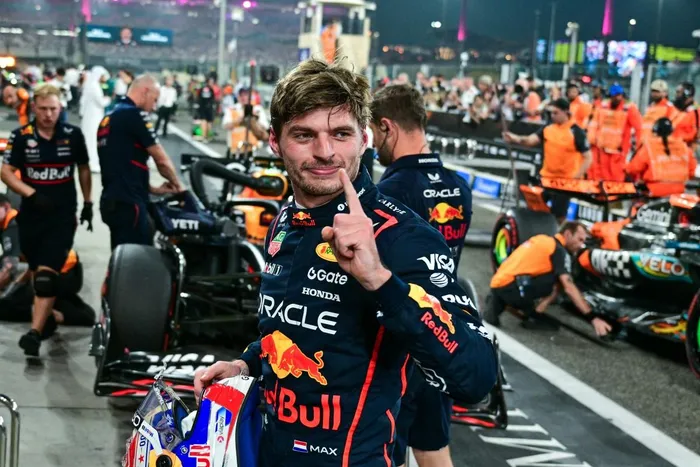
Max Verstappen and Red Bull Racing will have to adapt to the new Formula One rules if they want to compete for the championship next season.
Image: AFP
As the 2025 Formula One season wraps up, the paddock’s attention has already shifted to 2026, a year many insiders are calling the most transformative in a generation.
Once again, F1 is rewriting the technical rulebook, and this time it is not a subtle tweak but a full-blown evolution designed to reset competition, enhance racing, and pivot the sport towards sustainability and new forms of power delivery.
The last seismic upheaval of this scale came in 2014, when the sport moved from screaming 2.4-litre V8 engines to 1.6-litre turbocharged hybrid power units. This hybrid era redefined how teams approached performance: energy recovery systems became as important as combustion power, budgets ballooned, and the balance of power shifted dramatically in favour of Mercedes in the early years.
That change did not just alter engines; it reshaped competition and racecraft, forcing teams and drivers to rethink strategy, throttle control, brake management and fuel efficiency in ways that rewrote championship narratives.
Fast forward to 2026, and once again the structure of Formula One is being retooled — this time in areas that touch nearly every component of a contemporary F1 car. The new regulations encompass chassis design, aerodynamics, power units, overtaking systems and sustainability goals.
Cars will be smaller, lighter and more agile, with reduced drag and downforce, all designed to enhance wheel-to-wheel racing. Crucially, the power units will shift towards a true 50/50 split between electric and internal combustion power, with battery output more than tripling compared to current hybrids. Fuels will be “100% sustainable”.
Aerodynamically, the sport will move away from the Drag Reduction System (DRS), a stalwart overtaking aid, towards active aerodynamic systems and strategic power modes such as Overtake Mode and Boost Mode. Drivers will manage energy recovery and deployment more tactically than ever before, potentially turning races into real-time strategy battles rather than pure pace contests.
With all of this change, the big question for fans, teams and manufacturers is the same: who benefits most, and who will come out swinging? The truth is, nobody truly knows — and that is part of the excitement.
New regulations tend to reward ingenuity. Teams that interpret the rules creatively, or find performance where others do not, can leap up the order. Mercedes and Red Bull, perennial front-runners, may have advantages in engineering depth, but newcomers like Audi (entering via Sauber) and Ford (partnering with Red Bull Powertrains) could upset the established hierarchy by exploiting niches in the regulations that incumbents overlook.
The restructuring of engine technology and the prominence of electrical systems may allow these fresh challengers to carve out ground quickly.
Established champions are not out of the game. Red Bull, Ferrari, Mercedes and others have repeatedly shown they can adapt when rules shift. These teams possess not just resources, but experience in turning rulebook ambiguity into performance gain. It is this expertise that often determines how quickly a team can develop a competitive 2026 car and translate that development into race wins.
From a driver’s perspective, the new systems place an even greater emphasis on tactical flair. Managing energy deployment, navigating diverse aero configurations and maximising advantage from Overtake and Boost modes adds layers of complexity on top of raw speed. Talent that thrives under strategic pressure may well shine brightest in this era.
If history is a guide, the biggest regulation changes do not just tweak the pecking order — they reshuffle it. The hybrid era that began in 2014 saw Mercedes dominate early, but by the late 2010s and into the 2020s, other teams such as Red Bull and McLaren found their footing. With the 2026 rules promising even broader technical shifts, there is real potential for a new balance of power, or at least a more unpredictable one than we have seen in recent seasons.
With all their new technical firepower, perhaps Aston Martin will finally rise up and become the top-tier challenger it wants to be, rather than remaining a regular presence in the middle to lower order. Lawrence Stroll’s team does, however, need two crucial components: drivers.
Fernando Alonso is a seasoned veteran with vast experience, but Formula One is increasingly a young man’s game. And Lance Stroll — well, anything is possible if your father owns the team. But if Aston Martin are truly serious about competing for a title, they should go and find themselves a pair of hungry drivers.