FIA fires early warning shot as 2026 engine loopholes come under scrutiny
FORMULA 1
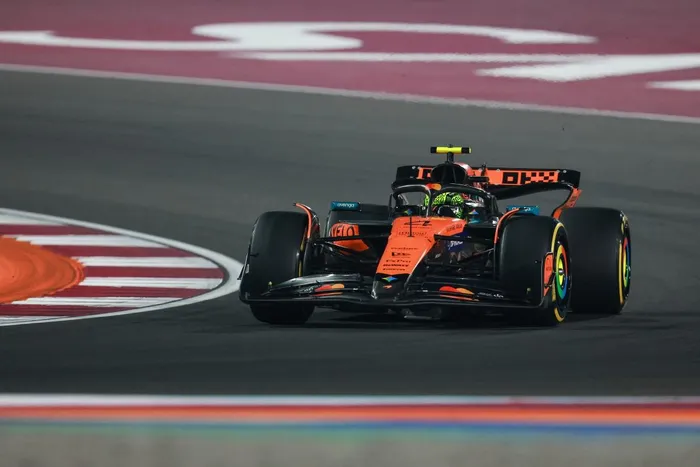
McLaren's Lando Norris will be defending his Formula One title next year.
Image: AFP
The FIA’s insistence that Formula One has learned from its past is being tested long before a wheel has turned in anger under the 2026 regulations.
This latest move to close off another engine loophole is not just technical housekeeping; it is a warning shot across the bows of manufacturers who are already probing the outer limits of the rulebook.
At the heart of the issue is fuel-flow measurement, a seemingly mundane area that has historically proven fertile ground for clever interpretation. With the sport moving to an energy-based fuel limit rather than a mass-flow cap, precision becomes power.
Even the smallest discrepancy in how fuel energy is measured could translate into meaningful performance, especially in an era where electrical deployment will play a far greater role.
The FIA has now made it explicitly clear that any attempt to influence the temperature of the fuel-flow meter is prohibited, regardless of whether that influence is direct or indirect. That change in wording is significant.
It acknowledges that modern Formula One engineering rarely operates in absolutes. Systems interact, heat migrates, and unintended consequences can be conveniently reframed as coincidence. The governing body is no longer willing to entertain that argument.
What stands out is the timing. We are still deep in the development phase for 2026 engines, yet the FIA is already stepping in to clarify intent. That suggests concern — not necessarily that a team has already found a smoking-gun advantage, but that simulations and early concepts are heading in directions that make the regulators uncomfortable.
This also speaks to a wider reality about the 2026 reset. The performance spread is expected to be large, and manufacturers know early advantages could define several seasons. In that environment, grey areas become strategic assets. By closing them early, the FIA is trying to ensure the competitive order is shaped by engineering excellence rather than regulatory gamesmanship.
There is also a political undertone. With manufacturers like Audi entering, and existing powerhouses determined not to be caught on the wrong side of history, the FIA is asserting authority now rather than reacting later. It is an attempt to avoid mid-cycle rule changes that breed resentment and conspiracy.
Whether this approach truly levels the playing field remains to be seen. What is clear is that the 2026 era will be policed aggressively, and teams are being told in no uncertain terms that creativity must live within clearly defined boundaries.
In modern Formula One, the margins are microscopic — and the rulebook is once again becoming the most powerful performance tool of all.