AFCON will be a spectacle of epic proportions as Egypt's Salah aims to end his title misery
Morocco are looking to clinch their first AFCON title in decades. Still, several other nations are threatening to steal the show at the tournament that will be Africa's grandest football carnival.
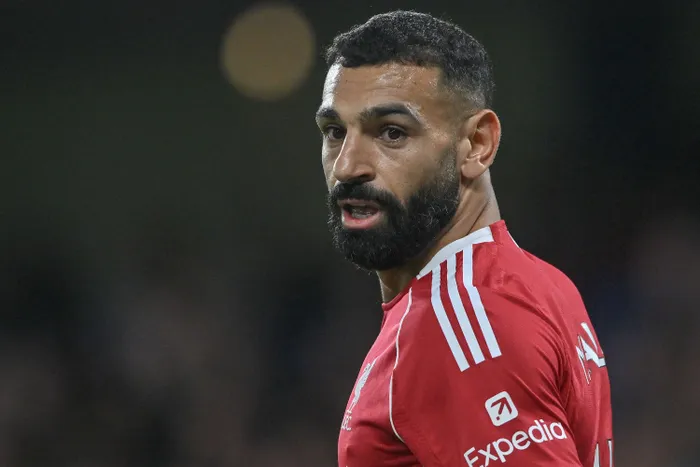
Mohamed Salah, a two-time 'African Player of the Year' winner, has suffered much heartbreak in four AFCON tournaments as Egypt twice finished runners-up and twice exited in the round of 16.
Image: AFP
This year’s Africa Cup of Nations (AFCON) tournament showcases some of the continent’s most talented players and teams.
The hosts, Morocco, will kick off the continental showpiece on Sunday, December 21, against one of the lowest-ranked countries, Comoros, in the opening match in Rabat.
As Africa’s top world-ranked team, Morocco is the favourite to win the championship on home soil, thanks in part to its impressive journey to the semi-finals of the last FIFA World Cup in Qatar.
However, the hosts face a potential setback with the early loss of their captain, Achraf Hakimi, who sustained a serious ankle injury while playing for Paris Saint-Germain against Bayern Munich.
Despite this hurdle, the Moroccan side oozes talent and tactical nuance. Adopting a flexible 4-3-3 formation, Morocco’s approach combines defensive solidity with rapid offensive transitions, utilising their fleet-footed wingers to outpace opponents and chip away at their defences.
With an enviable 11th-place world ranking, Morocco seeks to end a 49-year title drought, having last lifted the AFCON trophy in 1976.
However, the path to glory will not be easy, particularly with formidable opponents like Senegal and the Ivory Coast in the mix. The Lions of Teranga, Senegal, aim to add a second AFCON title to their resume after clinching their first in 2021 against Egypt.
With stars like Sadio Mane, Nicolas Jackson, Ismaila Sarr, and Iliman Ndiaye leading the charge, Senegal will pack a powerful punch. It will deploy a 4-2-3-1 formation that accentuates their physical prowess and speed.
The Elephants of the Ivory Coast also pose a serious threat. Fresh off a dramatic AFCON win in 2024, when they triumphed 2-1 over Nigeria, the Ivorian team has rebounded from adversity—having sacked their coach mid-tournament—and eventually lifted the trophy.
Their recent success serves as a reminder that title wins are never guaranteed, as they strive to prove their worth once more despite not being universally regarded as top contenders this year.
Meanwhile, Egypt, a titan of African football, seeks to reclaim past glory, with talisman Mohamed Salah leading the charge. The Pharaohs boast a record seven AFCON titles. Yet, their last victory in 2010 casts a long shadow over Salah, whose career is often compared with that of the legendary players from the successful 2000s squad.
As he aims to add the elusive AFCON title to his illustrious career, Egypt’s path will face its fiercest challenge in the group stages against South Africa.
Speaking of Bafana Bafana, the South African team has positioned itself as an unpredictable force, blending youthful exuberance with seasoned experience. Their preparations have been solid, having completed an impressive qualifying campaign with four wins and two draws.
Although they eye a hopeful qualification to the knockout stages, their main challenge will be against Egypt, a match that could determine their fate early in the tournament.
As the tournament unfolds across nine modern stadiums that capture Morocco’s rich culture, fans can expect an exhilarating showcase of football.
The expanded format, featuring 24 teams in six groups of four, ensures surprises are on the table, as the top two from each group, along with the four best third-placed teams, advance to a knockout stage filled with single-elimination drama.
With the anticipation growing, can Morocco finally end their AFCON title wait? Can Salah lead Egypt to glory? Or will Senegal and the Ivory Coast provide the fireworks that AFCON is known for?
As the countdown begins, one thing is clear: the 2025 Africa Cup of Nations promises to be a spectacle of epic proportions.