AFCON a double-edged sword for coaches of World Cup-bound teams, says Pitso Mosimane
AFCON
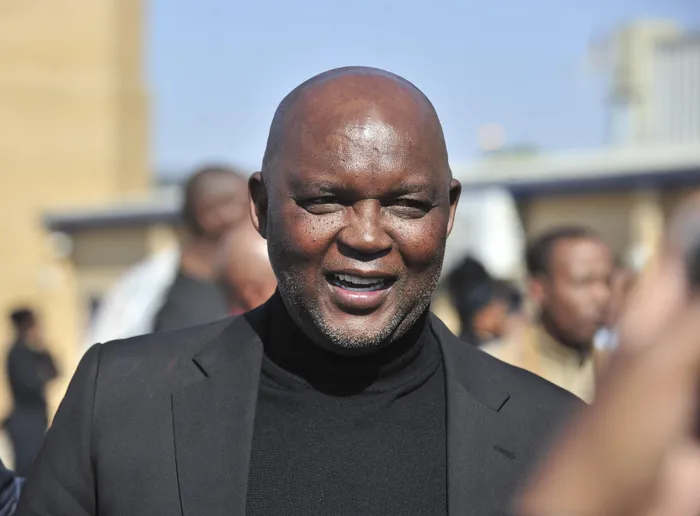
Pitso Mosimane says AFCON is going to be good preparation for the 2026 Fifa World Cup, but cautions coaches about the job risks it brings.
Image: BackpagePix
Former Bafana Bafana coach Pitso Mosimane has weighed in on the positives and challenges teams will face when they use the upcoming AFCON in Morocco to gauge their readiness for the 2026 FIFA World Cup in North America.
The biggest football event on the continent — AFCON — is set to get underway in Morocco from 21 December to 18 January, with 24 nations competing for the coveted crown of African football. But of the lot, seven — Morocco, South Africa, Tunisia, Egypt, Algeria, Senegal and Ivory Coast — will be hoping to hit two birds with one stone by using the tournament as preparation.
These seven teams will be eager to go all the way at AFCON — win the crown — and use that success as motivation and a signal of intent ahead of the global showpiece, which will be co-hosted by Canada, Mexico and the United States.
Mosimane, who was part of the 2010 World Cup on home soil as one of the assistant coaches to Carlos Alberto Parreira before taking over the reins afterwards, knows all about using one major tournament as a precursor for another.
Speaking on the sidelines of the launch of the Pitso Mosimane Youth Football partnership with Chinese multinational appliance and electronics manufacturer Hisense, Mosimane shared his thoughts on the narrative.
“Sometimes, I always look at the positives and the challenges,” Mosimane explained. “The positive is that you prepare yourself for the World Cup.
“But it doesn’t necessarily mean that if you don’t do well at AFCON, then you won’t do well at the World Cup. Sometimes, it tells you what you have and where you’ll be in six months’ time.
“So, it’s an opportunity for both players and coaches. But the unfortunate thing is that when coaches don’t make it at AFCON, they don’t go to the World Cup. History tells you that. So, let’s see what happens.”
That’s not all. Mosimane also backed one of the continental heavyweights who failed to qualify for the World Cup to remind their peers why they shouldn’t be judged by their recent shortfall.
“I think Nigeria will want to show that we lost an opportunity (to go to the World Cup), but we are still the Super Eagles,” Mosimane said. “They say: ‘We were at the final last year’. So, that’ll be a chance also.”
Mosimane hopes that AFCON and the World Cup will also provide opportunities for South African players to be scouted by overseas clubs, including teams in the Middle East and other regions of the world, not just Europe.
Over the years, locally based players have been said to make significant strides when they move to Europe. But after coaching in the Gulf region at Al Ahli, Al Wahda, Abha and Esteghlal, Mosimane has dismissed that notion, saying there is also a strong market for PSL players in those countries.
And Mosimane seems to have been correct. Mohau Nkota has shone at Saudi Arabian side Al-Ettifaq since joining from Orlando Pirates this season, while he is in the final AFCON squad alongside Elias Mokwana, who has impressed coach Hugo Broos after his recent exploits with another Saudi side, Al Hazem.
Mosimane backed up his earlier sentiments by noting that Cristiano Ronaldo, N’Golo Kanté and other European players remain competitive in the Saudi league, which is why they continue to receive national team call-ups.
“You can remember what I said: ‘Now we have a product in Saudi’,” Mosimane said. “When I was there, I did everything that I could to get South African players on board.
“At one stage, I tried to bring Iqraam (Rayners) when he was still at Stellenbosch. I believed that he could crack the market.
“Stellenbosch are also a progressing team in terms of giving chances to players. The challenge was that we couldn’t find a replacement at the last moment. I understood. So, it was an opportunity lost for both him and myself.
“But I don’t think it should end there — South African players can still go to the Gulf. The challenge is that it’s not easy.”
And with Pirates having recently sold Mbekezeli Mbokazi to MLS side Chicago Fire instead of a European team, Mosimane believes their business model — which enhances players’ careers and financial well-being — deserves to be studied.
“We should ask Pirates how they do it,” said Mosimane, also referring to the recent transfer of Nkota to Saudi Arabia.
“Maybe many teams can follow. They’ve released two players to play not in Europe, but in other countries. There are other countries where our players can play.”