Ramaphosa defends South Africa's economic recovery in SONA debate
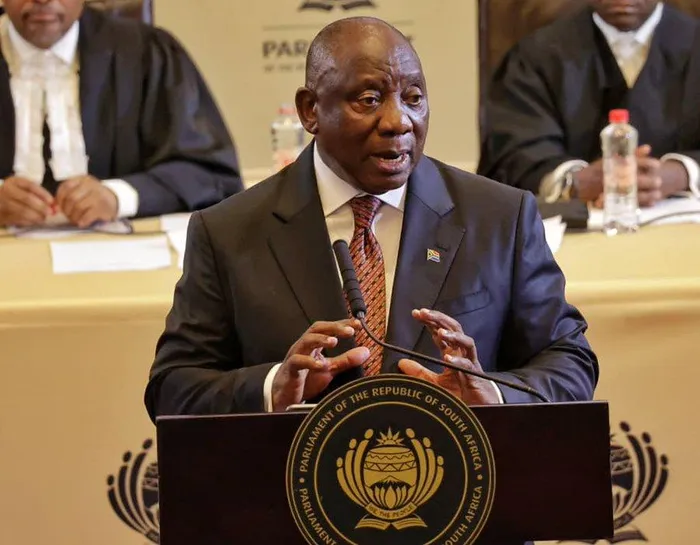
President Cyril Ramaphosa Ramaphosa firmly defended the black economic empowerment and criticised those who called for its scrapping durign his reply to the State of the Nation Address debate.
Image: GCIS
In a determined response to critics, President Cyril Ramaphosa reinforced his positive outlook on South Africa's path to recovery during his reply to the State of the Nation Address earlier this week.
Speaking to Parliament after two days of debate, Ramaphosa pointed to encouraging signs of economic resurgence over the past year, emphasising a commitment to continue building upon these gains.
“We see this in reducing unemployment and accelerating growth. We see the signs of recovery in improved public finances, lower inflation, and growing business and consumer confidence,” he said.
Despite opposition criticisms, Ramaphosa said South Africa was showing clear signs of recovery.
“Whether people like it or not, it has been there. Whether people think it’s an illusion, it has been there. Whether people think we have turned the corner or not, they are blind because we are turning the corner,” he said.
However, Ramaphosa said, although the progress was modest, the momentum of change was building.
“Our task now is to sustain this momentum, to protect and build on the progress we have made, and to ensure that it results in a tangible improvement in the life of every South African.”
He acknowledged the myriad challenges that still plague the nation, including over 10 million South Africans living below the food poverty line, more than 11 million without jobs, and violence communities face.
“The State of the Nation Address outlined the steps we are taking as the Government of National Unity (GNU), working together with all social partners and all sections of society, to achieve these objectives.”
Ramaphosa firmly defended the black economic empowerment and criticised those who called for its scrapping, saying the Constitution calls on the government to redress the injustices of the past, to build a society that is equal and just.
“We cannot do that without transforming our economy.”
In a veiled reference to GNU partners, the DA and Freedom Front Plus, he said the critics of Broad-Based Black Economic Empowerment were falsely claiming that it benefited only a few and was inhibiting economic growth and enabling corruption.
“We must see broad-based black economic empowerment not as a cost to the economy, but as an investment in the sustainable growth of our economy.
“That is why I announced in the State of the Nation Address that we are undertaking a review of our Broad-Based Black Economic Empowerment framework to ensure that it supports greater transformation and inclusive growth.”
Turning the spotlight on the collective responsibility within the GNU, Ramaphosa took a swipe at the DA for claiming achievements in government work.
He stated that there were no parties in the Cabinet, and that every minister and deputy minister was part of a collective.
“No minister or deputy minister should be claiming their work as an achievement of their party.”
He stressed that government successes are the result of teamwork, with mistakes and shortcomings likewise being a collective account.
“It is our commitment to partnership and shared responsibility that has made the Government of National Unity work and that will stand us in good stead for the work ahead,” he said.
Addressing criticisms of his establishment of the National Water Crisis Committee, Ramaphosa reflected on the formation of the National Energy Crisis Committee (NECOM), which successfully tackled the nation’s load shedding issues.
He said NECOM had brought together all the key role players to focus on the immediate tasks necessary to end load shedding.
“It succeeded because it was able to draw on the skills, capabilities, resources, and efforts of a broad range of departments and public institutions, as well as the best experts in South Africa and around the world, and to build a platform for collaboration with social partners.”
Ramaphosa added that NECOM was never about meetings and talk shops.
“It was about taking a hands-on approach to solving the problem, making sure that things actually get done and that they get done quickly. The experience of NECOM shows that complex problems need collaborative solutions,” he added.
mayibongwe.maqhina@inl.co.za