Crime stats | Murder rate dropped 8.7% in third quarter
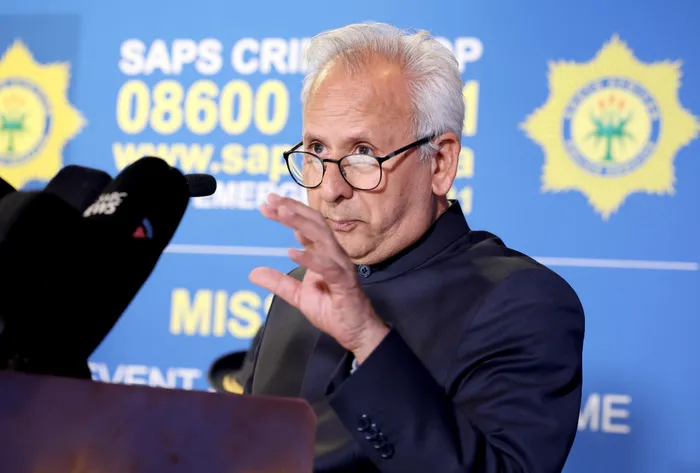
Acting Police Minister Firoz Cachalia says murder fell by 8.7% in the third quarter of 2025, with overall violent crime down 6.7%.
Image: File
Acting Police Minister Professor Firoz Cachalia says murder fell by 8.7% in the third quarter of 2025, while overall violent crime declined by 6.7% during the same period.
Cachalia briefed the media on Friday on the release of the third-quarter crime statistics, covering the period from October 1 to December 31 2025.
The latest figures follow the release on November 28 last year of the first- and second-quarter statistics for the 2025-26 financial year, covering April 1 to September 30.
Cachalia said the decision to publish crime statistics quarterly demonstrates the government’s commitment to transparency and accountability.
“Our people are entitled to know how many crimes are reported to the South African Police Service (SAPS) on a regular basis, and whether different categories are showing an increase or decrease in the precincts where communities live,” he said.
“We share this information so that communities, businesses and public service departments have a sense of what is happening in their neighbourhoods in terms of crime and related risks.”
He said knowledge empowers communities and enables more effective collective action to improve public safety.
Referring to President Cyril Ramaphosa’s State of the Nation Address last week, Cachalia said public safety - with a focus on organised crime and gender-based violence - had been placed at the forefront of the government’s agenda for the year ahead.
He said he had outlined further details during the parliamentary debate on the address and reiterate some of those priorities during the crime statistics briefing.
Cachalia said the “cautious optimism” he expressed last year regarding national crime trends remains.
“Most violent crime categories, including murder, rape and robbery, as well as most property-related crimes such as theft and burglary, continued to decrease, but remain at unacceptably high levels,” he said.
After more than a decade of annual increases, murder - regarded as the most reliable crime statistic - began declining in the first quarter of the 2023-24 financial year, he said.
That trend has continued, with the latest quarter recording an 8.7% decrease, or 602 fewer murders.
Over the past two years, murders during the third quarter have fallen by 17.6%, representing 1,359 fewer cases.
Total contact crime - which includes all categories of violent crime - began decreasing in the third quarter of 2024-25. In the latest quarter, total violent crime declined by 6.7%, or 12,682 fewer cases compared with the same period last year.
Over two years, total violent crime for the third quarter has fallen by 8.3%, or 15,763 fewer cases.
Cachalia said the trend may be attributable to enhanced policing operations but cautioned that crime levels remain unacceptably high and vary significantly across the country.
“These are statistical patterns. While most communities have recorded decreases in violent and property crimes, there are still too many communities that have recorded increases,” he said.
“This does not necessarily translate into a felt sense of security for individuals, families and communities.”
Five provinces - KwaZulu-Natal, Gauteng, Mpumalanga, Free State and North West - recorded double-digit declines in murder. Smaller decreases were recorded in the Western Cape and Eastern Cape, while slight increases were recorded in Limpopo and Northern Cape.
Of the 30 precincts with the highest murder rates, only 15 recorded decreases.
Killings linked to gang violence in the Eastern Cape and Western Cape remain “worrisomely high”, he said.
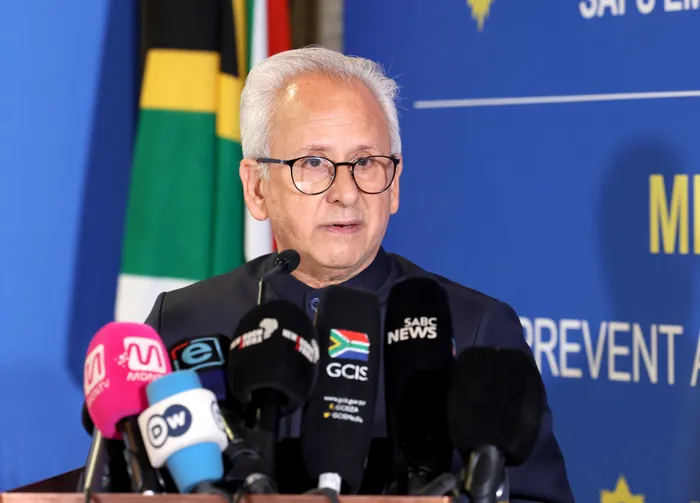
SA murder fell by 8.7% in the third quarter of 2025, with overall violent crime down 6.7%, acting police minister Prof Firoz Cachalia announced on Friday.
Image: File
Cachalia also expressed concern about an increase in the murder of police officers. Of the 23 officers killed during the quarter, nearly 80% were off duty.
“This is an issue that I will ask SAPS management to look into so that we can try and prevent these deaths from happening,” he said.
Firearms remain the primary weapon used in murder, robbery and organised crime, he added, and additional measures will be introduced to remove illegal firearms and prevent legal firearms from falling into the wrong hands.
On gender-based violence and femicide, which has been classified as a national disaster, Cachalia said intensified efforts are required. Much interpersonal and domestic violence occurs between people who know or live with each other, he said.
SAPS has allocated an additional 999 officers to detective services over the past year.
Cachalia said improvements in law enforcement must be accompanied by implementation of the Integrated Crime and Violence Prevention Strategy, requiring closer alignment among the health, education and social development departments across all spheres of government.
He said he will host a meeting of provincial heads of community safety and several premiers on 6 March to align national, provincial and local government operations in high-crime precincts.
Communities must also be supported in implementing local safety programmes, he said, but warned against vigilantism.
“Where communities take the law into their own hands, resulting in murders and assaults, this creates further work for an already overstretched police service,” he said.
He said a national community patroller programme will be established in each province. The Civilian Secretariat for Police has been tasked with developing a funding model to train and provide stipends to community members. Patrollers will not perform policing functions but will help prevent crime through visibility and by alerting police in high-risk areas such as transport nodes, walkways and around schools.
Cachalia said organised crime poses an immediate threat to democracy, society and economic development.
He said that much organised crime - including extortion, corruption and fraud - is underreported and not fully reflected in crime statistics, yet its impact is severe.
Local-level corruption in procurement and copper cable theft syndicates contribute to water and electricity outages, while the theft of public funds undermines essential services such as education, healthcare and transport.
A dedicated task team has been established to investigate allegations of criminality involving senior SAPS and Ekurhuleni local government officials identified in the interim report of the Madlanga Commission.
Cachalia said efforts to combat organised crime will focus on two parallel strategies: strengthening vetting and lifestyle audits of senior officials to root out corruption, and enhancing specialised investigative capabilities to dismantle sophisticated criminal networks.
In the short term, additional security resources - including Anti-Gang Units, specialised policing units and the South African National Defence Force - will be deployed in areas affected by gang violence and illegal mining.
He said the deployment of the defence force is under SAPS command and is timebound, focused on stabilising high-risk areas, supporting cordon-and-search operations and protecting critical infrastructure.
While national trends in violent and property crime are improving, Cachalia said much work remains.
“We still have a long journey to travel. But I promise that we will not give up. By adopting a whole-of-government and whole-of-society approach, together we can make South Africa a safer place. This is a priority and is achievable,” he said.
IOL News