Oil drama returns and South Africa may feel the heat

South Africa is vulnerable to both oil price and dollar shifts.
Image: Needpix.com
Oil prices are back in focus as renewed geopolitical tensions inject fresh volatility into global energy markets, reviving concerns for oil-importing economies such as South Africa.
Brent crude has edged higher in recent sessions, with traders pricing in increased risk linked to instability in the Middle East – a region central to global oil supply.
The liquid breached $70 to the barrel in the early afternoon.
While physical supply disruptions have not materialised, markets are reacting to the rising probability of escalation, particularly involving Iran.
Oil prices are highly sensitive to geopolitical threats in the region, given the strategic importance of the Strait of Hormuz, through which a significant share of the world’s crude exports flow.
Even the perception of risk can lift prices as traders build a premium into the market.
Wichard Cilliers, head of Market Risk at TreasuryONE, says geopolitical tensions are once again shaping both oil and currency dynamics.
“Oil prices have moved higher amid continued tensions in the Middle East, which could weigh on oil-importing countries like South Africa if gains persist,” said Cilliers.
Cilliers added that “ongoing geopolitical tensions, including developments around Iran, are also supporting the dollar as investors seek safer assets”.
The interplay between oil prices and the dollar presents a double-edged risk for emerging markets.
Heightened global uncertainty typically drives investors towards safe-haven assets, strengthening the dollar while pressuring risk-sensitive currencies such as the rand.
For South Africa, that combination can prove particularly costly.
Higher oil prices increase the base cost of imported fuel, while a weaker rand magnifies the impact by raising the local currency price of dollar-denominated imports.
The result is often felt at the pumps.
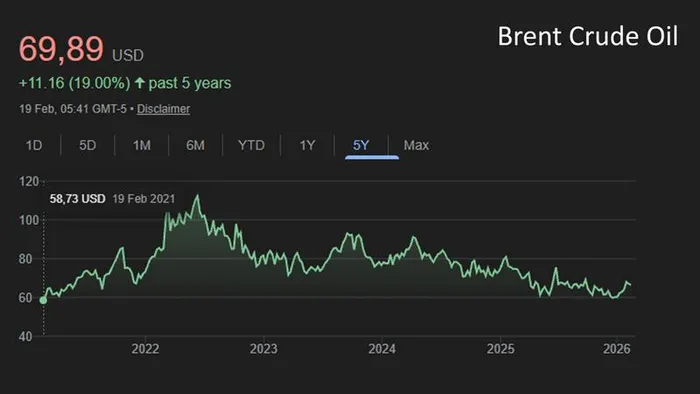
Brent crude went over $70 to the dollar.
Image: Google
South Africa’s fuel pricing model is directly linked to international product prices and the exchange rate, meaning shifts in global oil markets and currency flows filter quickly into domestic fuel costs.
Sudden swings in energy costs create challenges for businesses managing input prices and for policymakers attempting to anchor inflation expectations.
Rising fuel prices place pressure on transport costs, logistics, agriculture, and ultimately consumer inflation.
Diesel, a key input cost for freight and industry, is especially sensitive.
Episodes of oil-driven price increases have historically fed into broader inflation risks, complicating the outlook for monetary policy and household budgets.
For South African consumers, it adds another layer of vulnerability.
Fuel price shocks not only affect motorists but ripple through food prices, commuting costs, and the broader cost of living.
With the rand already prone to volatility, periods of global risk aversion can amplify domestic economic pressures.
For now, oil markets remain headline driven
IOL BUSINESS