Concerns raised over R15 billion ARV tender as EFF calls for SIU investigation
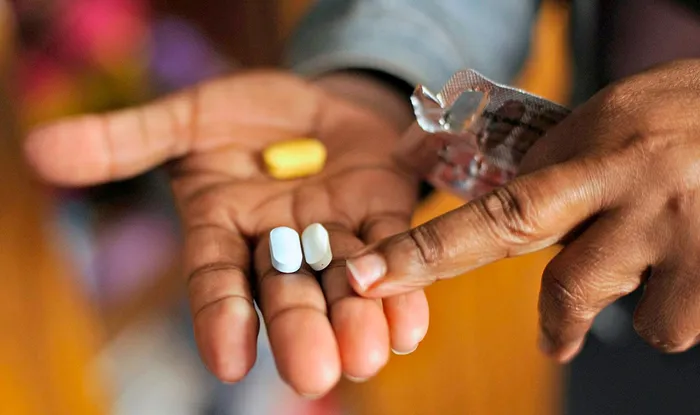
The EFF and Portfolio Committee on health have raised concerns over the R15 billion ARV tender, citing irregularities, inadequate due diligence, local supplier exclusion, and transparency concerns, urging urgent investigations and state pharmaceutical capacity.
Image: FILE
The Economic Freedom Fighters (EFF) has expressed serious concern over the R15 billion antiretroviral (ARV) tender awarded by the Department of Health, calling for a full investigation into alleged irregularities in the procurement process.
EFF spokesperson Sinawo Thambo said the party was alarmed that the tender, awarded to Barrs and Inovata, was granted without proper financial evaluation of the companies’ capacity to supply the medication.
“The National Department of Health claims to not have conducted financial evaluation in the tendering process, which rightfully raises an alarm on corrupt processes having unfolded,” Thambo said.
The EFF noted that similar concerns prompted the National Treasury to halt previous contracts with companies such as Hetero, following allegations of collusion and questions over financial capacity.
Thambo also said that the current tender process failed to assess the two new suppliers adequately.
“The National Department of Health, through the guidance of National Treasury, halted the previous contracts due to similar allegations, and instituted a new process which now reveals similar concerns,” Thambo added.
Days after the tender was awarded, both Barrs and Inovata reportedly went into business rescue, with Hetero stepping in to supply the ARVs, a sequence the EFF described as highly concerning.
The party has called on the Competition Commission to expand its investigation to include the two suppliers, which are owned by a single individual under the Avacare Health Group.
Thambo said the tender was particularly problematic because the two companies offered only a R1 difference on product pricing, echoing previous allegations of price collusion.
“The R15 billion ARV tender is characterised by irregularities which include but are not limited to granting of the tender to two companies owned by one person who on the product have a R1 price difference,” he said.
The EFF also called on the Special Investigating Unit (SIU) to probe the tender and urged the Health Minister to start the procurement process afresh.
“We have not forgotten about Digital Vibes. We have not forgotten about the Thembisa Hospital Heist. We have not forgotten about the Covid‑19 PPE scandals and the hundreds of infrastructural projects by the department that are found wanting when interrogated,” Thambo said, criticising officials who, he claimed, were “sleeping on the job.”
Thambo warned that failing to build state capacity would continue to compromise the nation’s health prospects.
“Since 2014, the EFF has continuously warned the state and the department that failing to build state capacity and a functional state pharmaceutical company will result in the health prospects of our nation being compromised.
''On an annual basis, this assertion is proven to be correct. Our state continues to be a toy that is taken advantage of by the private sector and tender tycoons, while our people’s lives are compromised in the process,” he said.
Meanwhile, the Portfolio Committee on Health has also expressed concern over the lack of due diligence conducted by the Department when awarding the tender.
During a briefing with Health Minister Dr Aaron Motsoaledi, committee members dissected the process that resulted in two suppliers being placed under business rescue.
Committee chairperson Faith Muthambi said the country had the capacity to produce four million monthly patient treatments for key ARVs, yet less than half of this was being sourced domestically.
“It would appear that the country has at least four million monthly patient capacity for TDL and yet less than 50% of this has been awarded domestically,” Muthambi said, referring to Tenofovir, Dolutegravir, and Lamivudine.
Members questioned why local companies were sidelined in favour of foreign suppliers, particularly Indian multinationals, and why the department’s claim that financial evaluations were not required contradicted the Public Finance Management Act.
''The department said the tender was intentionally awarded to multiple suppliers as a risk mitigation strategy, but members found this assertion questionable,'' she said.
They have urged the department to explain the rationale behind awarding contracts to suppliers with common shareholdings, as this does not seem to constitute effective risk mitigation.
''The committee requested a breakdown of how the department conducts its due diligence, particularly in confirming the shareholding of these companies and verifying whether manufacturers claiming to produce ARVs in South Africa are genuinely doing so,'' said Muthambi.
Minister Motsoaledi said that the department was procuring at least 70% of ARVs locally and assured members that there had been no impact on patients.
“We believe that there is no impact on patients because we know our patients who are getting ARVs. We know where they get them,” he said.
Committee members urged the government to revisit the long-delayed establishment of a state-owned pharmaceutical company, noting that a 2007 cabinet resolution to halt the creation of Ketlaphela had left the initiative unimplemented nearly two decades later.
The committee said it welcomed the Minister’s commitment to addressing the matter and said it would continue discussions to ensure transparency, accountability, and oversight in the tendering process.
hope.ntanzi@iol.co.za
IOL Politics