SANDF to be deployed in Eastern Cape to tackle organised crime, confirms Cachalia
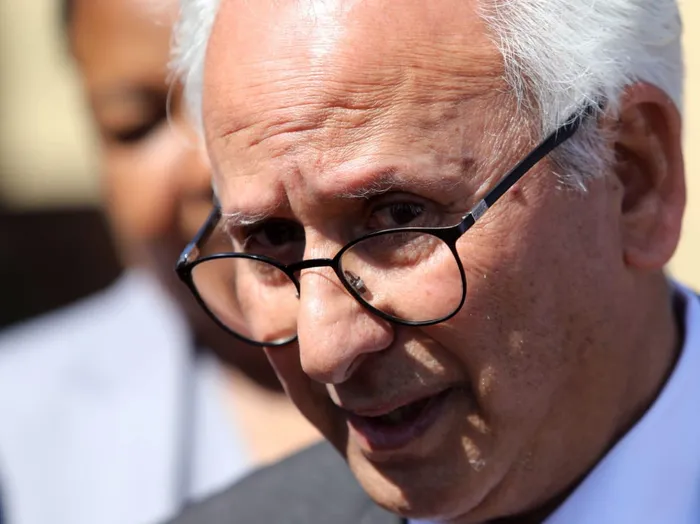
Acting Police Minister Professor Firoz Cachalia confirmed the SANDF will be deployed alongside SAPS to combat gang violence, illegal mining, and organised crime across the Eastern Cape.
Image: Oupa Mokoena
Acting Police Minister Professor Firoz Cachalia confirmed that the National Commissioner of the South African Police Service (SAPS) and the Chief of the South African National Defence Force (SANDF) have finalised a deployment plan set to begin within 10 days, which will now include the Eastern Cape.
Cachalia announced during a joint sitting of the National Assembly and the National Council of Provinces on Tuesday afternoon, where MPs debated President Cyril Ramaphosa’s recent State of the Nation Address (SONA).
The debate is set to continue on Wednesday at 2pm, with the President expected to respond on Thursday at 2pm.
Speaking on the fight against corruption, violent crime, and organised crime, including gang violence and illegal mining, Cachalia described Ramaphosa’s February 12 SONA address as the most significant in the past decade.
“The President’s speech recognised that the wellbeing and security of our people must be a core priority, upon which inclusive economic growth and the proper functioning of our democratic institutions depend,” he said.
He added that Ramaphosa outlined a clear vision for the coming decades, accompanied by detailed action steps to achieve these objectives.
Cachalia praised the deployment of the SANDF to Gauteng and the Western Cape to assist in combating organised crime and illegal mining. He confirmed that the deployment will also extend to the Eastern Cape.
“I can confirm that the National Commissioner of SAPS (General Fannie Masemola) , and the Chief of the SANDF, (General Rudzani Maphwanya), met yesterday to finalise the deployment plan, which will begin within the next ten days and include the Eastern Cape,” Cachalia said.
He emphasised that the deployment strategy would draw on lessons from both South African and international experience, respecting the mandates of the SAPS and SANDF, as well as the Constitution, with the goal of restoring calm and preventing further killings.
Cachalia said he has requested Masemola to take additional steps to strengthen Anti-Gang Units and deploy further specialised units, on which a report is expected soon.
“It will also be critical to strengthen intelligence-driven approaches to dismantle the networks behind organised crime,” he said.
He outlined the role of multi-disciplinary task teams - including the National Prosecuting Authority (NPA) under Advocate Jennifer Mothibi, skilled detectives, and officials from the Special Investigating Unit (SIU) and the South African Revenue Service - in targeting the leadership, finances, firearms, and logistics of criminal networks.
“I will be establishing a multi-stakeholder Organised Crime Advisory Council to oversee the implementation of a comprehensive and integrated strategy to combat organised crime,” Cachalia said.
The strategy will rely on open-source information and analysis to support the Ministry’s monitoring and oversight responsibilities.
On the Integrated Crime and Violence Prevention Strategy (ICVPS), he stressed the need for an all-of-government approach, recognising that crime also has socio-economic roots.
“The social cluster departments of government, including provincial and local authorities, have a critical role in improving the safety and security of our people across the country,” he said.
Cachalia highlighted that provinces most affected by gang violence and organised crime - Eastern Cape, Western Cape, Gauteng, and KwaZulu-Natal -must ensure that service delivery and development needs in vulnerable communities are addressed.
“Gang violence and criminality cannot be tackled by law enforcement alone. Young people in these communities need opportunity and the prospect of a meaningful, dignified future,” he said.
He expressed support for the Cape Crime Crisis Coalition (C4), which has emerged in response to gang violence.
Cachalia also expressed concern over the high levels of gender-based violence (GBV) and femicide.
“The levels of gender-based violence, rape, and femicide are unconscionable. By classifying this a national disaster, the President has provided the impetus to tackle this issue with renewed vigour,” he said.
He described his visits to communities, particularly in the Eastern Cape, as deeply troubling, noting the violence witnessed within families and intimate relationships.
Cachalia said to address this, he has asked Deputy Minister of Police Dr Cassel Boshielo, supported by the Civilian Secretariat for Police Services (CSPS), to assess gaps in SAPS’s current response and propose remedies.
“This approach will include expanding and strengthening the Family Violence, Child Protection and Sexual Offences (FCS) units in SAPS, improving docket quality, DNA evidence, and victim support at police stations,” he said.
Cachalia added that cooperation with the Departments of Social Development, Health, and Justice will be critical to ensure shelters, psychosocial support, and survivor-centred services are available.
On community policing, he said public involvement is essential.
“Since the inauguration of our democracy, community policing has been a core commitment. However, this initiative has lost some direction, and a renewed effort is needed to involve communities through forums, patroller programmes, and neighbourhood watches,” he said.
He also highlighted the potential of an expanded and incentivised patroller programme, funded by provincial governments via the Expanded Public Works Programme (EPWP) and Community Works Programme (CWP), as a way to provide additional income support alongside social grants.
“My experience with the Take Charge programme in Gauteng, informed by the Bambanani programme in the Western Cape, has shaped my interest in community involvement in public safety,” he said.
Cachalia also discussed measures to improve SAPS accountability, including vetting and lifestyle audits of senior management by the State Security Agency (SSA).
He said he expects Masemola to report on the implementation of these directives.
“The establishment of the Madlanga Commission is an opportunity to reset policing positively. Interim recommendations are already being implemented through a dedicated investigations task team,” he said.
He stressed that public trust in the police is crucial, which can be strengthened through enhanced accountability, professionalism, and adherence to the Constitution.
Cachalia is considering establishing a National Police Board, as recommended by the National Planning Commission, to advise the Masemola and Minister on police reform.
Legislation is being prepared for this board, and an interim governance panel may be established to guide the implementation of the Madlanga Commission recommendations.
He said that ministerial statements in the coming weeks will provide further details on measures supporting police accountability and reform.
simon.majadibodu@iol.co.za
IOL Politics