Steenhuisen axes livestock expert as FMD crisis deepens
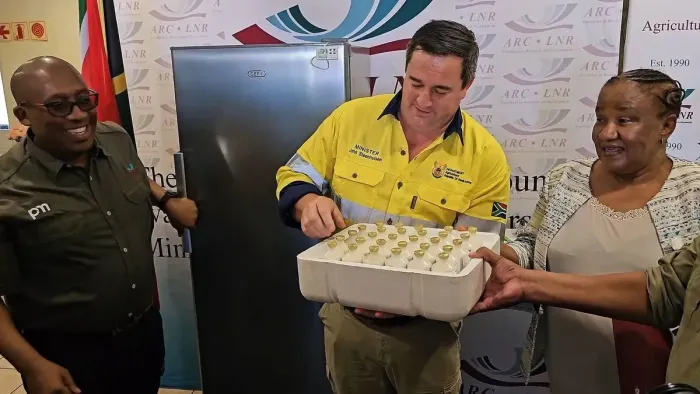
Agriculture Minister John Steenhuisen has removed veteran veterinarian Dr Danie Odendaal from the national FMD task team as the Western Cape commits R100 million to contain confirmed outbreaks across the province.
Image: Supplied
As the Western Cape intensifies its response to Foot-and-Mouth Disease (FMD) with a R100 million emergency intervention, Agriculture Minister John Steenhuisen has removed a senior livestock expert from the national task team overseeing the country’s response, Cape Argus has reported.
Dr Danie Odendaal, a veteran ruminant veterinarian and widely regarded livestock health specialist, was informed on Tuesday that his membership of the Ministerial Task Team on Controlled Diseases had been terminated with immediate effect.
In a letter to Dr Odendaal, Steenhuisen wrote: “You have, to date, not signed the required declaration, which is indeed disappointing.” He added that Odendaal’s membership was “hereby terminated and rescinded with immediate effect”.
The declaration refers to an impartiality and confidentiality undertaking required of task team members.
Dr Odendaal has served on ministerial task teams addressing foot-and-mouth disease since 2016 and has contributed veterinary expertise to national policy discussions. In recent weeks, he publicly expressed concerns about aspects of the government’s handling of the outbreak, including the vaccine strategy and the pace of the response. His removal followed those comments.
The Freedom Front Plus criticised the minister’s decision. FF Plus MP Dr Wynand Boshoff said: “For decades, Odendaal has been someone who spoke and acted on infectious diseases with authority.” He added: “Terminating his membership deals a severe blow to taking effective action against the disease.”
Dr Boshoff said the timing created the impression that Odendaal’s criticism may have influenced the decision.
A day after the termination, Steenhuisen announced the appointment of wildlife veterinarian Dr Gary Bauer to the task team to strengthen representation from the wildlife sector.
“The wildlife sector must be fully integrated into our FMD Recovery Plan,” Steenhuisen said.
Steenhuisen warned: “The stakes are extremely high. If we do not get this right, the consequences for both livestock and wildlife will be long-lasting.”
The department has stated that South Africa will pursue a phased national vaccination programme aimed at regaining FMD-free status with vaccination recognition from the World Organisation for Animal Health. Buffalo are recognised as natural reservoir hosts of the virus in southern Africa, and the department has emphasised biosecurity, movement controls and targeted vaccination in high-risk zones.
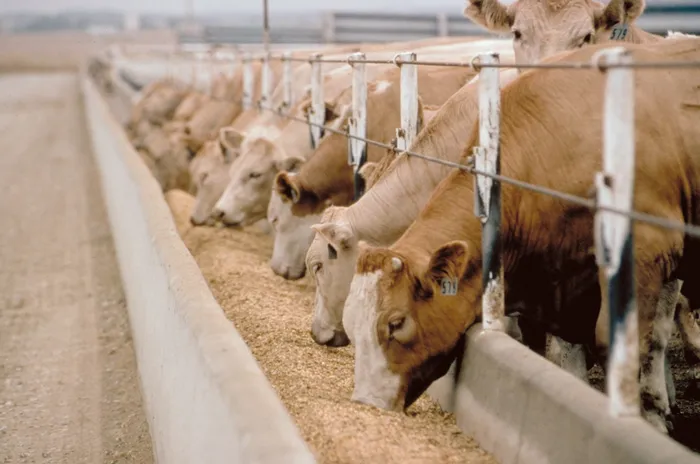
Farmers are taking a knock because of the foot-and-mouth disease
Image: FILE
The developments come as the Western Cape manages confirmed and suspected FMD cases in parts of the province. The virus was confirmed in Mbekweni, near Paarl, on 6 February, with suspected cases reported in George, Mossel Bay, Mfuleni, Makhaza and Kalkfontein.
Premier Alan Winde announced that the Western Cape Government would allocate R100 million to procure vaccine doses and implement a 21-point containment plan.
“We are acting swiftly with all stakeholders to get ahead of this outbreak,” Winde said.
He added: “Our focus is on protecting a critical multi-billion rand industry that employs 50,000 residents.”
Since 4 February, 24-hour livestock border controls have been introduced, movement of animals in affected areas has been restricted, and vaccination of affected and surrounding herds has commenced.
FMD is a controlled disease affecting cloven-hoofed animals, including cattle, sheep, goats and pigs. It does not infect humans but spreads rapidly through direct contact and contaminated equipment, vehicles and clothing.
Separately, the SA Poultry Association has raised concerns about what it describes as inconsistent regulatory approaches between foot-and-mouth disease and avian influenza vaccination programmes. SAPA chief executive Izaak Breitenbach said: “We raised this inconsistency with the relevant government committee and were advised to take it up directly with the minister.”
He said foot-and-mouth vaccinations appeared to face fewer regulatory hurdles than avian influenza vaccination approvals. “State veterinarians are being deployed to assist cattle farmers … By contrast, poultry producers are expected to bear the full cost,” Breitenbach said.
The Department of Agriculture had not publicly responded to SAPA’s claims at the time of publication.
IOL News