Ramaphosa plans to hold municipal managers accountable for service failures
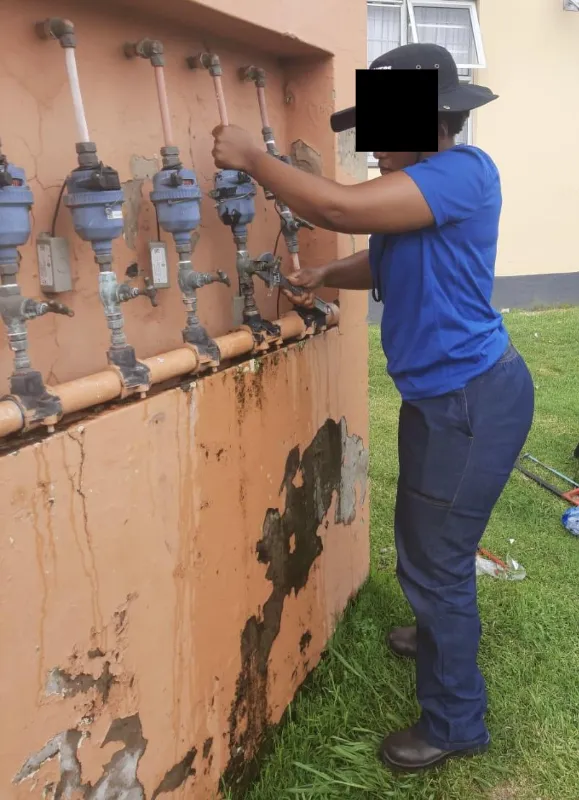
President Cyril Ramaphosa has announced harsher actions against municipal officials who fail to deliver basic services, such as water, to communities.
Image: Independent Media Archives
Ahead of the local government elections scheduled for late this year, President Cyril Ramaphosa has promised to fix broken municipalities by, among other things, holding their senior managers personally accountable for failing to deliver services, including water.
Delivering the State of the Nation Address (SONA) on Thursday evening, Ramaphosa said the government has already laid criminal charges against 56 municipalities that have failed to meet their obligations.
“We will now move to lay charges against municipal managers in their personal capacity for violating the National Water Act.”
He said communities were experiencing water shortages because municipalities were diverting large amounts of money meant for upgrading and maintaining water infrastructure to other things.
He said many municipalities’ administrations were weak because they are governed by patronage “rather than technical capacity and merit”.
Auditor-General Tsakani Maluleke has recently diagnosed the local government sector with insufficient accountability, failing service delivery, poor financial management and governance, weak institutional capability, and widespread instability.
“She says that arresting the decline of local government will require our collective action.
“We are now taking collective action,” the president said.
He announced that to address the challenges facing municipalities, the state has introduced a new R54 billion incentive for metros to reform their water, sanitation, and electricity services.
“This will ensure that revenues from water usage are put straight back into fixing pipes, reservoirs, and pumping stations.
“Water outages are a symptom of a local government system that is not working,” he said.
He said that in the coming months, the government will finalise a revised White Paper on Local Government to make the municipal system more effective and better functioning than the current system, which he said is too complex and fragmented.
He said smaller municipalities were failing because they were given more responsibilities than they could handle.
“We will propose fundamental changes that recognise the reality that some municipalities can take on more functions than others, and that we need a differentiated approach to municipal powers and responsibilities.”
Ramaphosa wants municipalities to employ senior officials who are academically qualified for the jobs they are hired for, meaning that the filling of posts through political influence would soon be a thing of the past.
“Where municipalities fail, we will strengthen the ability of the national government to intervene more quickly and to direct corrective measures in the interests of serving our people better. These changes may be difficult. But they must be done.
“While these fundamental reforms are under way, we will continue to implement targeted support to improve the delivery of basic services through the Presidential Working Groups on eThekwini and Johannesburg.”
He noted that while progress in stabilising eThekwini has renewed investor confidence, much more needs to be done in Johannesburg to address collapsing infrastructure, financial mismanagement, and interruptions in electricity and water supply.
There will now be a coordinated approach between traditional leaders and municipalities in terms of service delivery.
bongani.hans@inl.co.za