‘Blatant name-dropper, attention-seeker': SA’s first democratic police commissioner slams Paul O’Sullivan
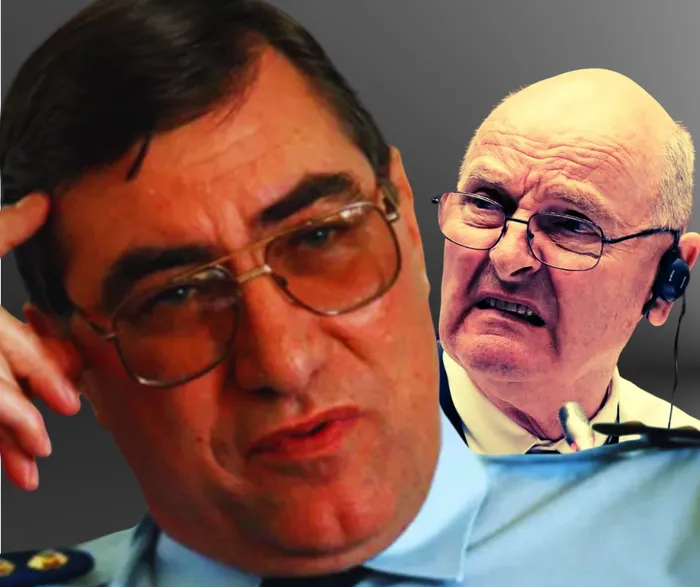
South Africa’s first post-apartheid national police commissioner, George Fivaz, has described controversial forensic investigator Paul O’Sullivan as a “blatant name-dropper” who seeks attention by creating the impression that he is a big police expert.
Image: IOL Graphics / Independent Newspapers
South Africa’s first post-apartheid national police commissioner, George Fivaz, has described controversial forensic investigator Paul O’Sullivan as a “blatant name-dropper” who seeks attention by creating the impression that he is a big police expert.
Fivaz made the remarks during an interview on the African Renaissance Podcast, hosted by former EFF heavyweight Dr Mbuyiseni Ndlozi.
Fivaz was appointed in 1995 by President Nelson Mandela, and became the first national commissioner of the newly established South African Police Service (SAPS) under democracy.
He was tasked with consolidating 11 separate policing agencies into a unified national force.
Over five years, Fivaz merged the agencies into a single cohesive service.
His term ended in January 2000, and he was succeeded by the late Jackie Selebi, who led the SAPS from January 2000 until January 2008.
Selebi was later placed on extended leave, charged with corruption and died in 2015.
Fivaz is widely regarded as the only national commissioner to complete a full term with an unblemished record.
Reflecting on his working relationship with Mandela, South Africa’s first democratically elected president, Fivaz said he had strong political backing.
“I worked well with him. He supported me in everything that I did,” Fivaz said.
Mandela served as president from 1994 to 1999 and died in 2013 at the age of 95.
Fivaz said he also had a good working relationship with Mandela’s successor, Thabo Mbeki, who served as president from June 14, 1999, to September 24, 2008, after serving as deputy president.
“We had a good relationship. It was always a pleasure. I think he had a lot of trust in me,” Fivaz said, adding that Mbeki supported him throughout his tenure.
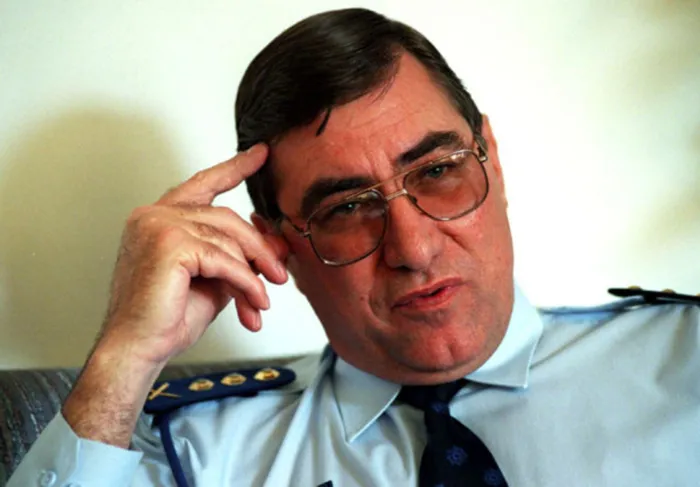
Former national commissioner George Fivaz says Paul O’Sullivan is creating a false impression that he is a leading policing authority, insisting he is “not a police expert”.
Image: File
Turning to current policing tensions, Fivaz referred to KwaZulu-Natal provincial commissioner Lieutenant General Nhlanhla Mkhwanazi, suggesting that political support is critical for effective leadership.
“Why is it that Nhlanhla is going the way he did? He never had the right political support,” Fivaz said.
He said that the current national commissioner, General Fannie Masemola should have supported Mkhwanazi more strongly.
Mkhwanazi is widely regarded as a tough stance law enforcer with a firm position against corruption.
In July last year, Mkhwanazi publicly alleged that elements within the justice system were shielding criminal networks and interfering politically in police operations.
His claims followed the controversial disbandment of the KwaZulu-Natal Political Killings Task Team (PKTT), which had been investigating high-profile assassinations.
Mkhwanazi accused then-now suspended police minister Senzo Mchunu of involvement in the decision to disband the unit.
The allegations led to President Cyril Ramaphosa to establish the Madlanga Commission of Inquiry to investigate the claims.
Fivaz said Mchunu had no authority to close or open police units.
“The minister is not entitled to close units and to open units. That authority lies with the commissioner,” Fivaz said.
He added that if Mchunu ordered the disbandment of the PKTT, “then he was wrong”.
“You know, so if it's true that he decided to close the unit with the cooperation of Mary De Haas, then he was wrong,” he said.
De Haas, who is the KZN-based researcher and crime activist, had requested the disbandment of the unit, a move that generated public concern.
At the centre of the dispute is O’Sullivan, a controversial forensic investigator accused by critics of peddling information and overstating his expertise.
Asked about O’Sullivan, Fivaz responded, “Who’s that?
He said he met O’Sullivan only once while still serving as commissioner, after reports emerged that he might take up a United Nations-related policing role in Ireland - an offer he said he declined.
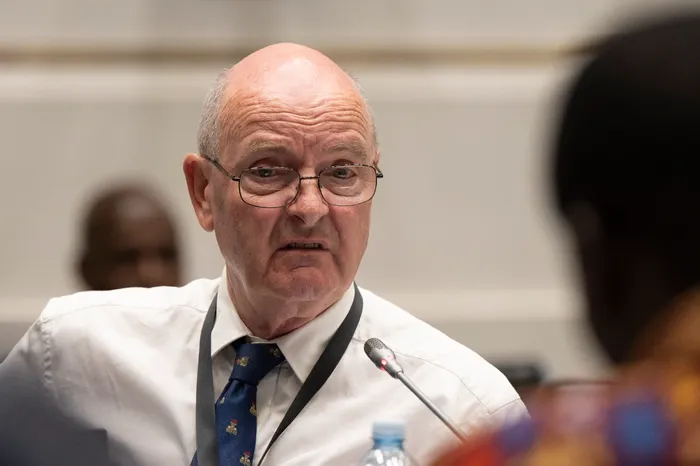
Former national commissioner George Fivaz has rubbished claims linking him to controversial forensic investigator Paul O’Sullivan.
Image: Armand Hough
According to Fivaz, O’Sullivan secured a meeting with him under the pretext of sharing important information.
“He said, ‘If you don’t take me with you, you’re going to be dead in the water,’” Fivaz recalled. “I told him I wasn’t going anywhere.”
Fivaz said that was the last substantive interaction he had with O’Sullivan.
“The man doesn’t know me,” he said. “I’m astonished that he’s saying he’s well known to George Webers. I don’t know him.”
Fivaz accused O’Sullivan of portraying himself as a leading forensic expert without clear credentials.
“I don’t know what his qualifications are. I don’t know who he is working for. I think he’s a blatant name-dropper,” he said.
“He’s seeking attention. He’s seeking to create the impression that he’s the big police expert, which he’s not.”
“He's not a police expert, as far as I know. He worked for ACSA. Yes, he was the head of airport security, but that doesn't make you a police expert,” Fivaz added.5
O’Sullivan recently testified before Parliament’s ad hoc committee investigating allegations of corruption within the criminal justice system.
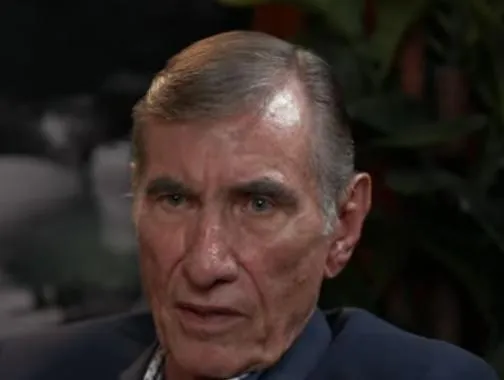
Former SA’s first democratic police commissioner George Fivaz has taken direct aim at Paul O’Sullivan, accusing him of inflating his credentials and chasing public attention.
Image: Screenshot
He said his appointment as group executive for aviation security at Airports Company South Africa (ACSA) was made after the role was created specifically for him.
He acknowledged that he did not hold formal academic qualifications for the executive position but said he was recruited based on his operational performance, including 12 years as a police reservist.
Speaking to journalists outside Parliament in Cape Town, O’Sullivan described Mkhwanazi, Masemola and crime intelligence head Lieutenant General Dumisani Khumalo as “rogue” and alleged they belonged “in prison”.
“The rogue elements in the police are a problem that has been in the country for more than 20 years,” O’Sullivan said.
“Fifteen generals and 18 brigadiers are facing criminal charges because of the investigations that I have done.”
Fivaz rubbished O’Sullivan’s characterisation of Mkhwanazi.
“That is so far removed from how I know Nhlanhla Mkhwanazi,” he said.
“I really know the man. I think he knows the man better, but that's Paul O'Sullivan.”
simon.majadibodu@iol.co.za
IOL Politics