Can Johannesburg reclaim its glory, overcome political turmoil and service delivery challenges?
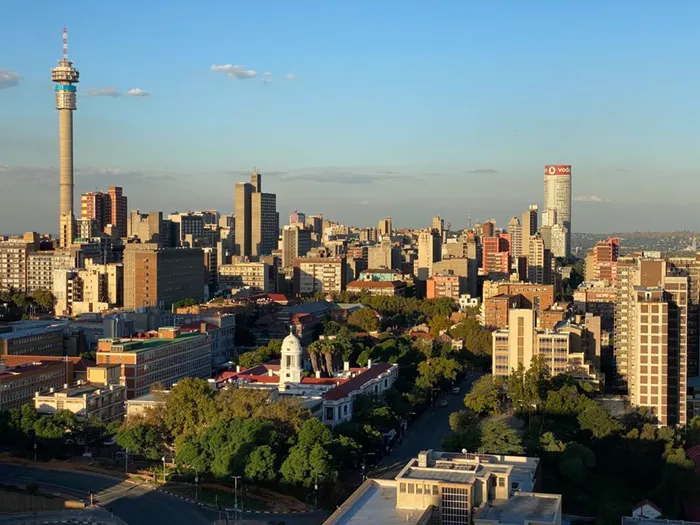
The City of Johannesburg has scores of attractions for G20 delegates to enjoy.
Image: File
Johannesburg has long stood as Africa’s economic powerhouse — a city built on gold, enterprise, and ambition. As the continent’s financial hub, it once symbolised opportunity, growth, and global competitiveness.
However, in recent years, the city’s shine has begun to fade. Rising crime, political instability, and governance failures have eroded investor confidence and public trust, threatening Johannesburg’s status and undermining the promise that once defined its skyline.
The city has been gripped by political instability, with the current Mayor Dada Morero facing repeated no-confidence motions through a deeply fractured City Council — reigniting debate over whether Africa’s economic powerhouse can still be salvaged from political instability and service delivery collapse. In recent years, the city has grappled with electricity supply interruptions, water shortages and deteriorating infrastructure.
Opposition parties and some coalition partners have framed the recurring motions against Morero as accountability measures. However, the mayor has rejected this narrative, arguing that the motions reflect political manoeuvring rather than genuine governance concerns.
Morero said the repeated challenges must be understood within the context of a “highly fragmented and unstable” council environment.
“Johannesburg has experienced frequent shifts in political alliances, leading to motions of no confidence that are often used as tools to destabilise leadership, renegotiate political deals, or serve narrow party interests,” he said.
He questioned whether the motions were driven by service delivery failures or internal power struggles, adding that while he acknowledges the city’s long-standing service delivery problems, the timing and frequency of the motions suggest political tactics rather than principled oversight.
“Real governance issues are best tackled through council oversight, portfolio committees and continuous engagement — rather than repeated attempts to remove an elected official before their programmes have had a chance to deliver results,” Morero said.
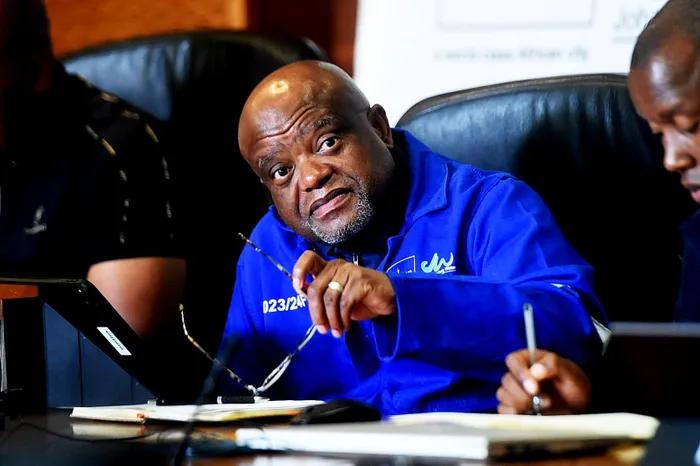
Joburg Mayor Dada Morero has been facing repeated motions of no confidence moves through a deeply fractured City Council.
Image: Itumeleng English / Independent Newspapers
Mayor vows stability amid service delivery crisis
Responding to criticism from opposition parties and coalition partners, Morero said his administration is focused on action rather than rhetoric. He outlined efforts to improve coordination within the coalition, strengthen oversight and transparency, and promote stability within the administration to allow officials to focus on infrastructure, service delivery and financial recovery.
“I am dedicated to working with all council parties, including critics, to put residents’ interests first,” Morero said. “Addressing Johannesburg’s challenges calls for stability, cooperation, accountability and firm leadership — rather than instability.”
His comments come as residents continue to face deteriorating infrastructure, unreliable basic services, a billing crisis, crime, and the collapse of parts of the city’s central business district — issues that have eroded public trust in municipal governance.
Creation of deputy mayor position amid service delivery crisis
Johannesburg’s council has, for the first time, approved the establishment of a deputy mayor post — a decision that has highlighted deep political divisions within the city.
The motion was met with resistance, with several councillors voting against it and others choosing to abstain. Those in favour argued that the new role would help the mayor manage the executive more effectively and ensure stability in leadership.
However, the Democratic Alliance (DA) has strongly criticised the move, calling it “appalling” and “ridiculous.”
“The DA in Johannesburg is outraged that ANC-led coalition partners supported the creation of this position while residents continue to endure failing service delivery,” said DA Johannesburg speaker designate Councillor Alex Christians.
Christians said the DA’s 2016 estimates show the new office would cost residents at least R10 million to establish.
“Since the ANC-led coalition assumed power, the city’s finances and service delivery have deteriorated. We have seen failures to pay Rand Water, contractors working on the Brixton water tower, and most recently, unpaid Pikitup workers, which brought services to a halt,” he said.
He added that these challenges reinforce the DA’s position that the deputy mayor role is unnecessary and does not benefit Johannesburg residents at this time.
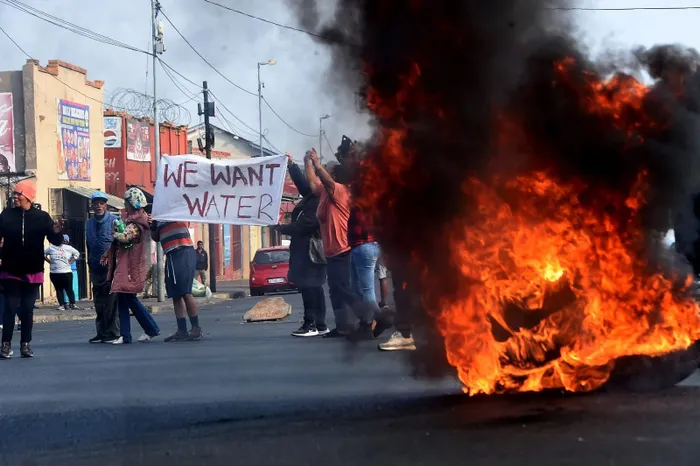
Protestors holding a sign reading “We want water” during a demonstration in Coronationville, Johannesburg.
Image: Itumeleng English/Independent Newspapers
A decade of instability
Political analyst Khanyi Magubane told IOL that Johannesburg’s crisis is rooted in coalition instability dating back to 2016, which has resulted in an unprecedented turnover in leadership.
“The City of Johannesburg’s mayoral position has been occupied by no fewer than 10 different politicians,” Magubane said, listing Parks Tau (around 2016), Herman Mashaba (2016–2019), Geoff Makhubo (2019–2021), Jolidee Matongo (2021), Mpho Moerane (2021), Mpho Phalatse (2021–2022), Dada Morero (2022; initial brief term), Thapelo Amad (2023), Kabelo Gwamanda (2023–2024), Dada Morero (re-elected in 2024/2025).
She said coalition politics has consumed political leaders with power struggles instead of service delivery.
“Motions of no confidence, political alliances, arrangements and re-arrangements have become the preoccupation rather than the people of Johannesburg — and this can be seen in the degradation of infrastructure, slow turnaround in fixing public amenities, decreased payment for utilities by angry residents and those who cannot afford to pay,” she said.
Magubane said responsibility lies both with the municipality and the political parties represented in council, warning that failure at local government level undermines the entire three-tier system of governance.
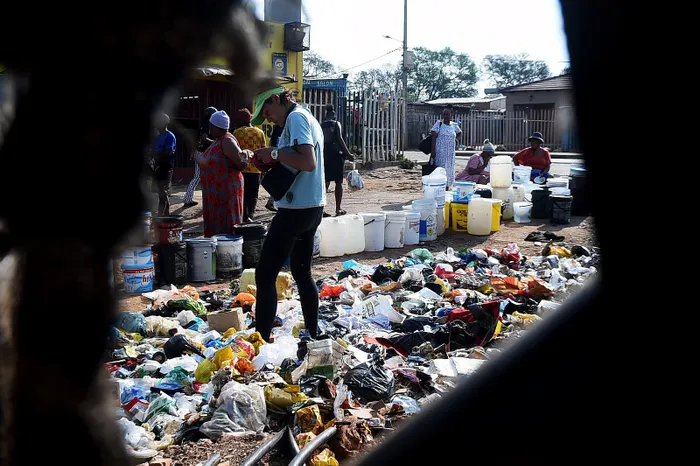
Johannesburg’s water infrastructure problems leave families without water, forcing many to rely on scarce and unreliable tankers.
Image: Itumeleng English/ Independent Newspapers
Can Johannesburg be salvaged?
Despite the bleak picture, Magubane said Johannesburg “can and should be saved” — but only with fundamental reforms to coalition governance and political accountability.
She called for stronger legal frameworks to regulate coalition arrangements, including laws that prevent parties from exiting coalitions at will, arguing that stability would encourage political maturity and service-focused governance.
“There is an urgent need to promulgate and write into law how coalitions will work, specifically the ease with which parties can come in and out of coalition arrangements,” she said. “Parties should be locked into those arrangements for a minimum period.”
In the short term, she said a single party winning an outright majority would restore stability. In the longer term, she proposed a “recommitment charter” signed by all coalition partners, pledging to prioritise residents’ interests over political ambitions, remain in coalition for at least three years, and set clear performance targets for the mayor and executive.
Such a charter, she said, should focus on reviving the city, fixing potholes, streetlights and decaying infrastructure, resolving the billing crisis, tackling crime, gangsterism and hijacked buildings, and restoring the Johannesburg CBD.
“Success looks like residents seeing tangible change in their local environment, the Joburg CBD gaining back its lustre, and services working efficiently again,” she said, adding that public safety leadership must be strong and decisive.
Political survival vs city survival
As motions of no confidence loom, Morero’s political survival is increasingly tied to Johannesburg’s broader struggle to reclaim its status as one of Africa’s strongest economic hubs. While political battles rage inside council chambers, residents continue to bear the cost of instability — raising the pressing question: can the city be rescued before the next leadership collapse?
sinenhlanhla.masilela@iol.co.za
IOL News
Get your news on the go. Download the latest IOL App for Android and IOS now.