Ramaphosa challenges Gauteng High Court ruling on National Health Insurance
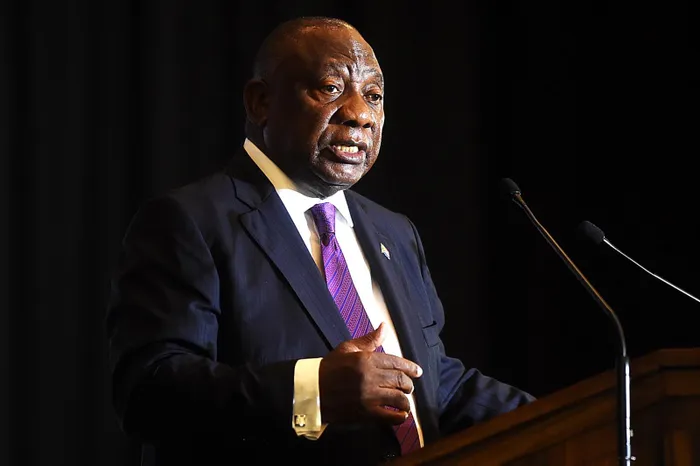
President Cyril Ramaphosa is set to square off against the Board of Healthcare Funders of Southern Africa and the SA Private Practitioners Forum over his decision to sign the National Health Insurance Bill into law.
Image: Itumeleng English / Independent Newspapers
President Cyril Ramaphosa and Health Minister Dr Aaron Motsoaledi have asked the Constitutional Court to overturn the Gauteng High Court, Pretoria, judgment declaring that the National Health Insurance (NHI) is reviewable.
In May last year, Gauteng High Court Judge Mpostoli Twala ruled in favour of the Board of Healthcare Funders of Southern Africa (BHF) and the SA Private Practitioners Forum’s (SAPPF’s) case against Ramaphosa and Motsoaledi.
Judge Twala ruled that the Gauteng High Court had jurisdiction to entertain the matter and declared that the president's decision to assent to and sign the NHI Act was reviewable.
In addition, Ramaphosa was ordered to furnish the record of the impugned decision within 10 calendar days of the court’s order. Ramaphosa and Motsoaledi have now asked the Constitutional Court to grant them leave to appeal directly to the apex court against the whole of Judge Twala’s judgment.
They also want the High Court orders to be set aside and substituted with orders stating in the BHF judgment handed down in November 2024, and the review application by the SAPPF is dismissed with costs.
Additionally, they want their appeal to be upheld and Ramaphosa’s points of law to be upheld as well.
The BHF and SAPPF launched separate review applications at the High Court seeking to review and set aside Ramaphosa’s decision to assent and sign the NHI Bill.
“The presidential assent and signature are constitutional obligations as governed by sections 79 and 84(2) of the Constitution and, therefore, any allegations of a failure to comply therewith are matters of which in the submission of the president only the Constitutional Court has jurisdiction in terms of Section 167(4) of the Constitution,” reads the government’s papers filed at the apex court.
Ramaphosa wants the country’s highest court to determine whether he enjoyed exclusive jurisdiction, or whether he failed to fulfill his constitutional obligations, which is divested from the High Court’s jurisdiction.
“The High Court’s judgment has far-reaching consequences that have the capacity fundamentally to alter the nature of constitutional democracy, including the role to be played by the president and the legislature,” read the court papers.
The president believes that the idea that his record of decision of assent and signature must be disclosed is at odds with the text and purpose of the Constitutional Court rules and ignores the very politically sensitive issues that this entails.
Ramaphosa warned that the questioning of his decision-making has profound and far-reaching consequences for the exercise of the obligations he has, not only in the present matter, but in the future, as it fundamentally and squarely engages issues regarding the Office of the Presidency as well as its ability to function, and the separation of powers.
loyiso.sidimba@inl.co.za