R100 to R300 just to apply: Thousands compete for limited spots as universities collect millions in application fees
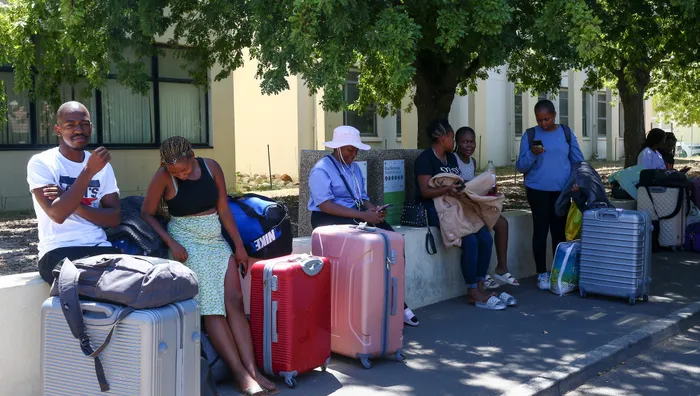
Some universities across South Africa say application fees are necessary to cover staffing and administrative costs, however, student unions argue the charges block access to higher education for poor and rural students.
Image: Leon Lestrade/Independent Newspapers
Public universities say application fees are not about making a profit, but about covering basic costs such as staff salaries, administration, and technology.
On average, university application fees range from R100 to R300, which are once-off, non-refundable, and mandatory.
On average, if a university received 100,000 applications and charged R100 per application, it would rake in R10million.
In most cases, international applicants pay higher application fees because of the additional administrative work required to process their applications.
There have been growing calls from student organisations, which argue that application fees place an unfair financial burden on learners from low-income and rural households and serve as an early barrier to access to higher education.
Almost all of South Africa’s 26 public universities require an application fee, with proof of payment often needed before applications can be submitted.
While some institutions have waived these fees, either entirely or for South African students only, many continue to charge them.
Although the 2026 academic year has just begun, applications for the 2027 intake are expected to open in April, with non-refundable application fees still required at several universities.
The South African Union of Students (SAUS), which represents student representative councils (SRCs) across the country, has voiced strong opposition to the continued charging of application fees.
SAUS spokesperson Dr Thato Masekoa said students from low-income households and rural areas consistently raised concerns about the fees being “an early and unnecessary barrier” to higher education.
“Many prospective students apply to multiple institutions to improve their chances of admission, which results in cumulative costs that families simply cannot afford,” Masekoa told IOL News.
“For learners from rural communities, this burden is often compounded by limited access to online platforms, data costs, and banking facilities, making even ‘small’ application fees exclusionary in practice.”
However, despite strong opposition, universities have defended fees.
The University of Cape Town (UCT) said its application fee - R100 for South African and SADC applicants, and R300 for non-SADC applicants - was intended to cover administrative costs.
“Application fees cover the administrative costs associated with the labour-intensive process of manually processing the large volume of applications received annually,” said UCT spokesperson Elijah Moholola.
When asked whether the university does not think charging the fee prevents or discourages these prospective students from applying, Moholola said there was no evidence to support this.
“This question is not empirical. UCT has not seen a decline in applications. For example, the university received 102,000 applications for admission in 2026, compared to 98,000 the year before.”

Student unions are calling on university applicantion fees to be scrapped as the argue the charges block access to higher education for poor and rural students.
Image: Armand Hough/Independent Newspapers
UCT received 102,182 first-year applications for approximately 4,000 available places.
Wits University registrar Carol Crosley also defended the institution’s R100 undergraduate application fee, saying it was approved in consultation with the Department of Higher Education and Training and Universities South Africa.
“The fee has remained unchanged for the past seven years,” Crosley said.
She said Wits employs hundreds of student assistants and part-time staff to assist with applications, administration, and orientation, and that processing documents and verifying applications requires specialised skills.
Wits received more than 160,000 applications for about 5,800 places.
The Vaal University of Technology (VUT) said its application fee - R110 for South African applicants and R120 for international applicants - helped cover the costs of processing large volumes of applications.
VUT received 210,849 applications for 10,881 available spaces.
“There is no evidence to suggest that the application fee discourages prospective students from applying,” said VUT spokesperson Sibusiso Nkosi.
“The University continues to receive high volumes of applications annually, with many programmes being fully subscribed.”
He said removing the fee would place additional financial pressure on the university due to the costs of system development, maintenance and cybersecurity.
The University of Pretoria (UP) said its R300 non-refundable application fee helped cover important costs.
“Application fees serve several essential purposes, including but not limited to covering costs for staff salaries, physically verifying applicant details and managing placement into programmes and IT systems and license fees,” said Rikus Delport, the university’s director for institutional development.
“Processing such a large number of applications requires dedicated as well as additional resources during the busy application process.”
Delport said the fee helps offset these costs as the work is done regardless of whether the applicant is admitted.
“It’s important to note that the university does not profit from application fees. The fee barely covers the expenses involved in processing the applications.”
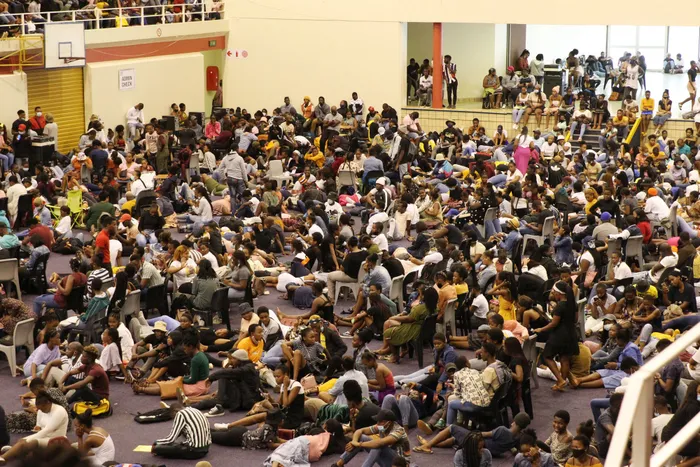
Some public universities maintain that their application fees are not a source of profit, as student unions raise concerns over the ongoing requirement for applicants to pay these fees.
Image: Doctor Ngcobo/Independent Newspapers (Archives)
Delport said it was important to clarify how the application and registration process works, as there were many misconceptions and false rumours.
“For example, if the University of Pretoria receives about 355,000 applications annually, only around 42,000 applicants meet the university’s admission requirements,” he said.
“Of those, the university can accommodate approximately 9,000 first-year students. Only applicants who meet the admission criteria are required to pay the R300 application fee. Applicants facing financial challenges may request that the fee be waived by submitting a motivation.”
The university charges a non-refundable R300 application fee for both South African and international students, payable before submitting an online application.
The fee is waived for applicants with a total household income of R150,000 a year or less.
The university reported that of the roughly 340,000 applicants who began an application, about 57,000 met some form of the admission requirements.
However, only about 16,000 were offered admission for approximately 9,700 available spaces.
The University of Johannesburg (UJ) said it was among the first institutions to introduce free online applications as part of a digital-first admissions strategy.
UJ charges a R200 fee only for paper-based applications, which it said are now rarely used.
“Online applications are faster, more accurate, and significantly more cost-effective than manual, paper-based submissions, while also enabling efficient large-scale data management and robust selection processes,” said UJ spokesperson Herman Esterhuizen.
According to him, UJ does retain a minimal application fee for manual, paper-based submissions.
“However, this option is rarely used, as applicants who apply online are not required to pay any application fee. The digital platform has therefore become the primary and preferred channel for prospective students.”
The university processed more than 450,000 applicants who submitted 870,000 study choices for an intake of 11,200 first-year students.
North-West University (NWU) offers free applications for South African citizens but charges international applicants a non-refundable R600 fee due to additional administrative requirements.
“(The application) is due to the fact that a lot more administration is involved with international students.”
“As indicated, it is purely for administration purposes, because the process of getting an international student here involves a lot more admin and processes,” said NWS spokesperson Louis Jacobs.
Other universities, including the Central University of Technology (CUT), University of Venda (Univen), University of the Free State (UFS) and Walter Sisulu University (WSU), offer free applications for both South African and international students.
Meanwhile, Masekoa said SAUS believed application fees filtered out poverty rather than academic potential, undermining the constitutional right to education.
“There is currently no uniform national policy, which leaves access to higher education dependent on the discretion of individual institutions rather than a coherent, student-centred framework,” he said.
He said SAUS has called for the abolition of application fees, or at minimum automatic waivers for NSFAS-qualifying students and learners from quintile 1 to 3 schools.

Student unions are angered by the continued requirement for applicants to pay these fees, which some universities say help cover staff salaries and administrative costs.
Image: Oupa Mokoena / Independent Newspapers
Educational activist Hendrick Makaneta echoed these concerns, saying application fees limited access for poor and rural students.
According to him, “there is no justification for fees in these times of online applications.”
“We acknowledge that administrative and IT costs still exist but those should not lead to exorbitant fees. Alternatives must include the government funding for admissions.”
“Application fees can negatively influence enrollment trends by shrinking applicant pools from underrepresented groups and this actually limits diversity and also hampers efforts for transformation particularly in public universities.
“The government should standardise application fees at a national level,” Makaneta added.
The South African Congress of Students (SASCO) also criticised application and registration fees, describing them as systemic barriers to entry.
“Institutions use application fees to reduce the number of applicants from working-class communities,” said SASCO national spokesperson Thuto Mashile.
She said waiving application fees should be the first step towards a more equitable higher education system.
“UJ had 600,000 applicants for 10,000 spots. Others, which do have application fees, see fewer applicants. Empirically, institutions use application fees to reduce the number of applicants from working-class communities,” she said.
IOL News has reached out to several universities, including the University of Limpopo (UL), Tshwane University of Technology (TUT), Nelson Mandela University (NMU), Mangosuthu University of Technology (MUT), UKZN, and the University of Fort Hare (UFH), but did not respond to requests for comment.
simon.majadibodu@iol.co.za
IOL News