Film and TV industry hands urgent memorandum to DTIC as crisis deepens
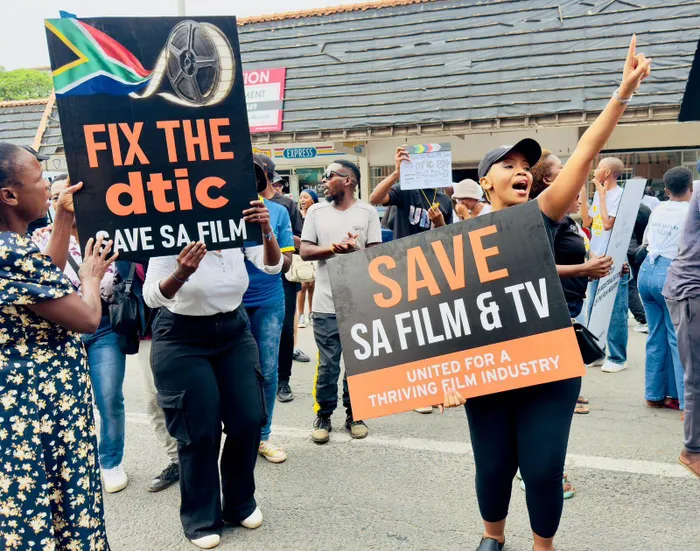
Protesters call for action as the film incentive system faces collapse, threatening thousands of jobs.
Image: Supplied
Hundreds of South African film and television workers gathered outside the Department of Trade, Industry and Competition (DTIC) in Pretoria on Thursday, staging a mass demonstration to demand urgent intervention in a sector they say is collapsing under the weight of a broken incentive system.
At the centre of the protest was a memorandum of demands formally directed to Minister Parks Tau, Minister of Trade, Industry and Competition, calling for immediate stabilisation and structural reform of the Film and Television Production Incentive.
Organisers said the memorandum represents the core purpose of the demonstration, a direct appeal for urgent action to save an industry on the brink of collapse.
The protest formed part of the broader SAVE SA FILM JOBS campaign and was organised by the Independent Producers Organisation (IPO) alongside a national coalition of industry bodies, including Animation SA (ASA), the South African Guild of Actors (SAGA), the Writers’ Guild of South Africa (WGSA), the Personal Managers’ Association (PMA) and the South African Screen Federation (SASFED).
Industry leaders said the incentive system, once a cornerstone of South Africa’s film economy, has become dysfunctional, paralysed by administrative failures, stalled approvals, and unpaid rebates — leaving producers unable to operate and workers without jobs.
“The memorandum is not symbolic, it is a demand for urgent steps to stabilise and reform the incentive system,” organisers said. “Without immediate intervention, the industry cannot survive.”
Protesters warned that the crisis has already caused widespread job losses, business closures, and the collapse of multiple productions, pushing thousands of freelancers and workers into unemployment.
Since 2020, the sector has reportedly contracted by nearly 50%, with hundreds of millions of rands lost in foreign direct investment due to the failure of the incentive system.
“Our decline is the direct result of a poorly implemented, red-tape-riddled rebate system whose approvals have stalled, and a department that refuses to engage meaningfully with the industry,” organisers said.
“When the film incentive fails, it is not just producers who suffer, the entire ecosystem collapses.”
Prominent actors, producers and creatives joined the protest, lending their voices to the growing outcry.

Actress Thuli Thabethe highlights the importance of the film industry for future generations during the protest.
Image: Supplied
Actress Thuli Thabethe told the Saturday Star the fight was about the future of the industry itself.
“We are here because it matters. We are not only in people’s living rooms to entertain them — we are here because this industry matters,” she said.
“This is the only industry I know. I want it to be better for myself and for the people who come after me. We need change.”
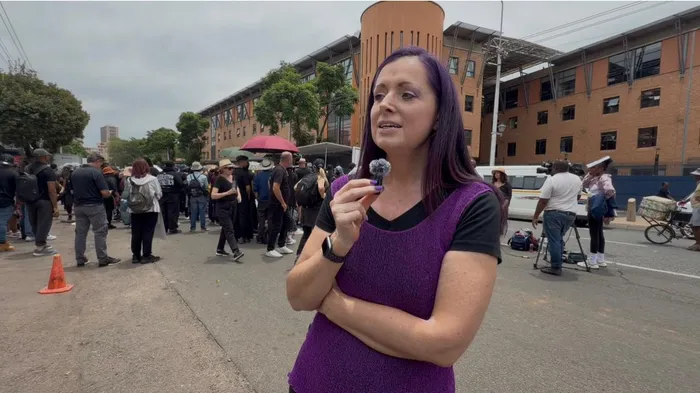
SAGA representative Carylnn De Waal-Smit, says the South African film sector faces a crisis, workers stand together to demand a sustainable future.
Image: Supplied
SAGA representative Carylnn De Waal-Smit said the system had failed workers at every level.
“So today is about us standing together as an industry against a system that has failed us. At some point the incentive worked, but in the last few years it hasn’t, it has failed the industry because it’s dysfunctional.”
Protesters said funds allocated through the incentive are not being paid out, making South Africa increasingly unattractive to international productions.
“It’s no longer economically viable for international productions to come here,” De Waal-Smit said.
“They’ve gone elsewhere.”
Industry leaders warned that South Africa is losing ground to countries such as Spain, Canada, the UK and Australia, despite having world-class crews, locations, skills and infrastructure.
The Pretoria protest followed earlier demonstrations in Cape Town, reinforcing what organisers described as a national mobilisation for reform.
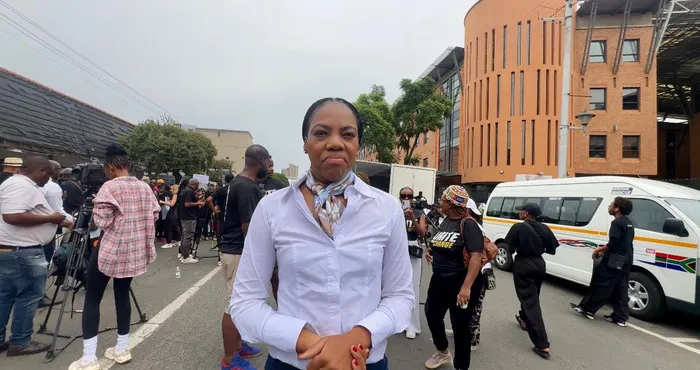
Build One South Africa (BOSA) leader Nobuntu Hlazo-Webster says political support for the film industry grows as leaders join the call for urgent reform in the incentive system.
Image: Supplied
Political support was also visible at the demonstration. Build One South Africa (BOSA) leader Nobuntu Hlazo-Webster said the party was rallying behind the industry because of its economic importance and the seriousness of its claims.
“As a political and public figure, it is my responsibility to hear out an industry like the film industry when they say there are issues in government that are preventing them from working and contributing to the economy,” Hlazo-Webster said.
“I understand this industry well. I know the challenges. That’s why this is personal for me. What I will do is take these issues back to Parliament.”
Speakers also called on the Department of Sports, Arts and Culture, Parliament, and other government stakeholders to intervene, stressing that the crisis cannot be resolved by the DTIC alone.
While labour rights, worker protections and industry regulation were also raised, organisers said the immediate priority remains clear:
As the memorandum was handed over, the message from the industry was unified and urgent:
South Africa’s film and television sector is not asking for sympathy, it is demanding action, accountability, and intervention before an entire creative economy collapses.