Action against Mchunu delayed until Madlanga Commission concludes
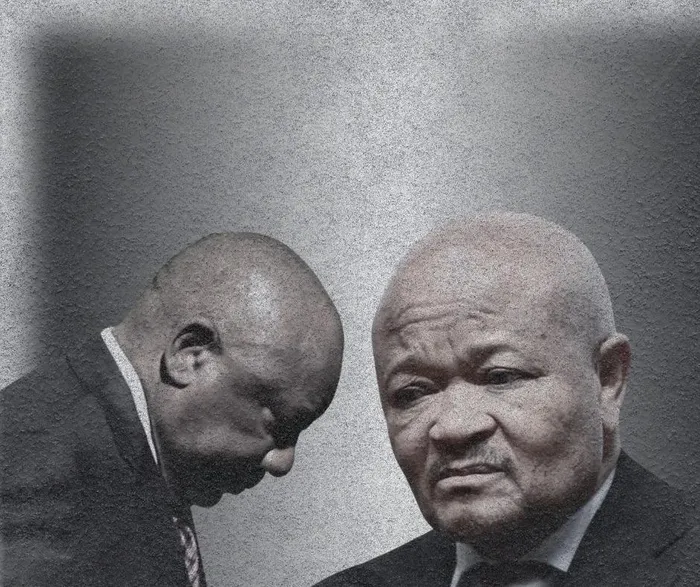
President Cyril Ramaphosa said action will be take against the corruption accused Police Minister, Senzo Mchunu.
Image: IOL Graphics
President Cyril Ramaphosa has promised decisive action against suspended police minister Senzo Mchunu, but only after the completion of the Madlanga Commission.
This week, Ramaphosa said that a number of senior police officials were earmarked for urgent investigation and possible prosecution.
Speaking on the Clement Manyathela Show, Presidential spokesperson Vincent Magwenya said Ramaphosa would act against Mchunu, but only once all submissions before the commission were finalised.
He declined to detail the specific findings, citing due process.
The stance has drawn scrutiny, particularly as Ramaphosa moved swiftly to authorise investigations into senior law-enforcement officers and municipal officials implicated in corruption, while Mchunu, facing serious allegations of political interference, remained on paid special leave.
Mchunu is accused of unlawfully disbanding the Political Killings Task Team (PKTT) in KwaZulu-Natal, a specialised unit credited with tackling politically motivated murders.
The allegations were brought by KZN police commissioner, Lt-Gen. Nhlanhla Mkhwanazi, and formed a central focus of the Madlanga Commission and a parallel parliamentary ad hoc committee.
According to testimonies, Mchunu ordered the immediate closure of the PKTT without consultation or review and instructed that 121 case dockets be removed from the unit.
Five of those dockets reportedly carried imminent arrest instructions.
The abrupt decision, it is alleged, stalled investigations and shielded politically connected individuals and criminal networks.
In a separate interview with the SABC, Magwenya conceded the gravity of the matter, saying the president viewed the allegations as “serious” and “deeply concerning”.
Pressed on whether Ramaphosa was legally obliged to act on the commission’s interim findings, critics argued that waiting for the process to conclude amounted to a political delay rather than a legal necessity.
During the radio exchange, it was pointed out that Mchunu had already conceded key failures, including not consulting relevant stakeholders, interfering in police operational matters, and disbanding the PKTT without conducting a review.
Those actions, the interviewer argued, directly compromised criminal investigations and should, on their own, warrant immediate removal from office.
Magwenya rejected suggestions that the president was minimising the issue. “That is precisely why the minister has been placed on special leave,” he said.
“He is not in charge of any portfolio, including the police.” He framed the president’s approach as a deliberate political and constitutional process.
“Before he acts and he will act, decisively, the president must ensure the commission concludes its work so that his decision is informed, fair and beyond reproach,” Magwenya said.
The explanation, however, contrasted with Ramaphosa’s urgent directive to establish a special police task team to fast-track investigations into senior law-enforcement officials implicated in corruption and misconduct.
Those referrals include Major-Generals Lesetja Senona and Richard Shibiri, Brigadiers Mbangwa Nkhwashu and Rachel Matjeng, and Sergeant Fannie Nkosi — all singled out for immediate criminal investigation.
Asked why similar urgency did not apply to Mchunu, Magwenya maintained that the president’s view was to allow the minister to “answer fully” before action is taken.
Ramaphosa insisted action is coming. The question increasingly being asked is not whether but when, and at what political cost.
Meanwhile, Mchunu has defended himself saying the allegations against him.
He even said he would comeback to the commission to clear his name.
kamogelo.moichela@iol.co.za
IOL Politics