Civil society demands action from Ad Hoc Committee on anti-corruption measures
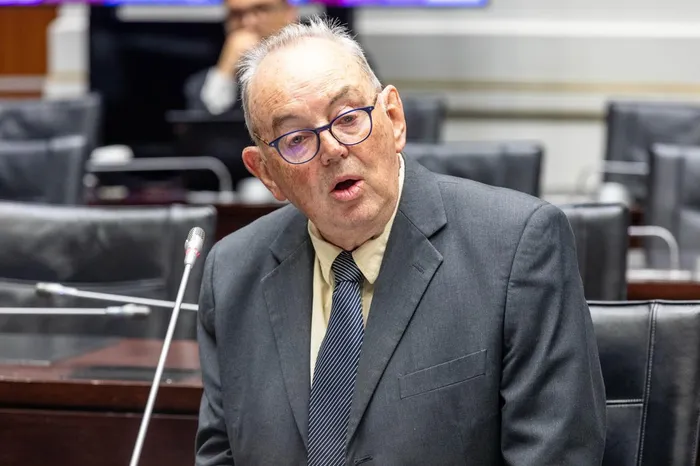
Accountability Now's Advocate Paul Hoffman says the law demands a body outside the executive control to deal effectively with corruption.
Image: Parliament RSA / Supplied
Civil society organisation, Accountability Now, said on Tuesday the criminal justice administration was dysfunctional because of rampant corruption and it was something the Ad Hoc Committee should address.
In his presentation to the Ad Hoc Committee probing allegations made by KwaZulu-Natal Police Commissioner Nhlanhla Mkhwanazi, Accountability Now’s Advocate Paul Hoffman advocated for the revision of the criminal justice administration capacity to deal with corruption effectively.
“Our law demands a body outside the executive control to deal effectively with corruption. That decision ought to have been translated into law by the previous Parliament when ordered to consider and put onto the statutes books within 18 months of the judgment handed down in March 2011,” he said in reference to the Glenister judgment.
This happened when the committee received submissions from civil society organisations on their recommendations on how the South African criminal justice system can be improved after the request by forensic investigator Paul O’Sullivan to testify virtually was rejected.
Hoffman noted that the Glenister judgment was debated in the then-Parliament, and amendments were effected to the legislation that gave rise to the Hawks, which continued to struggle in dealing with corruption effectively.
“The reason for that is not hard to find. The Hawks are a body not outside the executive control,” he said.
Hoffman said task teams and cooperation between agencies has been used to fight corruption since the dawn of democracy in the country.
“We don’t have a single body outside the executive control tasked with the business of effectively seeing off the corrupt in our midst. This negatively impacts the trajectory of South Africa.”
He urged the committee to approach its work on the basis that it was necessary to adjust the criminal justice administration system that is in place with the guidance of the Constitutional Court judgment, which has not found its way onto the statutes.
“That guidance needs to be on the statutes sooner rather than later,” said Hoffman.
He added that what was required was what has been proposed by DA MP Glynnis Breytenbach to establish a new Chapter 9 institution, which she called an Anti-Corruption Commission.
“The idea of a Chapter 9 seems to be the most obvious. None of Chapter 9 institutions answer to the executive branch other than a relevant parliamentary oversight body,” said Hoffman.
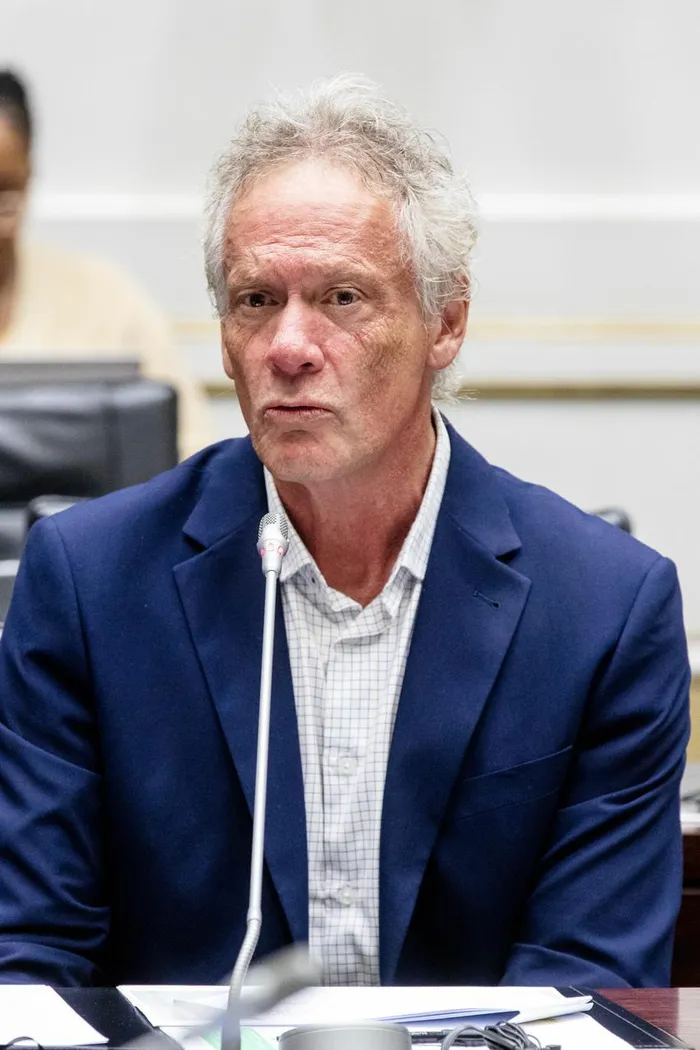
African Policing Civilian Oversight Forum's Sean Tait says there is a need to strengthen parliamentary oversight function and further insulation of SAPS operational command from executive interference.
Image: ParliamentRSA / Supplied
Sean Tait, of the African Policing Civilian Oversight Forum, said the committee should consider the need for legislative and institutional reforms to restore confidence in the criminal justice system.
“The first is to strengthen parliamentary oversight function. The second is on further insulation of SAPS operational command from executive interference. These relate to what we understand as core to the establishment of the committee and the ongoing work of the committee,” Tait said.
He noted that one concern raised by Mkhwanazi during his July 2025 media briefing was that statements he submitted to Parliament and the Police Portfolio Committee were not pursued further.
Tait said Parliament should strengthen its responsiveness to allegations or concerns that were brought to its attention.
“This could include initiating an investigation for further information or potentially calling police management to further explain the situation. We believe that it is a critical duty of Parliament to respond and address allegations of political interference in policing,” he said.
“It is beyond an issue of discretion for the committee. This is something that goes to the separation of powers, independence, and democratic policing. These allegations demand serious, immediate attention, and action by Parliament.”
He added that MPs and parliamentary staff should be capacitated and trained to deal with the rapidly changing environment of crime and security.
“It is important that Parliament has capacity and is updated to recognise and respond with best knowledge and evidence at its disposal.”
Tait also stated that Parliament should effectively track the progress and impact of its recommendations.
“The establishment of a subcommittee of police can be relevant to the criminal justice system with an ongoing mandate to scrutinise interaction between the executive of SAPS or law enforcement in the criminal justice agencies.”
mayibongwe.maqhina@inl.co.za