Solly Malatsi's directive raises concerns over Starlink's operations in South Africa
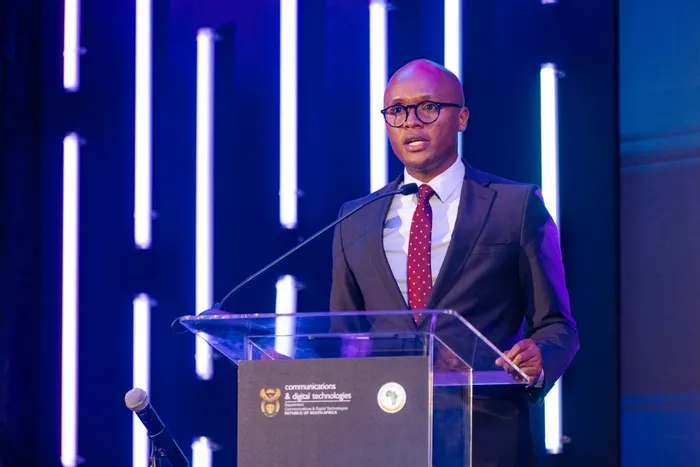
Minister of Communications and Digital Technologies Solly Malatsi.
Image: Supplied
Minister of Communications and Digital Technologies Solly Malatsi has been accused of overreaching and acting procedurally irresponsibly following his December 12 directive, which has been widely seen as an attempt to clear the path for Elon Musk's Starlink to operate in the country.
In the Government Gazette, he proposed easing Broad-Based Black Economic Empowerment (B-BBEE) licensing requirements for satellite service companies such as Starlink. This would allow for bypassing the strict 30% Historically Disadvantaged Groups (HDG) ownership requirements and replacing them with a less stringent “equity equivalent” model.
After his directive, the Independent Communications Authority of South Africa (ICASA) said it noted the publication of the policy direction. Since then, Malatsi has faced intense scrutiny since the directive.
GOOD Secretary-General Brett Herron said the minister’s directive is a dense, bizarre, and convoluted interpretation of legislation.
He said its language is argumentative instead of being neutral, and in the end, it directs only that ICASA “consider alignment” of regulations and then achieve and ensure promotion of broadband access, parity in licensing and preservation of South African digital sovereignty.
“The Policy Direction is, in its own language, a direction that ICASA only considers changing its ownership requirements for licensing. ICASA can consider ownership, equitable access and preservation of data sovereignty and conclude that its current position best achieves these objectives.
“The minister’s gazetted notice is unconvincing and clearly is driving a personal and party-political agenda, but his rambling motivation lacks objectivity and even clarity,” Herron said.
Musk has also taken to his social media platform, X (formerly Twitter), saying: “Starlink is not allowed to have an Internet provider license in South Africa for the sole reason that I am not Black. This is not ok.”
RISE Mzansi’s director of communication, Mabine Seabe, has come out saying that Musk does not subscribe to South Africa’s constitutional values and has been a key figure in the misinformation and disinformation campaign waged against South Africa and its people.
“He has been a loud and powerful voice claiming a non-existent ‘white genocide’. This is not the kind of person who should be investing in South Africa. Musk has further shown an inclination towards using his power and resources negatively and on a whim, as he has done in the European Union, the United Kingdom, and Ukraine.
“South Africa cannot subject itself to that,” Seabe said.
“The introduction of Musk’s Starlink risks turning South Africa into a data mine, selling personal information to the highest bidder.
“Notwithstanding the need for greater reliable and affordable internet access, particularly in rural areas, especially at schools, clinics, police stations, and other public institutions, at a principled level, South Africans should reject Starlink. We cannot jump on the Starlink express at the expense of our national values and interests,” Seabe said.
“If the minister acts outside of existing laws and regulations, Cabinet and Parliament must act against him. His job is to advance South Africa's interests within the guardrails of law, despite what his party's interests might be.”
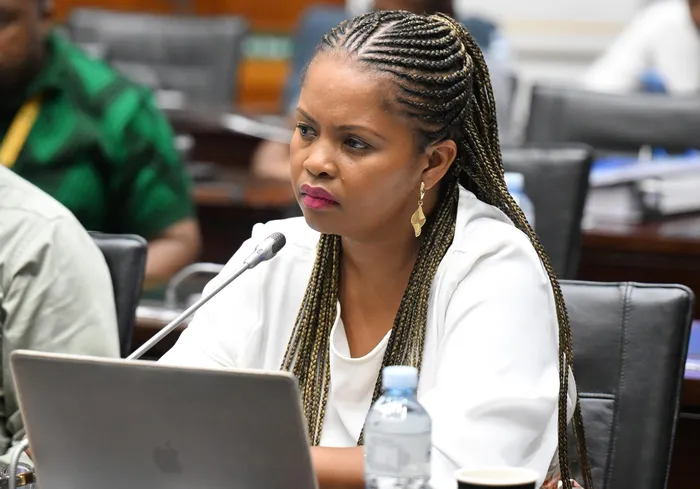
Chairperson of the Portfolio Committee on Communications and Digital Technologies, Khusela Sangoni-Diko.
Image: Phando Jikelo / Parliament RSA
Chairperson of the Portfolio Committee on Communications and Digital Technologies, Khusela Sangoni-Diko, speaking on the sidelines of the Ad Hoc Committee investigating allegations made by KwaZulu-Natal Police Commissioner Nhlanhla Mkhwanazi, said the minister cannot take a shortcut and just issue a policy directive.
“There are several, what they call Low Earth Orbit (LEO) satellite companies, which are like Starlink. They are competitors to Starlink. A lot of them have expressed a desire to enter the South African market.
“They are already in discussions with our mobile network operators from Telkom, Vodacom, and even some of our state-owned companies, such as Sentech. I want to make it clear that this is an area where more than one company operates.
“The issue around B-BBEE, as it is contained in the Electronic Communications Act, is raised only by Starlink, and that is where our problem is.”
Sangoni-Diko explained that at this current stage, legislation does not allow for companies to bypass the 30% B-BBEE requirement should they want a network communication licence.
“Should you want that amendment to be made to legislation, you need to follow the correct process, which is an amendment through a Bill that is presented to Parliament and ultimately passed into law. You cannot take a shortcut and want to issue a policy directive, which I think is the challenge and the crux of the matter that we're dealing with.
“Yes, he argues that they operate in other sectors, and we said, nobody's arguing with you on that. We're saying here, for the requirements of a licence, it's a condition that's there,” she said.
“He is holding on to what he thinks is a loophole in the legislation, where it says 30% or such other condition or higher percentage. And we said to the minister, please, just an elementary understanding of statutory interpretation says to you, you read it in context, and you also consider the intent of the legislator.
“The legislator would not have said 30% or higher if that other condition were to be removed or replace that 30%. For things like that, you can go to court and seek a declaratory order.”

Starlink is owned by businessman Elon Musk.
Image: Jonathan Raa / Nur Photo / AFP
Sangoni-Diko added that when the minister previously canvassed the issue at the portfolio committee, they, for all intents and purposes, were unanimous that the minister is overreaching.
“What he is doing is neither legally correct nor procedurally reasonable, and frankly, quite undesirable.”
Amid concerns that the policy direction is intended to benefit Starlink at the expense of transformation and the country’s data sovereignty, in his directive, Malatsi said: “As has been stated publicly numerous times, the policy direction will, if implemented by ICASA, apply to all licensees in the same way when the Ownership Regulations are amended as required
“South Africa’s Protection of Personal Information Act, 2013, has been in force for many years and the Information Regulator is empowered to take action in relation any data sovereignty concerns, as data sovereignty is addressed in this Act.”
In an interview with Malatsi last year, while addressing Starlink concerns, he said the protection of the country’s data is sacrosanct.
“What we equally have to do is ensure that we keep abreast with international best practice in this case. We (also) have to ensure that we are properly equipped to respond to the threats that exist in this space, where there are constant efforts by nefarious elements, globally, to intercept state data to gain unauthorised access to it, and to ensure that in the unlikely event that such happens, we can retrieve it promptly, quickly and protect citizens from any potential harm.”
Herron added that the gazette directs ICASA to consider its current application of the regulations concerning ownership, expanding access, and the preservation of data sovereignty.
“Risks to our data sovereignty will depend on what ICASA does with this policy directive. ICASA could for example, amend the ownership requirements for historically disadvantaged groups but also determine that an applicant licensee is a risk to data sovereignty.
“In the case of Starlink, for example, it would be perfectly rational for ICASA to conclude that there’s a data sovereignty risk given the overtly political positions taken by Elon Musk or even more objectively measurable is Starlink’s history of disconnection or geofencing in Ukraine during the conflict with Russia, or its disconnections in Sudan, Iran and now Uganda.
“These disconnections could be evidence that this provider is a risk to data sovereignty,” Herron said.
“South Africa should be concerned about which providers are licensed. Those who have a history of political alignment in other territories, and who have acted by disconnecting services, should be regarded as high risk for data sovereignty and even the expansion of access.”
Sangoni-Diko added that she is sitting with a situation where people are spamming her because Starlink has said that pressure must be applied to the politicians.
“We don't, we don't, we don't work like that here. There was a public participation process. People were given an opportunity. The minister was running that process, and we really take serious offence to the pressure that Starlink is putting behind what is a normal legal process that they should just follow, but because they undermine our laws, and they hold disdain for South Africa generally, they're not doing this and taking this route. It's extremely unfortunate.”
theolin.tembo@inl.co.za