South Africa's proposed alcohol ban aims to curb road deaths and reckless driving
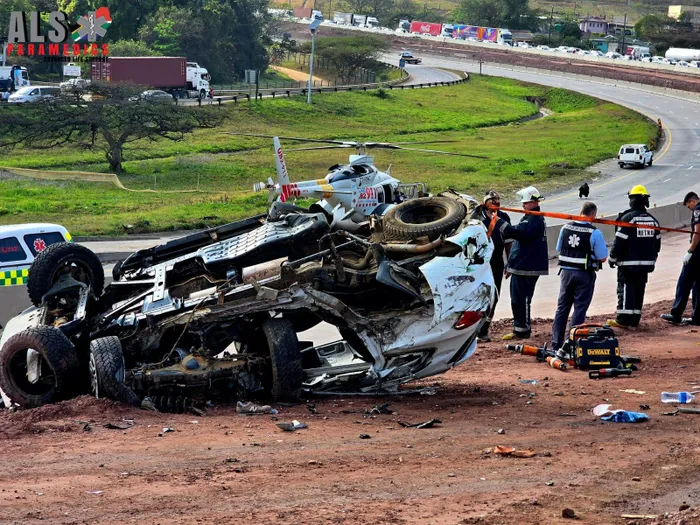
South Africa's road accidents is mainly caused by human behavior
Image: Supplied

Kyle Olivier
Image: Supplied
Road deaths in South Africa continue to be driven largely by human behaviour, particularly reckless driving and alcohol consumption, with authorities warning that there is nothing inevitable about the carnage on the country’s roads.
As the government moves to amend section 65 of the National Road Traffic Act to scrap the law that allows motorists to consume a certain amount of alcohol before driving, recent tragedies underline the urgency of reform.
Minister of Transport Barbara Creecy has called for a clear-cut and unambiguous policy that outlaws drinking and driving altogether, saying the current legislation is outdated and unacceptable.
“In today’s South Africa, it is totally unacceptable that there is a law that allows people to drink and then drive,” Creecy said, adding that the department will begin the process of amending section 65 of the Act to remove any legal alcohol limit for drivers.
The human cost of road accidents was tragically highlighted in Cape Town on the evening of 12 January 2026, when a motorcycle accident on Giel Basson Road near Goodwood claimed the lives of father and son Kyle and Leon Olivier.
Police spokesperson Sergeant Wesley Twigg confirmed that a case of culpable homicide has been registered following the accident, which occurred at approximately 20:40. He said both men were declared deceased at the scene after sustaining multiple injuries.
Kyle Olivier would have been a Grade 11 learner at Hoër Tegniese Skool Drostdy in Worcester this year and was a resident at the Dr Stals hostel.
In a tribute, the school described him as “a talented rugby player who played for the under-16 A team in 2025 as well as the Boland Grant Khomo team.
He was popular amongst his friends and teachers describe him as a friendly boy with a great sense of humour. He was always helpful and eagerly participated in hostel activities. Our hearts are broken and our friend’s place is empty.”
The tragedy comes as the Department of Transport released preliminary findings from the 2025/26 Festive Season Road Safety Campaign and the annual road safety outcomes for 2025.
Addressing the media, Creecy said preliminary data shows a five per cent reduction in both fatalities and crashes during the festive season compared to the same period last year.
“This year, a total of 1 427 fatalities were recorded from 1 172 crashes,” she said. “The 2025/26 festive season recorded the lowest number of crashes in five years, and the same number of fatalities as in the 2023/24 festive season.”
Five provinces reported reductions in fatalities, with the highest percentage decrease recorded in the Eastern Cape, followed by the Free State. However, fatalities increased in Gauteng, the Western Cape, Mpumalanga and the Northern Cape. Creecy noted a sharp increase in crashes and deaths between 15 and 28 December, which accounted for more than 40 per cent of festive season fatalities.
“This re-confirms that festive season crashes and fatalities increase once travellers have reached their destinations and are engaging in festivities rather than during peak travel periods,” she said.
Most fatal crashes occurred over weekends between 19:00 and 21:00 and again between midnight and 01:00. These incidents commonly involved collisions with pedestrians, hit-and-run crashes, single-vehicle overturns and head-on collisions.
The highest number of pedestrian fatalities were reported in Cape Town, Johannesburg, eThekwini, Nkangala District and Tshwane.
Small motor cars were involved in 55 per cent of crashes, followed by light delivery vehicles at 20 per cent. Minibus taxis and trucks accounted for seven per cent and six per cent respectively.
During the festive season, combined law enforcement officers conducted 1 632 roadblocks, stopping and checking 1.8 million vehicles. More than 450 000 traffic fines were issued and 525 motorists were arrested for excessive speeding.
A total of 173 695 drivers were tested for alcohol, with 8 561 testing positive, representing a 144 per cent increase compared to the same period last year.
Beyond the festive season, preliminary annual data for 2025 shows that 11 418 fatalities were recorded from 9 674 crashes, the lowest figures in five years. Crashes decreased by 6.4 per cent compared to 2024, while fatalities declined by 6.2 per cent.
Despite these gains, Creecy said more decisive action is required.
“Speeding and drunk driving remain the major causes of road accidents,” she said. “A law that allows drivers to drink a certain amount and then get behind the wheel must be scrapped. If nothing else, we owe this to the memory of the many South Africans who have lost their lives on our roads.”
tracy-lynn.ruiters@inl.co.za