No space for thousands as universities hit capacity wall
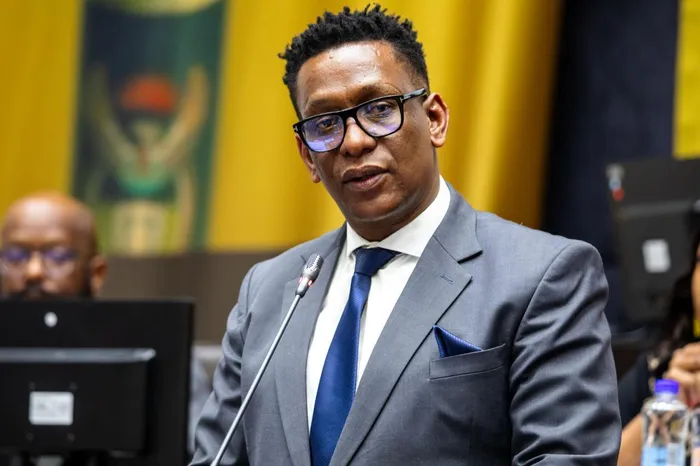
Portfolio Committee on Higher Education and Training chairperson Tebogo Letsie addresses issues on university readiness, admission pressures and governance challenges ahead of the 2026 academic year.
Image: Parliament RSA/Supplied
South Africa’s public universities will once again be unable to accommodate all qualifying matriculants in 2026, Parliament’s Portfolio Committee on Higher Education and Training has warned, citing persistent leadership instability and financial constraints that threaten a smooth start to the academic year.
Speaking at a media briefing ahead of the new academic cycle, committee chairperson Tebogo Letsie said public universities have capacity for approximately 235,000 first-year students, while more than 245,000 candidates obtained bachelor-level passes in the 2025 National Senior Certificate examinations.
“The number of candidates passing matric is higher than the opportunities available in these types of institutions,” Letsie said, attributing the shortfall to limited government subsidies and funding pressures affecting the National Student Financial Aid Scheme (NSFAS).
To avoid disruptions at the start of the year, the committee urged universities to urgently submit student registration data to NSFAS to enable the timely release of funds.
“We call upon institutions of higher learning to submit registration data so that NSFAS can proceed with upfront payments,” Letsie said.
While public universities remain the preferred option for most applicants, Parliament encouraged students and families to also consider accredited private higher education institutions—while warning against unregistered operators.
“Some are bogus or fly-by-night institutions masquerading as legitimate providers,” Letsie cautioned. “Students and parents should be vigilant and report such institutions.”
Beyond the admissions backlog, the committee raised serious concerns about governance instability at several universities, including Mangosuthu University of Technology (MUT), where the vice-chancellor and two deputy vice-chancellors were suspended in late 2025.
“We are concerned about how the suspension of these executives will impact the commencement of the academic year and the core business of the institution,” Letsie said. Parliament has yet to receive a formal briefing on the circumstances surrounding the suspensions.
The committee also reiterated its long-standing concerns regarding the University of Fort Hare, where it has recommended that the Minister of Higher Education and Training consider appointing an independent assessor.
“We believe that the continued stay of the current council is irregular,” Letsie stated.
To assess institutional readiness, the committee will conduct oversight visits to universities and TVET colleges in Limpopo from 26 to 30 January, followed by a second round in the Eastern Cape from 1 to 7 February.
“Our role is to ensure that universities are stable, properly governed and ready to receive students,” Letsie said, as thousands of applicants await final admission outcomes.
eceive students,” Letsie said, as thousands of applicants await final admission outcomes.
IOL News