
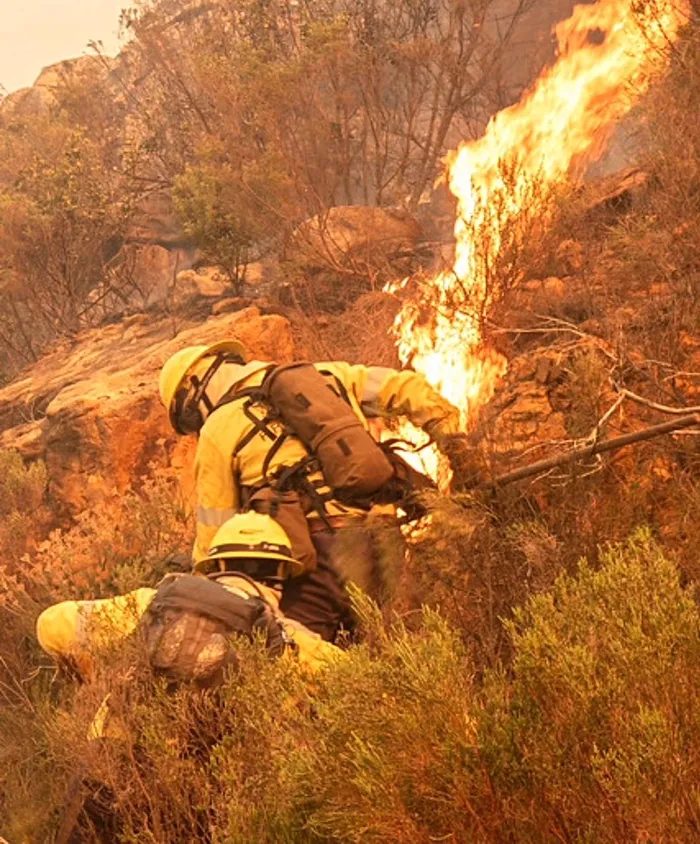
More than 100 000 hectares of land has already burned, and the fires in the Overstrand and Cape Winelands have seen more than 500 firefighters working together to protect people, infrastructure and biodiversity.
Image: Jeremy Rose/ Volunteer Wildfire Services
Fire crews across the Overstrand and southern Cape remain on high alert as containment and mop-up operations continue amid ongoing wildfire threats. In the Pearly Beach and Stanford fire zones, difficult terrain, dense vegetation and worsening weather conditions are hampering firefighting efforts.
Providing an update at 6am on January 14, 2026, Overstrand Municipal Manager Dean O’Neill said the Stanford fire has been contained within a defined block, but warned that a large island of unburnt fuel remains a concern and still requires attention. Fire crews and Fire Management Units (FMUs) are maintaining ongoing patrols to prevent possible flare-ups along the outer perimeters.
Meanwhile, on the outskirts of Pearly Beach, efforts in the Byeneskrans area near Sopieshoogte on the Baardskeerdersbos Road have proven particularly arduous. A fierce fire line persists, burning high up on cliffs where steep terrain presents formidable challenges to containment within the established firebreaks. Reports from the area indicate that both alien and indigenous vegetation are ablaze, with a 26-year-old veld contributing fuel to the inferno, affecting even well-established milkwood trees.
Compounding the situation, in Bluewater Bay, fire lines continue to advance through dense rooikrans vegetation, with strong westerly winds forecasted to test existing containment lines throughout the day. Despite the ongoing danger, authorities have kept roads open in the affected areas, including the R43 between Stanford, Gansbaai, and Pearly Beach. However, motorists are cautioned that closures may occur with little notice should conditions worsen.
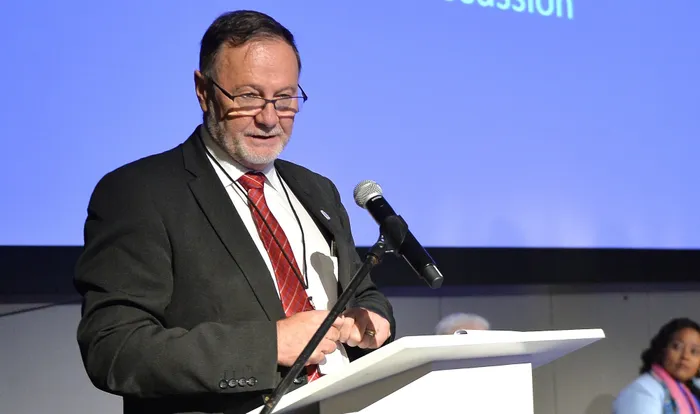
Anton Bredell, Western Cape’s local government and environmental affairs MEC announced that he will approach the provincial cabinet to motivate for a provincial disaster classification, citing the combined impact of prolonged drought in the Southern Cape and widespread wildfires across the province.
Image: Independent Newspapers Archive
In a proactive response to the crisis, Western Cape Minister for Local Government, Environmental Affairs and Development Planning, Anton Bredell, announced plans to approach the provincial cabinet for a disaster classification. This move is prompted by the cumulative effects of prolonged drought in the Southern Cape and the widespread wildfires impacting the province. Bredell noted, “A disaster declaration from the National Disaster Management Centre will allow us to focus across line functions and also to move funding quickly between programmes if and when needed.”
This announcement comes in light of alarming updates from the Knysna Joint Operations Committee (JOC), which revealed that the region’s primary water source, the Akkerkloof Dam, is currently only 15% full, diminishing Knysna's water buffer to 10 days, a decrease from 13 days merely a week ago. To address this urgent issue, the JOC is prioritising short-term interventions designed to stabilise the community's water supply, including tapping into additional springs, refurbishing existing boreholes, and finalising agreements to access ten boreholes located on private land.
Bredell emphasised the pressing need for immediate action to avert a Day Zero scenario, underscoring that Knysna is consuming water at a rate of 12 megalitres per day - exceeding its current supply capacity. He iterated that consumption must be reduced to 50 litres per person per day to alleviate pressure on water resources.
Turning attention back to the wildfires, Bredell described the fire season as exceptionally challenging, revealing that over 100 000 hectares of land have already been scorched across the province. He confirmed that the R17 million budget allocated for aerial firefighting efforts has been completely depleted, necessitating internal financial adjustments to ensure the continued operation of the 21 aircraft currently available for firefighting.
The Public Servants Association (PSA) has voiced its support for the Western Cape Premier’s call for a State of Emergency, highlighting the escalating wildfire crisis's toll on communities, public services, and emergency response systems throughout the province. The association indicated that the devastation wrought by the fires, particularly in rural and coastal regions, has led to substantial losses in property and livelihoods, further complicated by ongoing water shortages that impede firefighting efforts.
The PSA expressed solidarity with families facing displacement and uncertainty, acknowledging the overwhelming challenges they confront as they navigate recovery. According to the association, immediate financial assistance is essential for repairing damaged infrastructure, providing emergency accommodation, restoring essential services, and delivering urgent humanitarian support. A formal State of Disaster declaration, the PSA argued, would be a critical step in enabling the Western Cape Provincial Government to access emergency funding, expedite relief operations, and coordinate responses more effectively.
As the firefighting efforts continue amidst these daunting circumstances, the call for urgent intervention becomes increasingly critical to mitigate the alarming humanitarian and environmental impacts of an ongoing crisis that threatens countless lives and livelihoods.
As wildfires rage across the Overstrand and Southern Cape, the demanding situation intensifies with pleas for immediate action to avert a disaster. Local authorities grapple with containment efforts amid dwindling resources and worsening water shortages, underscoring the urgent need for support and intervention from provincial leadership. Read more to uncover the full extent of this unfolding crisis.