All systems go for the 2026 academic year despite overcrowding issues
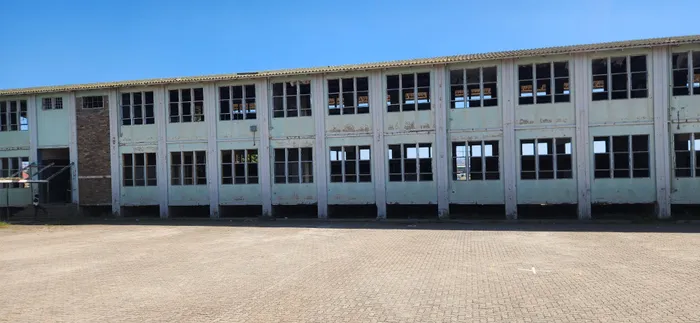
This entire section of classrooms at Greenville Primary in Gqeberha is not being used due to its poor and unsafe condition, and it has no windows.
Image: BRANDON NEL
More than 80 pupils squashed into a single classroom, long-drop toilets, asbestos-roofed bathrooms, and transport woes — these were among the shocking dilemmas flagged in the SA Human Rights Commission’s school readiness report released two months ago.
With schools reopening on Wednesday, the picture appears much the same, the only difference being that conditions may now be worse after vandalism during the December break, and with thousands of children still not placed at schools.
However, the first day of the 2026 academic year is expected not to be all doom and gloom.
Wide-eyed, toothless grade 1s will enter classrooms for the first time, grade 8s start high school, and everyone else moves up a grade in between.
According to the national education department, the day was expected to run smoothly in most of the country, with the majority of schools reported to be in good condition.
But not all learners were so fortunate.
Union Naptosa said readiness varied widely depending on location.
"So the first question is whether all schools are ready to open, and the answer is yes and no," Naptosa executive director Basil Manuel said.
"It just depends on where you are located."
He explained that in most provinces and districts, schools are as ready as they will ever be, and most will open, except for those severely damaged by rain, floods, or vandalism.
Manuel said he was particularly perturbed by schools opening without having all their ducks in a row, such as filled teaching posts and allocated resources.
"That is going to happen shortly," he said, adding that provinces like KwaZulu-Natal and Gauteng faced financial constraints, while Mpumalanga, Limpopo, and the Eastern Cape were also more prone to these challenges.
Some of the ongoing challenges include overcrowding and infrastructure strain.
According to Manuel, pupil numbers from Grade 1 to 12 have grown by almost 400,000, but the number of schools and teachers has not increased, which has led to overcrowded classrooms.
Grade R remains another major concern, Manuel said, with hopes that the program will expand successfully in 2026.
The Federation of Associations of Governing Bodies of SA Schools has expressed similar concerns.
Chief executive Jaco Deacon said though schools across the country are operationally ready to open, schools are under pressure.
"Principals, teachers and support staff have worked exceptionally hard to ensure that classrooms are prepared, timetables are finalised and learners can be received," he told IOL.
"However, 'ready' does not mean 'without strain'.
"In several provinces, schools are opening under pressure because key systemic matters such as staffing, funding flows and learner placement have not been resolved timeously by provincial departments.
"These are not school-created problems, but system-level delays that schools must absorb at the point of delivery."
It also said overcrowding remained a reality, particularly in Gauteng, Mpumalanga and Limpopo.
"These are structural capacity challenges linked to migration and settlement patterns rather than poor planning by schools."
The SAHRC report said these problems were widespread.
Its annual School Readiness Monitoring Project, conducted in January and February 2025 across all nine provinces, assessed whether public schools were ready to begin the academic year.
More than 150 schools were visited, ranging from urban secondary institutions to rural farm and boarding schools.
The report, released in November 2025, uncovered recurring systemic issues.
This included crumbling infrastructure, delays in providing learning and teaching support materials, severe overcrowding, and inadequate sanitation, particularly in rural provinces.
Despite significant government investment, some schools still rely on pit latrines.
Many schools also lack clean water and functioning ablution facilities, with asbestos present in numerous buildings.
Class sizes in some instances exceeded 80 learners, alongside critical shortages of teaching and non-teaching staff, it said.
Despite the flak, the Western Cape education department (WCED), together with its provincial counterparts in KwaZulu-Natal and the Eastern Cape, said they were ready for the start of the 2026 academic year.
In separate statements, they said learning materials, infrastructure interventions, and administrative preparations were largely in place to ensure schools open smoothly.
The WCED said essential items were apparently procured and delivered well in advance.
Schools were able to order top-up textbooks between May 12 and May 23, with full delivery completed by October at a cost of R58.7m.
Stationery for non-Section 21 schools, valued at R25.3m, was delivered by November, while a further R31.6m worth of goods arrived a month later.
The department said it was also ready to respond to new requirements arising from late applications or unexpected demand.
The WCED was, on its own account, managing a high volume of late school applications.
As of last Wednesday, 180,960 pupils — or 96% of applicants for Grade R, Grade 1 and Grade 8 - had been successfully placed, with placement still underway for 7,540 learners.
Since November 1, the department has received more than 10,600 late applications, which it said continues to put pressure on the placement process.
Welcoming learners back, the WCED said: “We wish all our learners a happy first school day, and that there will be smiles, not tears, as we welcome all our new grade R and grade 1 learners.”
The department said a first-day back-to-school statement will be released on Wednesday.
In KwaZulu-Natal, the education department said it had resumed delivery of the remaining learning and teaching support materials to schools following a marathon MEC management meeting held earlier this month.
“As a department we remain committed to ensuring stability, operational readiness and effective service delivery across all public schools, and we reassure parents, learners, educators, teacher unions and stakeholders of a well-coordinated and successful start to the school year,” it said.
The Eastern Cape education department said it too was on track, with preparations focused on learning materials, learner placements, and access to schooling.
District Admission Committees, established last year, are ensuring that no learner is left out and that access to education is maximized.
The department said 849 learners remain unplaced across four districts — Buffalo City, Nelson Mandela Bay, Sarah Baartman, and Chris Hani — representing just 0.05% of the provincial learner population.
The Eastern Cape projects learner enrolment for 2026 at 1,747,354, about 40,000 fewer than in 2025, confirming a continuing decline in the learner population.
Stationery was delivered to all schools by November 7, and top-up textbooks for grades 8 to 12 were delivered by December 5.
On outstanding materials, the department said: “The department assures the public that the top-up textbooks for grades 1–7 will be delivered to schools by the opening of the 2026 academic year in January.”
It added: “The timely and efficient delivery of LTSM is a key priority in supporting quality teaching and learning across the province.”
IOL visited a string of schools in Nelson Mandela Bay in November, and the conditions were shocking.
Many of the visited schools buckled under collapsing ceilings, stripped basins, only a handful of usable classrooms, little to no running water, and, in many cases, no electricity.
IOL approached the Gauteng education department for comment on its readiness.
The department said it would provide an update at a later state.
Education expert Prof Susan van Rensburg said one should not enter the new school year “starry-eyed and bushy-tailed".
She said while parents make huge sacrifices for school clothes and stationery, children must also be prepared for potential dangers.
“Warn your child about the size of classrooms, passages, and multi-level buildings,” she said.
“Teach them to be safety- and security-conscious.
"Show them how to protect against bullies, gangsters, and drug peddlers, and never accept excuses to go to isolated areas.
"Safety in toilets, waiting for transport, and moving around school is crucial. Your teacher will do their best, but there may be situations where they cannot help.”
Van Rensburg advised starting children off with their own food, especially while school feeding systems may not be fully reliable.
She encouraged learners to have a “buddy system” to support each other and noted that many challenges — like overcrowding or delays in receiving learning materials — are beyond schools’ control.
She said though the country spends about 40% of its education budget on schools, most of it goes to salaries and benefits, yet teachers face tremendous stress and burnout.
“We also need investment in retraining teachers for the AI and robotics future, plus basic infrastructure like electricity, water, sanitation, and protection against theft of cables, computers, and even building materials,” she said.
Meanwhile, police spokesperson Lt-Col Siphokazi Mawisa said parents and children needed to stay vigilant at all times.
She said to stay safe from cybercrime, children should not respond to bullying, never retaliate, seek help to avoid a cycle of aggression, save the evidence, block the bully and reach out for support.
Mawisa also urged parents to monitor their children’s online activity, including their use of social media.
"Limit access to social media and establish rules for screen time limit," she said.
"Ensure your child knows their home address and contact details of their parents.
"Practise stranger danger, educate your child on importance of staying safe around strangers and what to do when they feel uncomfortable."
She also called on schools to establish and strictly enforce drug- and gun-free zones.
"Establish policies that declare that anything that is illegal off school is illegal on school," she said.
"Engage learners in maintaining a good learning environment by establishing a representative council of learners."
IOL News