Minister Malatsi confirms that SA Post Office's business rescue exit application is still pending
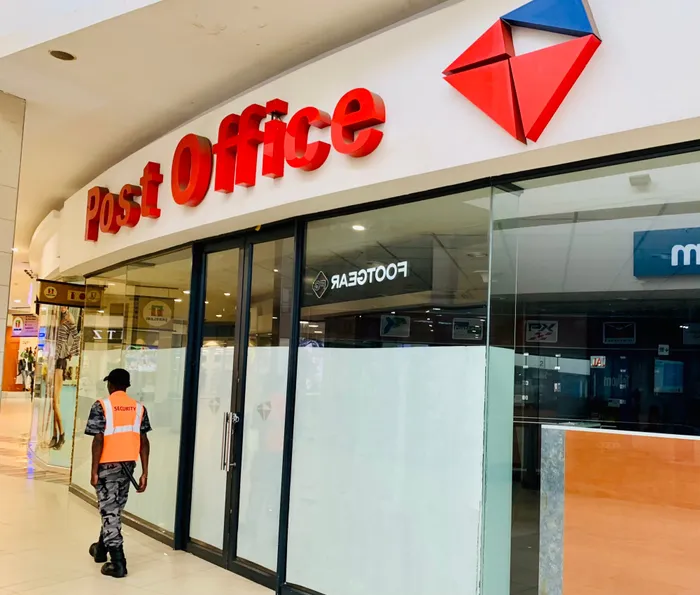
Communications and Digital Technologies Minister Solly Malatsi says the appointment of a new board for the South African Post Office was critical to ensure a smooth transition and effective handover by the business rescue practitioners.
Image: Bhekikhaya Mabaso / Independent Newspapers
The application by business rescue practitioners to exit the South African Post Office (SAPO) has not been filed with the court, said Communications and Digital Technologies Minister Solly Malatsi.
Responding to DA MP Tsholofelo Bodlani, Malatsi said the business rescue application to exit business rescue has not been filed yet.
“I am currently engaged in discussions with the business rescue practitioners (BRPs) concerning the final affidavit that will be filed with the High Court for business rescue exit.
“The BRPs intend to proceed with filing the application once alignment has been reached,” he said.
Business rescue practitioners Anoosh Rooplal and Juanito Damons were appointed after SAPO was placed under business rescue in July 2023.
Malatsi said the appointment of a new board for SAPO was critical to ensure a smooth transition and effective handover by the BRPs.
“A call for nominations has been issued, and the process to establish a nominations committee to assess candidates and make recommendations to me is currently under way. This process is expected to be finalised before the end of the current financial year.”
Asked whether he has established a ministerial intervention team for SAPO after its business rescue process, Malatsi said a task team comprising representatives from the Department of Communications and Digital Technologies, the South African Post Office, the National Treasury, with the Development Bank of Southern Africa as technical advisor, has been established to explore alternatives for ensuring SAPO’s sustainability post business rescue.
He said the mandate and functions of the task team included guiding the public-private partnerships for SAPO, identifying and agreeing on the non-core assets that must be considered for disposal, considering the responses from the market, and recommending the preferred options to the minister and Cabinet for consideration.
Malatsi said the task team will also undertake the appropriate due diligence on the preferred bidder and ensure that it complies with all the country’s legislative requirements.
The team will also ensure proper exchange of information and facilitate engagements with the relevant stakeholders.
Responding to ANC MP Oscar Mathafa, who asked about the measures to ensure the revitalisation of SAPO given the potential for the entity to develop an e-commerce ecosystem was not fully realised, Malatsi said the Post Office has a universal access obligation to provide letter post delivery services, being part of the ‘last-mile’ services.
“This obligation aligns with similar obligations imposed on all delegated operators under the international Universal Postal Union Treaty. SAPO may provide any other services that it chooses in addition to its reserved services, in competition with existing market players.”
He said the revitalisation of the South African Post Office was being supported through targeted partnerships and regulatory reform.
“The recently published SAPO Request for Information seeks strategic partnership proposals to support financial recovery, improve the use of underutilised assets, strengthen digital capability, and expand SAPO’s courier, last-mile logistics, warehousing, and e-commerce fulfilment services.”
There were regulatory changes published in a government gazette in December to reflect the evolution of the postal and courier market.
“The removal of ‘small parcels’ from reserved services and the temporary limitation of exclusivity over remaining reserved services are intended to increase competition, improve service quality, and create a more commercially viable operating environment for SAPO.”
Malatsi said these measures aimed to position SAPO as a viable entity while broader legislative amendments to the Postal Services Act were finalised.
Asked by Bodlani about the total number of branches that will be operational after the completion of the business rescue process and the staff that have been retrenched, the minister said a branch rationalisation was initiated.
“A total of 657 branches remain operational, of which 258 branches are part of the Universal Services Obligation.”
He added that a total of 4,342 employees were retrenched in terms of Section 198 of the Labour Relations Act.
mayibongwe.maqhina@inl.co.za