Urgent call for competent, financially literate municipal councillors - Minister Hlabisa
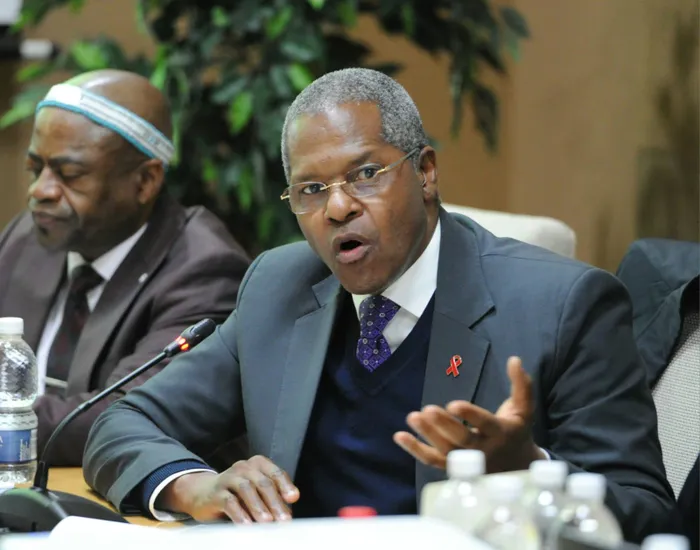
Cooperative Governance and Traditional Affairs (Cogta) Minister Velenkosini Hlabisa.
Image: Department of Cooperative Governance and Traditional Affairs / Facebook
Tightening controls around who could be a municipal councillor would be key in turning around the local government sector and ensuring that municipalities deliver on their mandate.
This view was expressed by councillors who stated that part of the problem in the failure of municipalities is that some of their colleagues cannot process complex documents.
The councillors spoke out after the Minister of Cooperative Governance and Traditional Affairs (Cogta), Velenkosini Hlabisa, indicated that the current Government of National Unity (GNU) has stated that councillors elected in the next cycle of local government must be able to read and process complex documents.
“All the political parties in the GNU, come 2026, must ensure that deployment is based on merit and nothing else. The deployment of political leadership must meet certain competencies. We may not prescribe a degree or diploma, but a person must be competent enough to comprehend the annual financial statement, understand the report by the auditor-general, and see what needs to be done, regardless of whether they have a diploma or degree. Competence must be there; we all agree that in order to change the local government space, the best of the material we have must be deposited in the local government space,” Hlabisa said.
Reacting to the minister’s statement, ACDP councillor Rienus Niemand agreed, stating that a major reason for the failure of governance at a local level is that councillors generally have a low capability to interact with and understand the finances of their respective municipalities. This lack of understanding leaves them prone to manipulation.
“The quality of councillors is a concerning factor in governance. Personally, there is no doubt that local government governance has deteriorated significantly over the years. The political aspect is partially to blame. Councillors often follow party direction in debates rather than logic or good governance and sound financial principles,” he added.
IFP councillor Jonathan Annipen noted that this observation reflects a structural reality within local government, where effective governance is inextricably linked to financial literacy and analytical competence. In the absence of such capacity, councils risk becoming procedural bodies rather than substantive oversight institutions.
“In my experience, the necessity of this call is evident in recurring governance challenges across councils, including the routine adoption of financial reports without rigorous interrogation, limited engagement with audit findings, and an over-reliance on technical officials to explain matters that are fundamentally political and accountability-driven in nature.
“This dynamic weakens council oversight and diminishes the ability of elected representatives to independently evaluate financial risks and policy trade-offs,” said Annipen.
He added that the election of councillors with stronger educational and analytical competencies would yield significant benefits for both the municipality and the ratepayers.
The chairperson of the Cogta portfolio committee in the KwaZulu-Natal legislature, Marlaine Nair, stated that the minister was correct in his view.
“Indeed, the Minister is correct. Even if councillors don’t have formal qualifications, they must have the capacity to be trained, be teachable, and have the desire to learn in order to perform their oversight duties well and hold officials to account,” she said.
“We have seen unfunded budgets passed, ongoing corruption, poor value for money on projects, and so much more, while many councillors across the province say and do nothing about it.
“Councillors must be educated on their rights and powers and exercise them; they must understand that they represent the voters who put their trust in them,” she added.