Cachalia stands firm against calls for more oversight of Presidential Protection Services
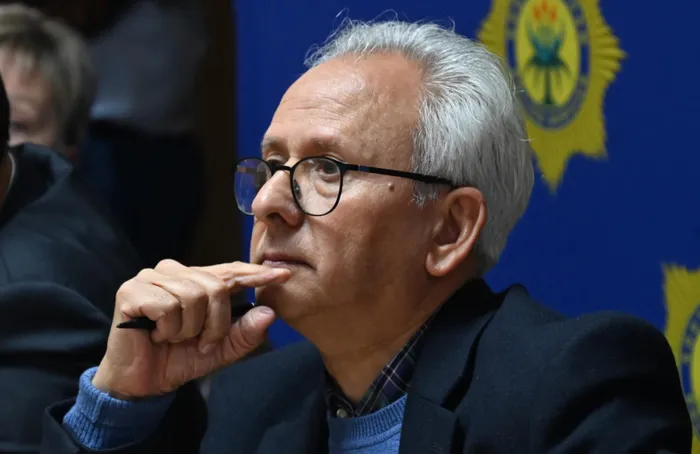
Acting Police Minister Firoz Cachalia has no intentions of introducing a legislative amendment providing for the reporting of misconduct by members of the Presidential Protection Services to the Independent Police Investigative Directorate.
Image: Ayanda Ndamane / Independent Newspapers
Acting Police Minister Firoz Cachalia has ruled out introducing a legislative amendment that would require reporting misconduct by members of the Presidential Protection Services (PPS) to the Independent Police Investigative Directorate (IPID).
Responding to DA MP Ian Cameron, Cachalia stated that current legislation already provides for reporting misconduct by Presidential Protection Services members to the IPID.
“The Minister of Police will not introduce legislative amendments to the South African Police Service Act, 1995 to create a statutory obligation for Presidential Protection Services misconduct to be reported directly to the Independent Police Investigative Directorate,” he said.
Cachalia was asked by Cameron whether he intended to introduce legislative amendments to the SAPS Act and/or IPID Act to create a statutory obligation for Presidential Protection Services misconduct to be reported directly to IPID, require external oversight of PPS operational deployment protocols, and mandate annual reporting to Parliament on PPS integrity incidents and reforms.
In his reply, the acting minister said the PPS is a specialised component called Protection and Security Services within the South African Police Service (SAPS) and performs a unique function.
“The officials are SAPS members employed in terms of the SAPS Act, and are therefore subject to the same statutory framework that governs all members of the SAPS.”
Cachalia also stated that the IPID Act mandates reporting any matters referred to it to the police watchdog body.
“Should a Presidential Protection Services employee be involved in misconduct, the matter must be reported to IPID in compliance with Section 29(1) of the IPID Act,” he said.
“As Presidential Protection Services employees are members of the SAPS, the oversight of Presidential Protection Services’ operational deployment protocols is subject to the same oversight mechanisms as all other members of SAPS.”
According to Cachalia, the executive director of IPID is required, at any time when requested to do so by the minister or Parliament, to report on the activities, investigations, and recommendations of the IPID to the minister or Parliament.
The report may include Presidential Protection Services' integrity incidents and reforms, he said.
Asked whether he will propose any SAPS policy reforms addressing the apparent evolution of protection units into semi-autonomous forces, Cachalia said all SAPS members, including Protection Units, are regulated by the SAPS’ Discipline Regulations, Code of Conduct, SAPS Act, and the Constitution.
“A need for review of policies and directives dealing with discipline in the SAPS has been identified as a priority to be addressed with the national commissioner,” he said.
mayibongwe.maqhina@inl.co.za