Caught napping, EMS video sparks probe in Nelson Mandela Bay
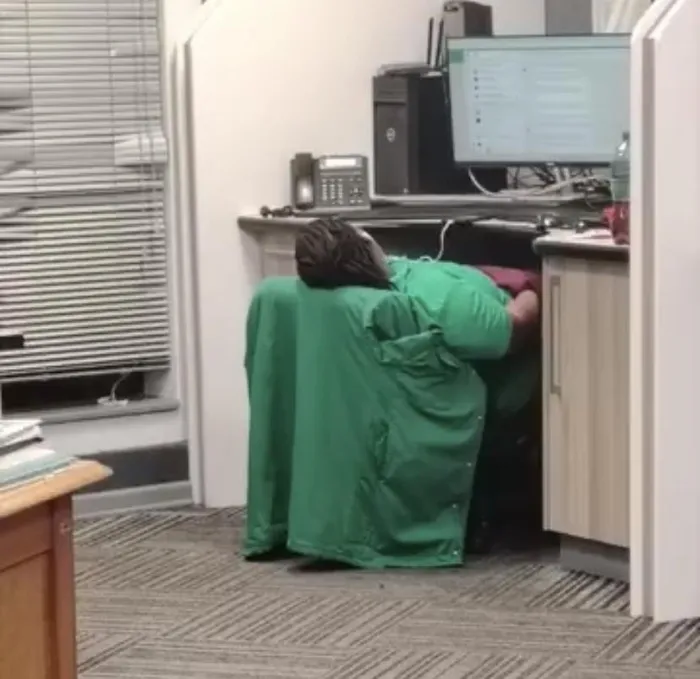
The Eastern Cape Department of Health has launched a probe after footage surfaced showing EMS workers apparently sleeping while on duty in Nelson Mandela Bay.
Image: Screenshot
A video showing Nelson Mandela Bay emergency workers apparently catching some shut-eye on duty is now under investigation.
This is according to Eastern Cape health spokesperson Camagwini Mavovana.
The video, seen by IOL, shows the workers slumped at their desks, fast asleep.
And though Mavovana said it was concerning, the footage was apparently more than six months old.
The health department's response comes after IOL sent a query early on Saturday morning.
It then released a statement publicly.
“The Eastern Cape Department of Health has noted with serious concern the video footage circulating on social media involving Emergency Medical Services (EMS) call-takers at our Nelson Mandela Bay facility,” Mavovana said.
She said the department had established that the images and video were more than six months old, based on identifiable markers in the footage.
“It is therefore clear that the footage is old, and the intention to distribute it at this time could be part of a smear campaign against the department,” she said.
Mavovana sought to reassure the public that EMS remains a critical component of the province’s healthcare system, processing and responding to thousands of emergency calls daily.
However, she said the conduct depicted in the video did not align with the standards of service delivery the department aims to uphold.
She confirmed that preliminary internal reviews were under way to establish the full context of the footage.
“While employees are entitled to regulated breaks, sleeping or eating at workstations - rather than using designated recreation areas - constitutes a breach of professional protocol,” Mavovana said.
She added that the department was also addressing the conduct of the employee who recorded and distributed the footage.
“Sharing internal departmental operations publicly and without context violates our communication policy and undermines the collective efforts of the EMS workforce,” she said.
Mavovana acknowledged the immense pressure faced by EMS personnel, noting that the gap between service demand and available resources remains a daily challenge across the province.
“However, resource constraints can never be an excuse for a lapse in professional vigilance,” she said.
According to Mavovana, the department’s response would extend beyond disciplinary action and focus on systemic reform.
She said the department was finalising a framework for the professionalisation of EMS communication centre operations, aimed at aligning services with international best practice.
The framework includes enhanced oversight, mental health support for high-stress roles and modernised dispatch technology.
“The Batho Pele principles of customer service will continue to be integrated into all training offered to EMS call-takers and dispatch officers,” she said.
IOL News