Madlanga Commission must force change: Lt-Gen Nhlanhla Mkhwanazi
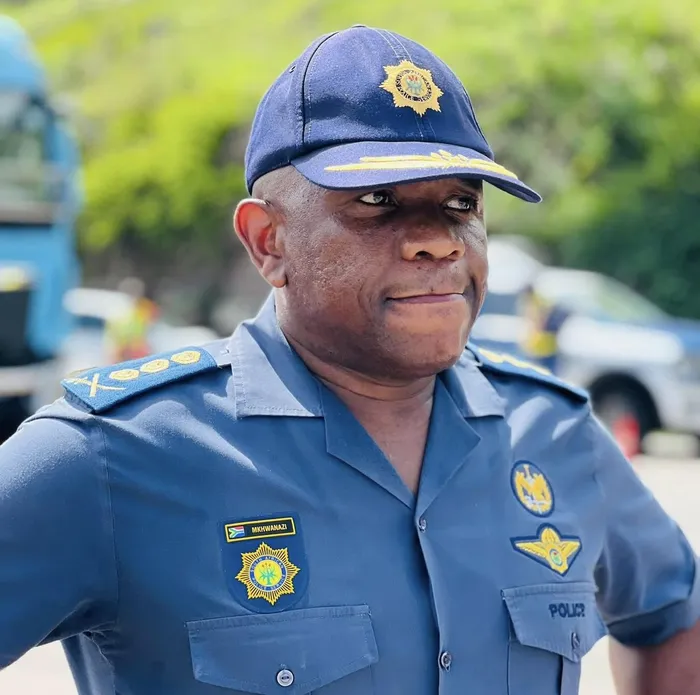
Lieutenant General Nhlanhla Mkhwanazi, whose unprecedented public briefing in July sparked the establishment of the Madlanga Commission, says the final report will help restore trust and accountability in South Africa’s criminal justice system.
Image: Facebook/SAPS
KwaZulu-Natal police commissioner Lt Gen Nhlanhla Mkhwanazi says the final report of the Madlanga Commission must do more than diagnose the problem. It must force change.
Speaking publicly for the first time since the commission submitted its interim report to President Cyril Ramaphosa, Mkhwanazi said he expects the final findings to confront what he has repeatedly described as a justice system in crisis.
His decision to address the nation in July was extraordinary for a serving provincial commissioner. He said it was driven by desperation.
“The rot was deepening,” he said. “We could no longer pretend everything was working.”
Mkhwanazi was speaking during a festive season oversight visit in KwaZulu-Natal led by Police Minister Prof Firoz Cachalia. National police commissioner Gen Fannie Masemola and other senior officers joined the visit, which focused on crime prevention and police readiness during the holiday surge.
Thousands of officers have been deployed across the province as part of the operation.
The Madlanga Commission was established in the aftermath of Mkhwanazi’s July briefing, where he alleged corruption and political interference within the criminal justice system. Its interim report has now been handed to the president, but the document remains under wraps, drawing sharp public criticism.
Mkhwanazi said public scrutiny was already having an effect.
“The media are showing the whole country what is happening,” he said. “It helped us all see the scale of the problem. Now society can judge what comes out of these commissions.”
He said Ramaphosa had committed to releasing the final report and opening the door to public input.
“We all want a better criminal justice system,” he said. “The status quo cannot continue.”
The commissioner said police were being blamed for failures that often begin after arrests are made.
“Our job is to investigate, arrest and take matters to court,” he said. “But when those who must process our cases become part of the problem, we are left powerless.”
He said decisions on prosecution, bail and sentencing routinely undermine police work.
“If the law says one thing, but discretion is used to block justice, the public becomes dissatisfied,” he said. “It pains us. That is why we spoke out. We want to do our jobs properly.”
The Presidency has confirmed that the interim report will not be released. Spokesperson Vincent Magwenya said Ramaphosa received the document on December 17, but stressed that it was incomplete.
“The report the president has received is not the one that will be made public,” Magwenya said.
He said some witnesses would return to expand on testimony that so far covered only limited aspects of wider issues. The interim report, he said, was intended only to brief the president on progress.
The final report is expected in 2026.
Magwenya urged patience, warning that early public debate could derail the process.
“We need to allow the work to be completed,” he said.
IOL News