Win for consumers: Gauteng High Court rejects Eskom-Nersa settlement over R54 billion tariff hike
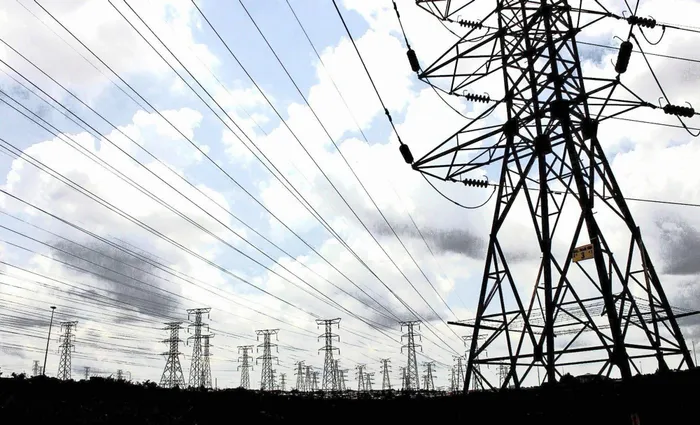
In a win for consumers, the Pretoria High Court rejected Eskom' and Nersa's R54 billion settlement regarding electricity tariffs.
Image: File
A behind-closed-doors settlement between Eskom and the National Energy Regulator of South Africa (Nersa), which would have cost consumers approximately R54 billion, was slammed by the Gauteng High Court, Pretoria.
The court not only refused to make the settlement an order of court but said it is untenable that such a decision could be made without public participation.
The settlement endeavoured to correct an error in Eskom’s allowable revenue determination. The judgment, issued on Sunday, followed Eskom’s original court application for a review of Nersa’s decision regarding Eskom’s Multi-Year Price Determination (MYPD) application tariff.
However, the application turned into a settlement agreement, which would have allowed Eskom to increase electricity tariffs by almost 9% annually, thereby recovering an additional R54 billion from already overburdened consumers.
Eskom subsequently asked the court to endorse the R54 billion settlement by making it an order of court to render it lawful. But Judge Jan Swanepoel refused, and he remitted the matter back to Nersa, with the order that the public must be consulted before a final determination is made.
AfriForum and the Minerals Council of South Africa joined the proceedings as interested parties. AfriForum, during its argument, said that Nersa in their court papers admitted that an advantage of the settlement with Eskom would be that the agreement would become binding and that it would give Eskom the desired outcome without the details being exposed in open court and exposing Nersa to further scrutiny.
It pointed out that if the settlement did become a court order, the R54 billion would have been phased in with R12 billion recovered during the 2026/27 financial year, resulting in an increase of 8.67% instead of the 5.36% approved in January 2025. A further R23 billion would have been recovered during the 2027/28 financial year, which would have resulted in an increase of 8.85% instead of the 6.19%, also approved in January 2025.
Judge Swanepoel found that Nersa’s revenue decision was unlawful, irrational, and based on material calculation errors. The court rejected the notion that Eskom and Nersa could correct these errors through a negotiated compromise that bypasses public scrutiny.
He also questioned how the two entities arrived at the R54 billion figure as a settlement between them. He pointed out that no one knows what the correct amount is for Eskom’s allowable revenue.
Nersa has conceded that its undervaluation by R107 billion was the result of calculation errors. When it entered into negotiations with Eskom, its re-calculation showed that the Regulatory Asset Base value had been underestimated by R44 billion. Eskom took the stance that a re-evaluation of R66 billion was acceptable to it. Based on those figures, they seemed to have agreed to split the difference, and they decided on R54 billion.
“It leaves one with the uncomfortable feeling that the compromise was little more than a thumb-suck,” Judge Swanepoel commented. He also said that the proposition made by Eskom and Nersa that a major amendment could be made to the tariff decision without public participation offends the principle of transparency. He added that this ignores the broader picture, that the settlement has an impact on every electricity consumer in South Africa.
“Nersa appeared embarrassed by its mistake. Its purpose for entering into an agreement was, at least partially, to avoid public scrutiny of its error,” the judge said. He added that in wanting the settlement merely to be made an order of court, it wanted to avoid judicial scrutiny. “Even though it was attempting to correct a mistake, one of its motives was self-serving and improper,” he said.
This is the second time in two months that the court has ruled in the interest of electricity consumers, finding that Nersa did not follow proper public participation processes. The court earlier found that Nersa’s approval for the implementation of municipal electricity tariffs without the use of proper cost studies and public participation processes is unconstitutional.
zelda.venter@inl.co.za