Cellphone restrictions in South African schools: What it means for learners
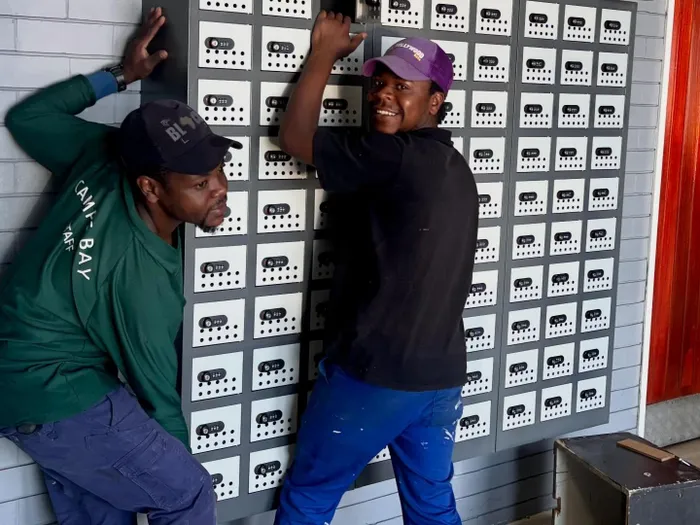
Workers install newly fitted cellphone lockers at Camps Bay High School as the school prepares to implement a bell-to-bell phone-free policy from January 2026.
Image: Camps Bay High/ Facebook
As more schools across South Africa tighten or ban cellphone use during the school day, education authorities say the shift is about managing technology responsibly — not removing it from classrooms altogether.
The Western Cape Education Department (WCED) has emphasised that cellphone use in schools must be handled in an educationally sound manner, while safeguarding learning, wellbeing and safety.
WCED spokesperson Unathi Booi said every school should have a clear policy governing the use of cellular phones and mobile devices, developed with input from all stakeholders, including school management teams, governing bodies, parents, teachers and learners.
“Cellular phones and mobile devices have to be managed in an educationally sound manner and every school should have in place a policy on the use of cellular phones and mobile devices with the input from all stakeholders,” Booi said. He added that schools should also host regular cyber-wellness seminars to address concerns linked to cellphone and mobile device use.
According to the WCED, decisions on whether cellphones are used in classrooms rest with individual school management teams. While some teachers prefer to integrate cellphones into lessons, others choose not to.
Booi said many schools that do not allow phones in class still permit learners to bring devices to school for communication and safety reasons, particularly to contact parents or caregivers while travelling to and from school. In these cases, schools typically enforce strict rules to prevent misuse during the school day, including requiring phones to be locked away until school ends.
The WCED has stressed that cellphone restrictions should not be confused with opposition to technology in education.
“A ban on cellphones does not mean a ban on technology altogether,” Booi said. He pointed to alternatives such as computer laboratories, school-owned tablets used under supervision, and interactive smartboards that allow teachers to integrate digital learning without relying on personal devices.
The department said policies should aim to balance reduced distractions with meaningful access to technology — a principle increasingly shaping cellphone rules at schools across the province and the country.
Get your news on the go, click here to join the Cape Argus News WhatsApp channel.
Cape Argus