Minister Ramokgopa reveals bold plans to tackle load reduction by 2027
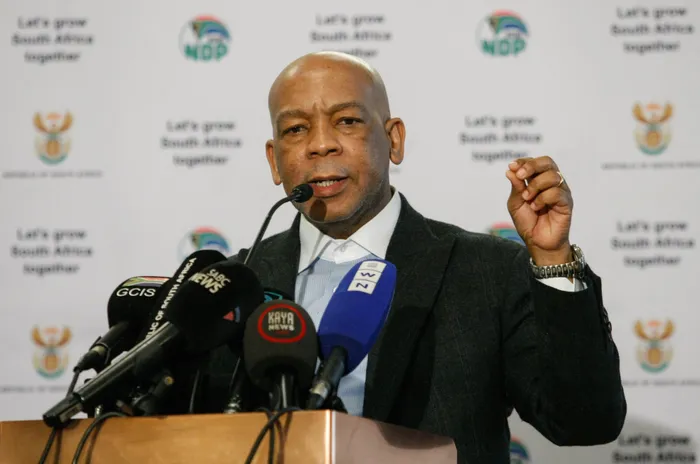
Electricity and Energy Minister Kgosientsho Ramokgopa said the programme to eradicate load reduction will be a phased, three-pronged approach that entailed expanding Free Basic Electricity (FBE), accelerated rollout of smart meters, and deployment of distributed energy resources.
Image: Jacques Naude / Independent Newspapers
Minister of Electricity and Energy Kgosientsho Ramokgopa has unveiled ambitious plans to eliminate load reduction by 2027.
This announcement comes as a response to escalating concerns over load shedding impacts and the need for infrastructure protection amid growing illegal electricity connections and meter tampering.
Answering parliamentary queries posed by DA MP Kevin Mileham, Ramokgopa clarified that while Eskom has recently suspended load shedding, temporary load reductions remain in effect during peak hours in certain high-density areas.
He emphasised that these measures are essential to prevent equipment overload and safeguard public safety.
“Eskom uses load reduction as a last resort to protect the network from overloading.”
He was responding to Mileham, who asked the reasons Eskom enforced the discontinuation of electricity supply, known as load reduction, in major high density areas between April and June, despite the widely publicised suspension of load shedding.
Ramokgopa outlined steps Eskom was taking, saying the strategy was tackling illegal connections and to work with local authorities and other affected departments to incorporate informal settlements into the electrification plans, especially those areas that have been properly proclaimed for human settlement.
He said Eskom announced in October that it was stepping up efforts to eliminate load reduction by 2027 as South Africa’s electricity system stabilises.
“Over the next 12 to 18 months, Eskom’s plan to eliminate load reduction will impact around 1.69 million customers, which is 20% of its customer base. The targeted 1.69 million customers are supplied via 971 feeders, predominantly in Gauteng, Limpopo, Mpumalanga, and KwaZulu-Natal.”
Ramokgopa also said the programme will follow a phased, three-pronged approach that entailed expanding Free Basic Electricity (FBE), accelerated rollout of smart meters, and deployment of distributed energy resources.
He explained that regarding expansion of Free Basic Electricity access, priority will be given to registering eligible indigent households.
“While about 2.1 million households qualify in Eskom supply areas, only 485,000 currently benefit. Expanding FBE is essential as households face rising electricity costs and businesses strive to remain competitive.”
He emphasised that the 2.1 million households depend on Eskom, municipalities, and relevant government departments working together.
Ramokgopa also said Eskom plans to install 6.2 million smart meters over the next three years.
This includes the 1.69 million customers affected by load reduction, with 577,000 meters to be installed by 2026, and the remaining 1.69 million by 2027.
“Smart meters support Eskom’s Demand Management Programme, helping customers reduce peak-period consumption, improve efficiency, and strengthen grid stability.”
He added that 250 distributed energy resources will be installed over the next five years to bolster supply in remote and high-demand areas.
“The plan is to eradicate the need for load reduction within the next financial year (2027), and we call upon all South Africans to work with Eskom to eradicate the scourge of electricity theft and infrastructure vandalism,” he said.
Replying to another question by DA MP Edwin Victor Baptie on the impact of municipal debt on the price of electricity sold by Eskom to municipalities and customers, Ramokgopa said the accumulation of municipal debt remained one of the most serious challenges to the financial sustainability of the power utility and the overall stability of the electricity supply industry.
He, however, said the impact of the debt on the current price of electricity sold by Eskom is indirect and limited by the regulatory framework that governed tariff setting.
“The growing level of unpaid municipal debt, which stood at more than R100 billion as of July 2025, affects Eskom’s cash flow and its ability to fully implement its maintenance and capital investment programmes.
“This in turn exerts upward pressure on Eskom’s overall cost base over time, as the utility must rely more heavily on borrowings and working capital facilities to maintain operations and fund infrastructure.”
He said his department, working with Eskom, National Treasury, and the Department of Cooperative Governance, was implementing measures to stabilise municipal electricity revenue management through the rollout of distribution agency agreements.
“These agreements aim to improve revenue collection, ring-fence electricity income, and ensure that bulk payments to Eskom are prioritised.”
mayibongwe.maqhina@inl.co.za