High Court slaps SAPS with R644m forensic software bill
Court Ruling
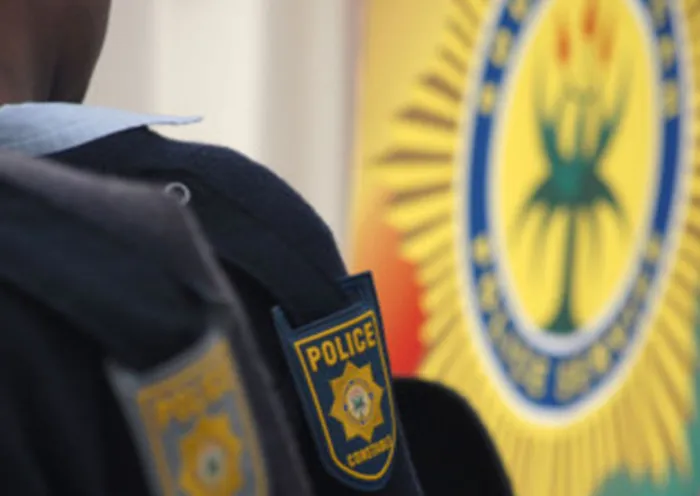
The SAPS were ordered by the Pretoria High Court to pay R644 million for forensic software it uses in its essential services.
Image: File / Skyler Reid
A protracted legal dispute concerning the South African Police Service (SAPS) defaulting on a payment agreement with Forensic Data Analysts (FDA) has concluded with a court order compelling SAPS to pay R644 million.
The payment was due for the use of the FDA's software programs, which are essential for core services like the tracking and tracing of evidence.
This is for the purchase price for the intellectual property in the computer programs, Gauteng High Court Judge Sulet Potterill ordered in a judgment delivered earlier this month.
This followed a civil lawsuit by IT services provider FDA and Investigative Software Solutions (plaintiffs), which have been embroiled in protracted legal proceedings with the National Commissioner of SAPS over the use of the software.
Despite promises over the years and numerous court orders, the SAPS did not honour its contract.
In the opening to her judgment, Judge Potterill commented: “Upon hearing the evidence in this matter, the idiom 'playing cat and mouse' involuntarily comes to mind; the one party repeatedly attaining a certain outcome with the other party repeatedly evading the outcome by cunning, or deception through contrived action.”
The judge added that “this cat and mouse pursuit was prolonged and in normal circumstances there is no clear winner or resolution, but herein either the cat or the mouse must win”.
The FDA claimed R644 million from the SAPS pursuant to an oral agreement concluded in January 2020 at the Presidential Guesthouse, Pretoria.
In terms of the agreement, the FDA said it sold the intellectual property in three computer programs, the Firearm Permit System (FPA), the Property Control and Exhibit Management System (PCEM), and the Visual Analysis Anacapa Matrix Intelligence Solution System (the VA-AMIS) to the SAPS.
This contract was, however, never signed by the SAPS. It denied that an oral agreement was concluded and argued that the process did not comply with the procurement processes and was thus unlawful.
In unpacking the history of the matter, Judge Potterill noted that in November 2017, SCOPA (Standing Committee on Public Accounts) raised eyebrows about the FDA’s contract with the SAPS.
National Police Commissioner Khehla Sitole, at the time, stopped payment to the FDA for the licensing fees and the maintenance and support fees for the systems.
Judge Potterill noted that the FDA was the sole provider of these three computer systems that were of critical importance to the SAPS for the functioning of the police, national security, the safety of the public, and the integrity of the justice system.
Despite the FDA in April 2018 seeking urgent intervention from Sitole, no payment was forthcoming, with the SAPS using the systems around the clock.
The FDA, at one stage, switched off the systems, and the FDA support personnel left the site. The State Information Technology Agency (Sita) illegally switched the systems back on. The SAPS still made no payments to the FDA for the use of the systems, the judge noted.
Another judge earlier found that the copyright of the systems did not vest in the SAPS as they were paying licensing fees.
More litigation followed between the parties, which included a 2021 order that the police, “for now”, may continue using the software systems, else it would leave the criminal justice system in an extreme state of emergency.
But the FDA eventually turned to court to claim what it was owed. Judge Potterill said it was never put to the FDA by the SAPS that the performance of the oral agreement is impossible.
“Sitole did not testify to what new systems are in place. Sitole did not testify to impossibility at all. This is fatal to the SAPS, raising impossibility as a defence to specific performance and specific performance must follow,” she said.
She ordered the SAPS to sign a written copy of the original contract (as amended in the meantime), and if it failed, the Sheriff must sign on its behalf.
Apart from paying R644 million as the purchase price for the computer programs, the SAPS must pay a further R120 million for maintenance and support services.
zelda.venter@inl.co.za