Foot-and-mouth disease outbreak hobbles South African farmers
FINANCIAL STRAIN

TLU SA Free State warns that foot-and-mouth disease is pushing farmers across South Africa to the brink of economic collapse.
Image: File
The escalating outbreak of Foot-and-Mouth Disease (FMD) across South Africa, particularly in the Free State, is rapidly transforming from an agricultural concern into a broader economic crisis for farmers and rural communities, says TLU SA Free State. With the imposition of 10 km quarantine zones, livestock movement has ground to a halt, leaving farmers in a state of uncertainty and financial strain.
Bertus van der Westhuizen, Chairperson of TLU SA Free State, articulates the crippling impact of the situation: "Farmers are now finding themselves in a checkmate situation. The banks are asking for repayment dates for overdraft applications, but that is simply something that cannot be provided." This impasse is catalysed by state-confirmed cases of FMD which arise, often from local informal settlements, leading to immediate quarantine and prohibiting farmers from selling their livestock.
Van der Westhuizen said despite promises from agricultural authorities regarding vaccinations, there is still a significant lack of clarity surrounding the costs, regulation, and availability of these vaccines. The disconnect between official assurances and the stark realities faced daily by farmers is growing wider, leading to a crisis that many feel is on the brink of becoming unmanageable, he said.
Inadequate management of the outbreak has left farmers to bear the economic brunt of prolonged quarantines, Van der Westhuizen said. The inability to market weaner calves due to transport restrictions has led to overcrowded herds, increasing the risk of disease spreading while diminishing the capacity of land to sustain them. "Once the quarantine zone is established, farmers' hands are effectively tied," he said, stressing the urgent need for action from the state to support those affected.
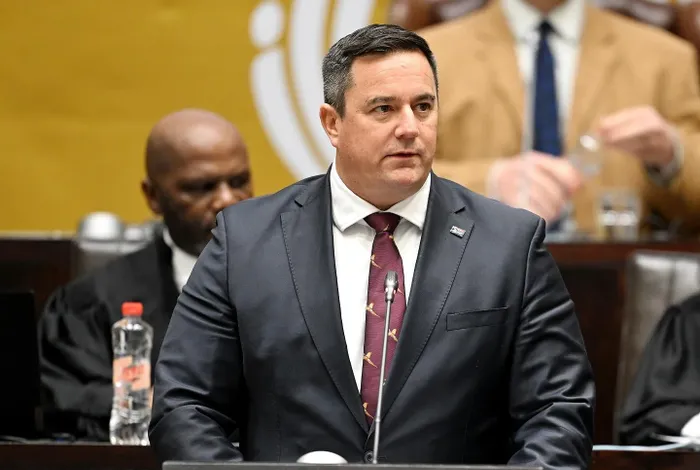
Agriculture Minister John Steenhuisen announced the department has secured FMD vaccine doses as outbreaks persist across five provinces, but TLU Free State says there is no clarity surrounding the costs, regulation, and availability of these vaccines.
Image: Phando Jikelo / Parliament of RSA
The pressures of the festive season compound these challenges, with stock theft rates notoriously rising in December. Farmers are left vulnerable, unable to safeguard their herds or generate income. The effects are not limited to the agricultural sector; local economies are already feeling the strain. "FMD is beginning to hit the rural economy hard. It affects schools, businesses, churches — the chain reaction is already visible," Van der Westhuizen warns, drawing attention to the far-reaching implications of the crisis.
In response, TLU SA is appealing to the Department of Agriculture for a practical, temporary solution. Their proposal allows farmers in quarantine areas to work with local private veterinarians to inspect herds and issue health certificates where no FMD signs are present. Such measures could enable the safe transport of livestock to auction houses while maintaining biosecurity, thus preventing economic catastrophe amid ongoing control measures.
Van der Westhuizen called for urgency from government officials: "If no one wants to listen, actions will follow that will seriously damage relations between the government and farmers." The growing impatience of farmers is palpable as they seek avenues for engagement with Agriculture Minister John Steenhuisen, who has yet to open his door for discussions, said Van der Westhuizen.
TLU SA has reaffirmed its commitment to working alongside the ministerial task team focused on FMD control. Van der Westhuizen believes collaborative efforts can lead to viable, sustainable solutions that honour both the need for biosecurity and the economic survival of the agricultural sector. As the crisis unfolds, the time for decisive action is now; without it, the vibrant agricultural tapestry of South Africa risks unravelling, he said.
IOS