SA miners feel the squeeze from mining input cost pressures
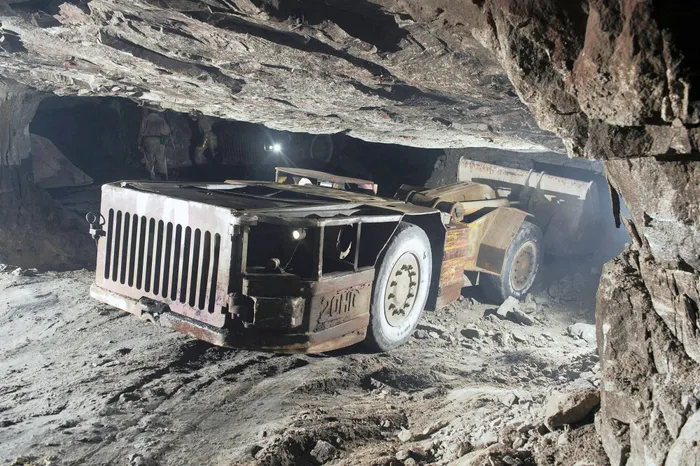
Global platinum demand is expected to jump by 9 percent due to solid investment demand, the World Platinum Investment Council said in a report on Friday. Photo: Supplied Data from the Minerals Council shows that mining input costs edged up higher in October, reaching 2.7% year-on-year.
Image: Supplied
Tawanda Karombo
An upward trend in intermediate input costs for South African miners is emerging, the Minerals Council said on Friday, even though overall input costs remain historically subdued.
The Minerals Council said on Friday that the emerging trend of rising mining input costs is being driven by “higher prices for intermediate mining inputs, including iron ore—which is performing stronger” than a year ago.
“These increases are putting pressure on costs where these and other minerals are used in intermediate processes. Additionally, there has been a notable rise in sawmilling and wood costs, electricity and water tariffs, and significant increases in road transportation costs,” said the Minerals Council.
These factors, it explained, were collectively driving the upward trend in mining input costs that has been recorded over the past three months.
Data from the Minerals Council shows that mining input costs edged up higher in October, reaching 2.7% year-on-year. That year, the council’s South Africa Mining Composite Input (MCI) Cost Index rose to 2.7% year-on-year (y/y), up from 2.4% in September.
In the year to date period, mining input costs are averaging 1.5% y/y for 2025, compared to 3.1% over the same period in 2024.
The Minerals Council has identified that on an annual basis, October marked the end of winter electricity tariffs which started in June and ended in September.
After the end of the winter electricity tariffs, which saw prices increase by up to 36% in June on top of the standard tariff, the expectation was that electricity tariffs would be reduced to the National Energy Regulator of South Africa (Nersa), approved 12.74%.
“The data suggests that this is not the case. In October, electricity costs are 16.8% y/y higher, still above the Nersa-approved 12.74%,” said Andre Lourens, economist for the Minerals Council for South Africa.
Members of the Minerals Council, the Energy Intensive Users Group (EIUG) and the Ferro Alloy Producers of South Africa (FAPA) raised concerns that electricity tariff increases exceeded Nersa’s approved 12.74% for FY26.”
This issue had already been escalated to Nersa, prompting the regulator to launch a market inquiry into the increases. Submissions had closed in November, with the regulator’s assessment and the outcome of the inquiry are still pending.
However, preliminary indicators suggest that changes to Eskom’s Retail Tariff Plan have resulted in additional costs for consumers, influenced by factors such as line voltage and distance from substations, resulting in tariff increases on top of the 12.74%.
The Minerals Council now expects an outcome from the regulator in January next year.
But beyond electricity charges, water costs had also risen sharply. In October, water prices were 11.7% higher than a year earlier, raising concerns about the long-term trajectory of water costs and signalling that the availability and affordability of water could become a major challenge for mining operations going forward.
“Additionally, transportation and logistics continue to exert pressure on mining input costs. The MCI Input Cost Index captures expenses associated with moving minerals and metals to market, with transport and logistics being key components,” said Lourens.
During the month of October, road freight costs increased by approximately 5.3% y/y. However, rail performance has performed positively; over the past two months, rail volumes increased notably while associated costs remained relatively stable.
“This improvement in the cost-to-volume ratio has provided welcome relief to the sector. Still, where rail capacity is unavailable, mining operations are forced to rely on road transport—whose costs show no signs of easing.”
Platinum group metals and gold recorded the highest levels of input cost pressure among major Commodities in October, with the gap between the two metals groups has been narrowing over recent months.
One contributing factor has been the increase in structural and fabricated metal products—though modest at around 1%. Such materials are widely used in gold mining operations, making their cost rise disproportionately impactful on gold input costs.
Coal and iron ore experienced the smallest increases in input cost pressures although the release of the Integrated Resource Plan (IRP) 2025 is expected to negatively affect the coal industry by incentivising reduced coal usage for electricity generation.
Regarding iron ore, the easing of cost pressures may partly reflect the closure of the Beeshoek mine, which previously supplied ArcelorMittal South Africa, which terminated its supply contract following the shutdown of its long steel business which relied on iron ore for steel production.
BUSINESS REPORT