Emirates says jet fuel constraints remain a major threat to South Africa’s aviation recovery
AVIATION
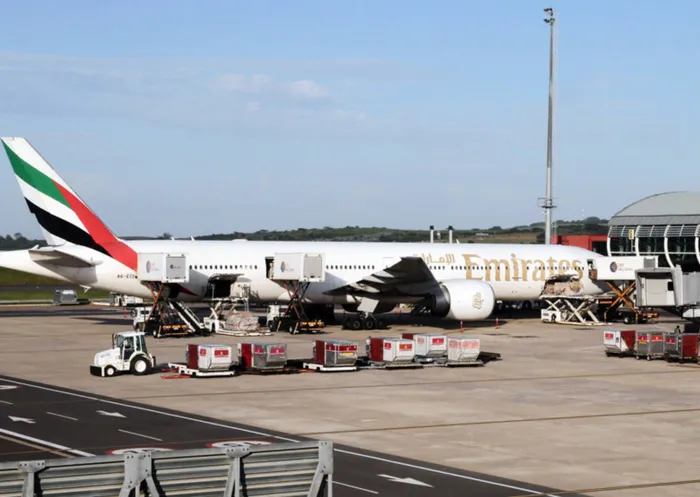
Despite the operational challenges, Emirates reaffirmed its confidence in the South African market, adding more weekly flights to Cape Town in response to “increasing demand” from its global network.
Image: Supplied
Jet fuel shortages and infrastructure constraints at South Africa’s major airports remain one of the most serious risks to the country’s aviation and tourism sectors, a senior executive from Emirates Airlines has warned.
Jet fuel constraints have been a long-standing pressure point for airlines operating in South Africa, exacerbated in recent years by refinery closures, logistical disruptions, and insufficient storage and pipeline capacity.
Industry players have repeatedly raised concerns that supply interruptions, with some airports dipping to critically low levels, risk damaging South Africa’s competitiveness as an aviation hub.
However, Airports Company South Africa (Acsa) is undertaking an ambitious programme of infrastructure upgrades, including the installation of a new 20-inch jet fuel feeder line, the implementation of Jet Fuel Redundancy Phase 1 and significant refurbishment of fuel receipt meters, hydrants, and booster pumps.
In November, Transport Minister Barbara Creecy said Acsa has strengthened airport operations, passenger handling, and infrastructure support, with fuel reserves of 44 million litres and robust redundancy measures in place.
Speaking with Business Report on Sunday, Emirates' regional manager for Southern Africa, Afzal Parambil, said persistent fuel supply issues continue to affect operations at OR Tambo International Airport and other major hubs managed by Acsa.
"I must admit that it's one of the key challenges that we face. We're operating one of the largest international airlines in South Africa. The infrastructure limitations, fuel shortages, and other deficiencies that we face. And we work very closely with the Ministry of Tourism, Ministry of Transport to address this issue," Parambil said.
"We have been engaging Acsa as a stakeholder in addressing the matters.We have been taking actions. Obviously, it's not up to the required level. And if that doesn't improve, it will have a significant impact on the travel business out of South Africa."
Acsa on Monday said it will be hosting a peak season readiness media briefing on Friday where key operational matters, including jet fuel, will be addressed in detail, along with other important updates for the season.
Despite the operational challenges, Emirates reaffirmed its confidence in the South African market, adding more weekly flights to Cape Town in response to “increasing demand” from its global network.
But Parambil emphasised that South Africa must urgently address systemic infrastructure issues if it hopes to fully unlock its tourism and jobs potential.
"Every single passenger we bring into South Africa creates a minimum of three jobs. If I bring in a million passengers as tourists, it creates three million jobs. And a country like South Africa, that is very paramount," he said.
"People are looking for new opportunities. Travel and tourism is an industry where people need to explore. And South Africa is a beautiful destination, you don't need a lot of people to sell this destination. You just need to be open, transparent, and accessible. People will come to South Africa."
Last month, Emirates and South African Airways (SAA) strengthened their nearly three-decade-long partnership with a new reciprocal codeshare agreement set to enhance connectivity ahead of the 2025/26 peak travel season.
Under the expanded codeshare, Emirates passengers will gain seamless access from Johannesburg to Cape Town, Durban and Gqeberha, as well as 13 regional African destinations including Accra, Dar es Salaam, Kinshasa, Windhoek, Lusaka, Harare, Lagos and Mauritius.
With single-ticket itineraries and integrated baggage handling, the deal is expected to boost feeder traffic into Emirates’ global network, particularly from UK and US travellers connecting through Dubai.
The new agreement builds on the existing codeshare that allows SAA customers to fly to Dubai on Emirates’ soon-to-be 56 weekly flights from three South African gateways, with onward access to 68 destinations on an interline basis. Since January, more than 45 000 passengers have used the partnership.
In a further boost to South African operations, Emirates will launch a third daily flight between Dubai and Cape Town from 1 July 2026. Operated with a Boeing 777, the new frequency adds more than 600 seats per day, responding to sustained high demand on the route.
BUSINESS REPORT