SARS moves to seize PetroSA’s Mossel Bay refinery over R4.5bn tax debt
ENERGY
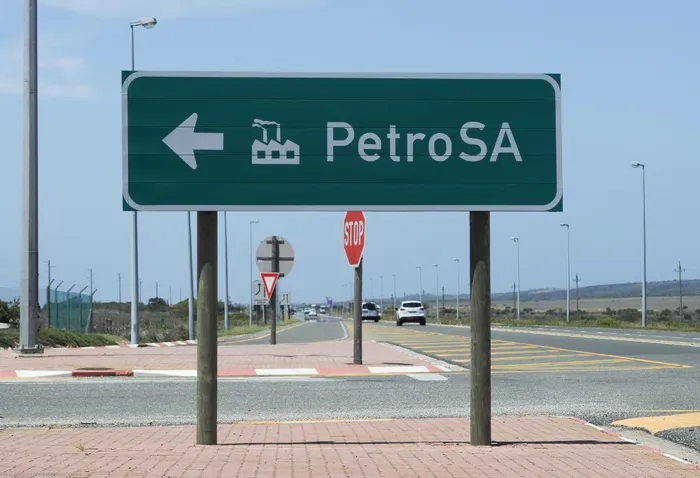
PetroSA executives told Parliament this week that Sars officials arrived at the company’s offices last Tuesday to discuss a repayment plan, followed shortly by a formal notice demanding a response by Friday, 5 December.
Image: File
Banele Ginindza
The South African Revenue Service (Sars) has moved to attach PetroSA’s mothballed Gas-to-Liquids (GTL) refinery in Mossel Bay as the state-owned oil company struggles to settle more than R4.5 billion in unpaid licensing and duty fees.
PetroSA executives told Parliament this week that Sars officials arrived at the company’s offices last Tuesday to discuss a repayment plan, followed shortly by a formal notice demanding a response by Friday, 5 December.
Failure to comply would allow Sars to proceed with attaching the refinery as security for the debt.
Nombulelo Tyandela, PetroSA's chief financial office, said the refinery’s book value, R340 million, falls far short of the amount owed.
"Looking at the balance sheet, the refinery is sitting at R340m. We owe Sars R4.5bn. The attachment won't cover sufficiently what they want to get from the refinery," Tyandela said.
"We got a notification call on Monday from Sars that they are going to Mossel Bay to identify the asset. They will allow us to continue operating the asset but we cannot encumber it to anyone because they are holding the asset as a guarantee on the amount we owe."
Mikateko Mahlaule, chaiperson of the Portfolio Committee on Mineral and Petroleum Resources, appealed to the Department of Mineral and Petroleum Resources to intervene in the ongoing matter between PetroSA and the Sars to create an enabling environment for the company to focus on its mandate.
PetroSA’s financial position has deteriorated sharply as current liabilities sit at R9.4bn at company level, R9.7bn at group level.
"By October 2025, current liabilities were exceeding assets. We are unable to honour liabilities as they fall due. Apart from Sars, we owe product suppliers. We depend on traders instead of refiners," Tyandela said.
"If we are defaulting on the traders, it will make life difficult as they assist us getting it on an open account basis. By us defaulting, it puts us in a very difficult position. As indicated, our balance sheet position is weak. Our liabilities exceed the assets that we have. We have liabilities of R20bn at group, assets at R13bn, a negative shareholder contribution part of equity. We are seeing ciumulative losses year-on-year."
Ayanda Noah, chairperson of the Central Energy Fund, said the board learned of the planned attachment during a lunch break in Parliament on Tueaday and had not yet processed the implications.
"My immediate thought is that we need to regroup as a team. It really has not allowed one to process. We need to get together as a team. I believe we need to invoke the intergovernmental relations process as a matter of urgency and at an escalated level, because there are many issues around the claims from Sars to PetroSA, and there are also some counterclaims," Noah said.
"So it actually requires that we sit together and invoke the intergovernamental process and see how we can have this matter resolved. At the moment, we really don't have a solution as it is really fresh."
PetroSA’s business is currently sustained by importing finished fuel, storing it at Mossel Bay or alternative facilities, and distributing it to customers in Mossel Bay, Cape Town and limited inland markets.
But Tyandela said sales volumes are below targets and revenue remains weak.
"As we rely import and selling, the revenue needs to support the upstream base and the GTL plant that is not operational. About 70% of operation costs to care and maintain assets ot operational at the moment to ensure the bottom line stays positive," she said.
PetroSA’s revenue was also affected by over-dependence on a few major customers, most notably Eskom.
"As Eskom improved its operations, we have therefore seen them need less and less diesel supply from PetroSA," Tyandela said.
"In a perfect world where debt situation was better, we could buy directly from refining companies who manufacture but they require us to issue them with letters of credit."
Despite ending March 2025 with R1.6bn in cash and equivalents at group level and R1.3bn at company level, Tyandela said the financial position is “not exciting” because creditor payments are falling behind and current liabilities remain unresolved.
The entity also faces a R3bn shortfall in its rehabilitation fund, which PetroSA is required to maintain at around R10bn. The fund has grown from R1.5bn to R3bn through money-market investments earning 8% interest, but remains far below requirements.
Management has explored faster-growing investment instruments, but tax complications could erode returns, forcing PetroSA to keep the funds in the money market for now.
BUSINESS REPORT