Lifestyle audits, ghost worker sweep and stricter ethics: Inside SA’s new anti-corruption plan
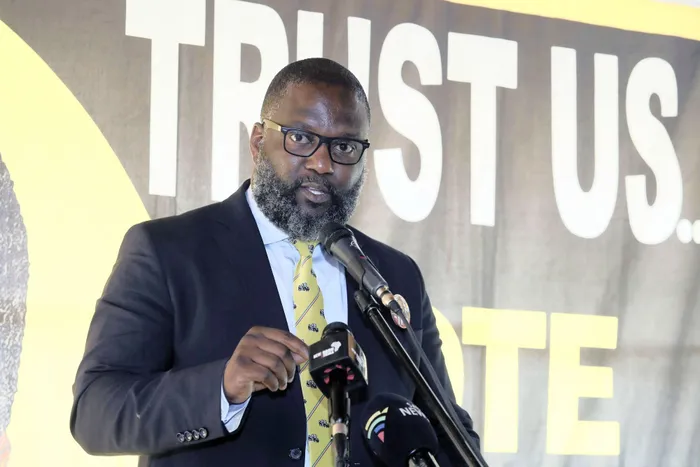
Minister Buthelezi outlines bold measures to combat corruption, including whistleblower protection, redeployment of suspended officials, and international cooperation, signaling South Africa’s commitment to integrity, accountability, and improved public service delivery.
Image: Simphiwe Mbokazi / Independent Newspapers
The Public Service and Administration Department says it is entering a new phase in its fight against corruption, outlining concrete reforms intended to strengthen accountability, improve ethics in the public service, and close long-standing loopholes that have enabled wrongdoing.
Speaking at a media briefing on Tuesday, at the launch of the International Anti-Corruption Day, Public Service and Administration Minister Inkosi Mzamo Buthelezi said the country had reached “an inflexion point” where South Africans expected a capable and ethical state, and government could no longer rely on statements of intent.
Buthelezi said corruption continued to erode the foundations of South Africa’s democracy, describing it as a pervasive challenge “from misappropriation of funds, nepotism and ethical failures within our system,” and one that thrived “where government is weak, where financial controls are compromised and where accountability is absent.”
He said the consequences were visible in diminished public trust, compromised service delivery and economic stagnation, “that ends up depriving South Africans of opportunities and dignity.”
Buthelezi framed this year’s observance of International Anti-Corruption Day as more than a symbolic exercise, calling it “a reaffirmation of our national mandate and commitment to confront and tackle the persistent threat” facing the state.
He also positioned the moment within South Africa’s recent role on the global stage, highlighting the country’s successful chairing of the G20 Anti-Corruption Working Group.
Buthelezi said South Africa’s work in the G20 “demonstrated that indeed South Africa has the ability to convene, to lead and to deliver on complex multilateral reforms,” adding that the group’s outcomes had strengthened international consensus on procurement standards, cross-border cooperation on asset recovery, anti-money laundering, and illicit financial flows.
At the centre of the state’s domestic reforms, Buthelezi said, were lifestyle audits and a new central register for individuals found guilty of corruption. These were among the G20-aligned measures that the government expected to shift the public service from reactive responses to proactive prevention.
Explaining how lifestyle audits would work, Buthelezi said the process had three phases. The first involved e-disclosures, where public servants were required to declare their assets.
The second phase included a verification process: “Checking now whatever that the particular employee has disclosed, whether it is indeed aligned with what the person has.”
He gave an example of a public servant who declared two cars only for the Department of Transport to find five registered under their name.
He emphasised, however, that discrepancies did not automatically imply wrongdoing, saying investigators often found benign explanations, such as vehicles that were no longer in use but had not been deregistered.
The third phase would begin when red flags were detected. Buthelezi said unexplained wealth would trigger an investigation, but acknowledged a challenge: the government lacked enough trained investigators, forcing departments to rely on external units at high cost.
For this reason, the DPSA was creating “a pool of investigators” that departments without capacity could draw on.
If investigations confirmed wrongdoing, Buthelezi said, cases would be referred to law-enforcement agencies while departments pursued their own internal disciplinary processes. Those dismissed for corruption would be placed on the new central offender register so that they could not return to public employment.
The Minister also addressed the longstanding challenge of suspended officials who remained on full pay for years. He said the government was trying to curb wasteful expenditure by encouraging departments to redeploy suspended officials, where risk allowed, rather than sending them home.
“If a person commits an offence and is suspended, better, instead of sending that person home, put that person elsewhere,” he said, adding that an employee implicated in supply-chain wrongdoing, for instance, could be placed in a unit with “zero risk” of repeating the offence.
On whistleblower protection, Buthelezi said government was strengthening mechanisms in recognition of the danger whistleblowers faced. He cautioned, however, that cooperation from whistleblowers was essential, explaining that protection often required dramatic lifestyle changes, including relocation and new identities.
“Some do not really appreciate because we are social beings naturally,” he said, noting that some individuals opted out of protection programmes, exposing themselves to risk.
He said the Department of Justice was doing “a great deal” to ensure safety, and that timely prosecutions were equally important: “The sooner we finalise those cases and we send to jail those that are found to have committed wrongdoings, the better for even those that need protection.”
Deputy Minister Pinky Kekana also briefed the media, addressing the problem of ghost workers. She said the DPSA and National Treasury were jointly overseeing a verification process in every department, with individual departments required to confirm the existence and employment status of all staff members.
Kekana said the verification had deadlines linked to the current financial year and government expected to reconcile the numbers with Treasury’s personnel expenditure by March. She added that the Minister would continue issuing reminders to departments before the deadline.
The briefing also addressed the employment of foreign nationals in the public service. Acting Deputy Director-General of Human resources and development Dr Anusha Naidoo said foreign nationals represented only 0.44% of the public service and all such appointments complied with legislation. She stressed that “recruitment processes prioritise South African citizens,” with foreign nationals appointed only in cases of verified skills shortages or institutional needs.
Naidoo said South Africa’s international commitments, including multilateral engagements, meant the state could not completely exclude foreign expertise, but she assured the public that “our country will always prioritise our local talent.”
On strengthening ethics capacity, Dr Solomon Vermark, Chief Director of the Public Administration Ethics and Disciplinary Technical Assistance Unit, outlined work underway to support ethics officers across departments.
He said the DPSA had partnered with the National School of Government to develop an Ethics Maturity Model, known as the EMMA tool, which guides departments through ethics risk management and legislative compliance. The tool had already been piloted in IPID, SAPS and several Gauteng departments, and would be rolled out from the next financial year, he said.
Vermark said the aim was to ensure ethics became embedded in departments so that government did “the preventative work” rather than intervening only once corruption was entrenched.
Buthelezi said the suite of reforms represented a “renewed contract of trust” with South Africans. He insisted that corruption would be “confronted, dismantled and be uprooted,” whether in municipal offices, boardrooms or international networks. These measures, he said, were part of building “a public service culture that is anchored in ethics, accountability and performance discipline.”
Buthelezi said the fight against corruption was a long-term national commitment requiring “consistency, vigilance and collective ownership.”
He thanked South Africans for their resilience and “insistence on ethical government,” saying the state’s efforts were a commitment to “a future where integrity is standard, where accountability is guaranteed and where South Africans act with honour.”
hope.ntanzi@iol.co.za
IOL Politics