SANDF to 'defend peace' in gang-ravaged communities, says Ramaphosa
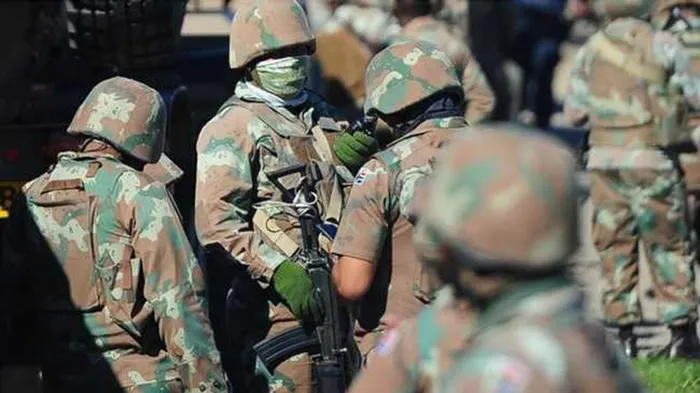
President Cyril Ramaphosa has announced the deployment of the South African National Defence Force to combat gang violence and illegal mining in the Western Cape and Gauteng during State of the 2026 Nation Address on Thursday.
Image: File
President Cyril Ramaphosa said on Friday the SANDF will be defending peace and ensure that the police did their work properly during their deployment in the Western Cape and Gauteng.
Speaking to the media at the Presidential Golf Challenge at the Atlantic Beach Golf Estate, Melkbosstrand, Ramaphosa said the soldiers would act in support of the police in the troubled areas to deal with gang violence and illegal mining in the Western Cape and Gauteng.
“They have done extremely well whenever they have been deployed alongside the police. They give confidence to our people, and they are a deterrent,” he said.
“You must know that soldiers are not police officers. Soldiers are trained to kill and defend the people of South Africa. In this case, they will be defending the peace,” he said.
Ramaphosa announced the deployment of the SANDF when he delivered his 2026 State of the Nation Address in Parliament on Thursday night.
The deployment will take place against the backdrop of increased deaths in the gang-ravaged areas in the Cape Flats and communities dislocated in areas affected by illegal miners in Gauteng.
“They will be defending anti-criminality, and that is what they will be doing, and the police, alongside the defence, will continue to do their work properly supported and armed with the support of SANDF,” said Ramaphosa.
He described the deployment of the soldiers alongside the police as a “very good combination” that has worked well in the past.
“We saw that during Covid. I deployed the SANDF during Covid and they played a very important supportive role to our people, working alongside other security forces.”
Ramaphosa confirmed that he has directed Acting Police Minister Firoz Cachalia and Defence Minister Angie Motshekga to work out the tactical plan and timing of the deployment within the next few days.
“I will be informing Parliament and informing them that this is the step I am taking, and I will also be informing them what it will cost,” he said, adding that the cost will be looked into over the next few days.
The president would not be drawn into commenting on what the tactical intervention will be because the people who do wrong things, the gangs, will know in advance what would be done.
“We are to keep the interventions to ourselves, and the soldiers and the police will make those intervention effectively as possible.”
The deployment takes place against the backdrop of the SANDF withdrawing from an external mission in the Democratic Republic of Congo.
“We informed the Secretary-General of the UN that we would like to withdraw our troops that have been participating in MONUSCO for many years, so we can consolidate and rebuild our defence force so that it can participate in future peacekeeping missions that the UN or the AU may decide to participate in.”
Meanwhile, Ramaphosa spoke on the water crisis, especially by the national government to ensure water was delivered to the people.
He explained that there was a constitutional situation that provided for the devolution of water reticulation to the local government.
“We allocate money to our local government, and they are supposed to maintain and ensure there is reticulation.”
Ramaphosa said rather than have people without water and being punished for lack of delivery by municipalities, the national government will intervene and use a section of the Water Act.
He also said they were in the process of looking into the White Paper on Local Government and to amend legislation to allow the national government to intervene directly and deploy resources when a municipality did not meet its constitutional obligation.
“After 30 years, we are beginning to realise certain things work well and others don’t work well. Those things that don’t work well, we are correcting them,” said Ramaphosa.
mayibongwe.maqhina@inl.co.za