How Ramaphosa's university expansion plan is stirring debate
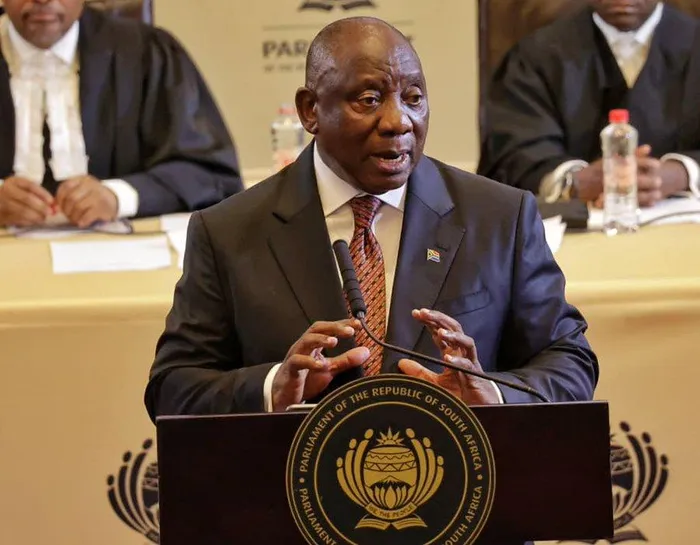
President Cyril Ramaphosa has directed the Ministers of Finance and Higher Education to work on a proposal to build more universities and TVET colleges with specialised areas of focus.
Image: GCIS
President Cyril Ramaphosa’s announcement for the establishment of more universities and TVET colleges has drawn mixed reaction from political parties.
Delivering his State of the Nation Address (SONA) on Thursday, Ramaphosa said the government will expand the opportunities for young people to enter institutions of higher learning to absorb the increasing number of young people passing matric.
Last year saw the highest matric pass rate in our history, with more than two-thirds of all bachelor passes coming from schools in the most disadvantaged communities.
“I have directed the ministers of Finance and Higher Education to work on a proposal to build more universities and TVET colleges with specialised areas of focus.
“An immediate problem is the great shortage of student accommodation at our institutions of higher learning. I have directed the minister of Higher Education to address this challenge, working with financial institutions on innovative ways in which government can provide student accommodation,” said Ramaphosa during his address.
ACDP leader Kenneth Meshoe gave credit to Ramaphosa for saying a number of positive things that were encouraging.
“The fact that he raised issue of building more TVET colleges and universities because he wants people to be skilled is something that is commendable and we want to commend him for that,” said Meshoe.
But, EFF leader Julius Malema accused Ramaphosa of using a government platform during an election year to launch a campaign for his political party.
“Most of the things we have been listening to, we heard about them. We were supposed to hear today how far is the University of Ekurhuleni. He said he was to establish the University of Ekurhuleni and things like that,” said Malema,
He was referring to the promise Ramaphosa made in his 2020 SONA that the government had decided to establish a new University of Science and Innovation in Ekurhuleni.
Ramaphosa said at the time Ekurhuleni was the only metro in the country that did not have a university.
“This will enable young people in that metro to be trained in high-impact and cutting-edge technological innovation for current and future industries. Investment and growth require a safe, stable and crime-free environment. More importantly, it is fundamental to the aspirations of all our people to live in security, peace and comfort,” he said at the time.
Rise Mzansi leader Songezo Zibi noted that Ramaphosa outlined some achievements like the decrease in debt service costs, saying money saved there should be spent on things that mattered the most.
“There are kids who are protesting. They don’t have accommodation. I heard the President talks about new universities. Yes, we need them. Actually we need to capacitate universities like Fort Hare, Limpopo and so on so that kids don’t have to study thousands of kilometers away from home,” Zibi said.
Meanwhile, Ramaphosa noted that a strong economy relied on a well-educated, capable and skilled population.
He said their focus now was on establishing a firm foundation for learning in the early years of a child’s life.
“We are intensifying efforts to fix the basic education system, with a focus on early learning, literacy and numeracy, and mother-tongue based bilingual education,” he said.
Build One South Africa leader Mmusi Maimane agreed with Ramaphosa on the need to increase the skills base.
“I want to challenge the President to increase 30% (pass rate in matric) so that we have a higher output of young people who are going to the job market,” said Maimane.
According to Ramaphosa, the government was preparing the ground for a skills revolution to enable the youth to transform society and secure their future.
He said they were undertaking a fundamental overhaul of the skills development system to implement a dual training model that integrated education with practical workplace experience.
“We will reform and reduce the number of Sector Education and Training Authorities to improve governance, strengthen industry participation, raise the quality of training and better align skills development with the needs of the economy.
“This includes improving the use of TVET colleges as the primary sites for occupational training and artisan development,” he said.
mayibongwe.maqhina@inl.co.za