SAPS capture: The psychological tactics behind criminal grooming of police officials
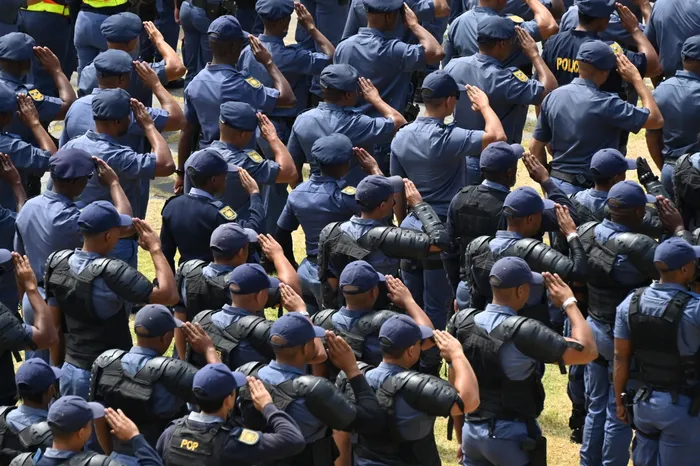
According to experts, the recruitment of senior officers by criminal syndicates begins with vulnerability, financial pressure, or personal difficulties that make an officer easier to approach, easier to persuade, and harder to walk away once the line has been crossed.
Image: Ayanda Ndamane / Independent Newspapers
A slow erosion of boundaries through access, flattery, problem-solving help, emotional availability, gifts, or ‘small’ favours, which then escalate to requests that create obligation, are some of the tactics used by criminals to groom senior officials, and these could be curbed through regular psychometric testing, experts say.
This is after the Madlanga Commission proceedings put to the fore personal relationships, such as the ‘boyfriend and crime boss’ link, and the ‘brother’ relationship between senior police officials and alleged criminal bosses, revealing a glimpse of how these serve as the ‘soft tissue’ connecting organised crime to the police.
Among the relationships that came under the spotlight is that of suspended Ekurhuleni Metro Police Department deputy chief, Commissioner Julius Mkhwanazi, who admitted that he regarded underworld figure Vusimuzi ‘Cat’ Matlala as a ‘brother’, and the KwaZulu-Natal head of Hawks, Major General Lesetja Senona, who also referred to Matlala as a ‘brother’, which he said was out of respect.
Brigadier Rachel Matjeng, the section head for Quality Management for Criminal Record and Crime Scene Management at the Forensic Services Division in Pretoria, admitted to an on-and-off romantic relationship with the alleged crime syndicate boss, Matlala.
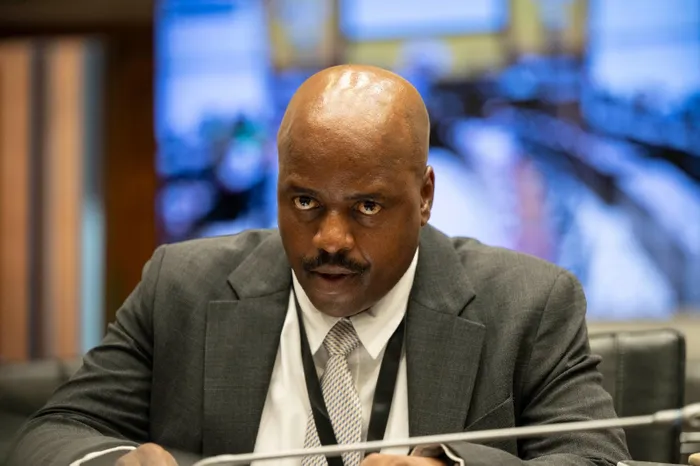
Suspended Ekurhuleni Metropolitan Police Department deputy chief Julius Mkhwanazi appeared before Parliament's Ad Hoc Committee and the Madlanga Commission to face allegations of corruption and links to a crime syndicate.
Image: Armand Hough / Independent Newspapers
Under questioning, Mkhwanazi confirmed that Matlala was not just a business associate but someone he regarded as a ‘brother’. The allegations against Mkhwanazi state that he facilitated the installation of blue emergency lights, designated for law enforcement, on vehicles associated with Matlala’s security firm, CAT VIP. There were also financial favours from Matlala to Mkhwanazi.
It was revealed at the commission that Senona allegedly sent a SAPS docket to Matlala, which contained the names, ID numbers, and identity photos of several SAPS and Hawks members. It also included cellphone numbers of the officers and the specific police stations where they were based. Some of the exposed identities belonged to members of Crime Intelligence, whose identities are typically protected for operational safety.
Senona also admitted to forwarding a letter from the National Police Commissioner, General Fannie Masemola, to Matlala, which officially terminated Matlala’s R360 million Medicare24 contract with the police. While this was an official administrative move, Senona allegedly encouraged Matlala to legally take the SAPS on regarding the cancellation.
Matjeng acknowledged receiving money, including an alleged R300,000, and luxury gifts like flowers and chocolates. She insisted these were personal ‘gifts from a boyfriend’ and not bribes related to his business interests. She admitted that some money was deposited into a friend’s bank account to hide the transactions from Matlala’s wife.
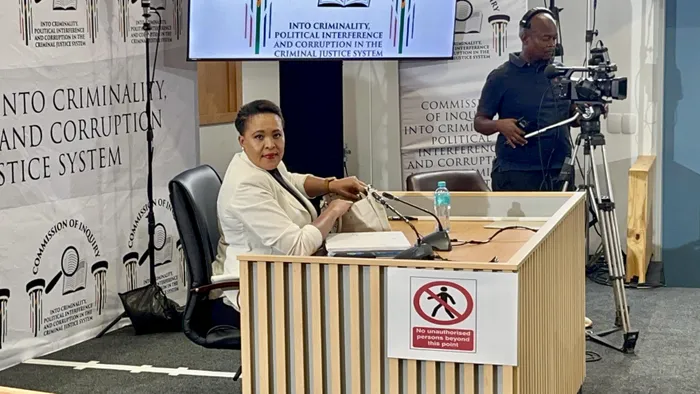
SAPS Brigadier Rachel Matjeng told the Madlanga Commission that there was enough proof that she and Vusumuzi "Cat" Matlala were lovers.
Image: Kamogelo Moichela / IOL News
Matjeng stated that she was not part of the adjudication panel and had no power over the approval of the R360million Medicare24 contract with the police. She claimed she actually used her relationship to protect the SAPS.
The commission’s interim report, adopted by President Cyril Ramaphosa, has already recommended further criminal investigation into Senona, Mkhwanazi, Matjeng, and other high-ranking officials for their links to Matlala.
Dr Mary Mangai, a senior lecturer at the School of Public Management and Administration at the University of Pretoria, said that a high-ranking official does not usually ‘switch off’ reality overnight.
Mangai said in many cases, what happens is psychological compartmentalisation, where the person mentally separates ‘my private relationship’ from ‘my professional duty’, and then uses rationalisations to protect a positive self-image.
Identity fusion with a social circle, she said, happens when repeated contact, shared language such as ‘brother’, private loyalty, and mutual dependency start to replace institutional identity. At that point, scrutiny of the associate is experienced as an attack on the self.
“Organised crime literature has long described how corruption networks thrive through relational influence and favour-trading, not only through overt bribery. In plain terms, once a person’s emotional identity migrates from institution to informal network, objectivity becomes very difficult,” Mangai said.
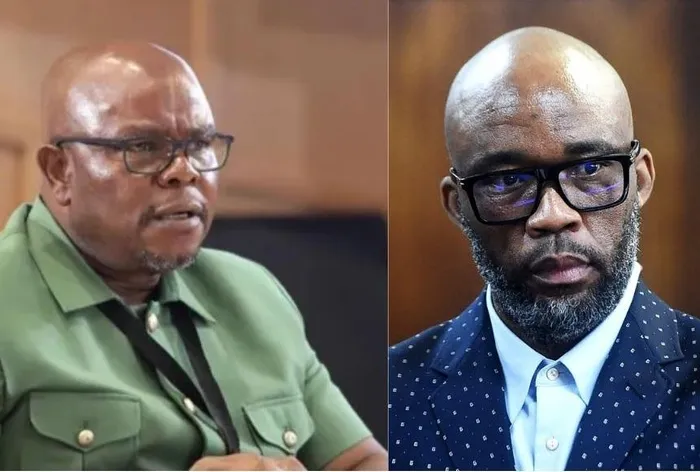
Major-General Lesetja Senona, the KZN Hawks head, is under fire for his WhatsApp chats with Vusimuzi "Cat" Matlala, an alleged crime mastermind.
Image: Oupa Mokoena and Itumeleng English / Independent Newspapers
Describing how criminal cartels groom senior officials, she said, it is usually a slow erosion of boundaries, not an immediate ‘aggressive takeover. It often starts with access, flattery, problem-solving help, emotional availability, gifts, or ‘small’ favours, then escalates to requests that create obligation.
“Public-integrity guidance repeatedly warns that private benefits and relational closeness can create conflicts of interest long before a clearly criminal exchange is visible. The danger is cumulative: by the time the high-risk request comes, the relationship has already normalised dependency,” Mangai stated.
“Once an official has accepted emotional support or a ‘brotherly’ favour, saying ‘no’ later becomes psychologically harder because of reciprocity pressure of ‘I owe him’, consistency pressure, such as ‘I can’t now act like we’re not close’, and reputational fear like ‘if I refuse, what will he expose?’.
“That does not remove legal or ethical agency, but it does increase friction against refusal. This is exactly why integrity systems require early disclosure, recusal, and intervention before the relationship reaches a coercive stage,” Mangai explained.
She stated that behavioural ethics research shows people often miss or excuse misconduct when it develops gradually, and social-psychology work explains how influence processes can make this feel normal rather than shocking in the moment.
“So, it is often less a total break from reality than a staged distortion of reality,” Mangai stated.
Professor Nirmala Gopal, a senior criminology lecturer at the University of KwaZulu-Natal, said that the relationship between a senior officer and a criminal is less about trust or care and more about mutual financial advantage.
“The use of kinship language seems to function as a veneer, masking motivations that are fundamentally transactional. What is most troubling, however, is not the existence of the arrangement itself but the role played by the police officer. By engaging in this dynamic, they seem to be aware of the psychological games at play. The officer demonstrates a troubling lapse in moral judgment. Law enforcement officers are entrusted with public confidence and ethical responsibility; when personal gain takes precedence over integrity, that trust is inevitably undermined,” Gopal stated.
In these kinds of relationships, power isn’t fixed. It can sit with either party and shift depending on what is at stake. Typically, the crime boss is looking for inside information that offers an advantage. In some cases, that expectation extends to favours, such as cases quietly disappearing, depending on the officer's influence, she said.
Gopal added that recruitment of senior officers by criminal syndicates rarely starts with power alone; more often, it begins with vulnerability, financial pressure, or personal difficulties that make an officer easier to approach, easier to persuade, and harder to walk away once the line has been crossed.
She stated that if a ‘captured brother’ sits at the top, damage can spread fast because subordinates take cues from leadership.
How quickly that influence corrodes the ranks often depends on how the leader is viewed: as untouchable, admired, feared, or simply impossible to challenge. In such environments, ethical lines can blur with alarming ease, Gopal said.
She advised that one practical step the police could take is to make regular psychometric testing part of the job.
“Policing is challenging work. Officers deal with constant pressure, high stress, and difficult moral choices every day. Ongoing assessments could help track not only cognitive ability but also emotional intelligence and personality traits over time. This wouldn’t be about punishment. It would be about understanding,” Gopal said.
She stated that regular check-ins could highlight strengths, show where extra support or training is needed, and catch early warning signs when behaviour or mental well-being begins to shift. That means help can come before problems spiral out of control.
gcwalisile.khanyile@inl.co.za