Fuel price shocks ahead? The troubling reasons South Africans are still paying too much for fuel
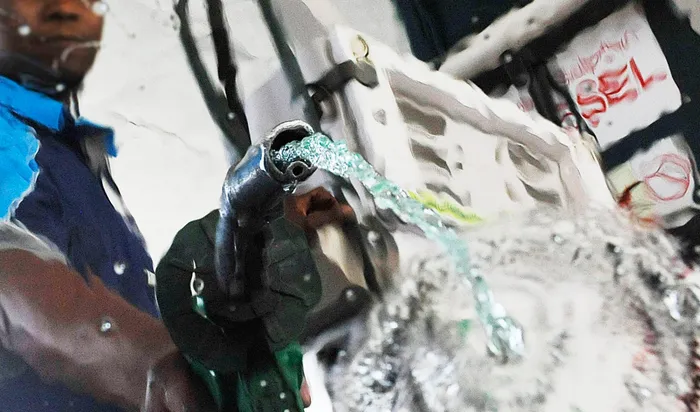
Despite recent reductions, fuel prices in South Africa are not as low as they could be.
Image: Courtney Africa / Independent Newspapers
On the face of it, there seems little reason to complain about the price of fuel at the moment.
Following February’s petrol price decrease of 65 cents and diesel reductions of between 50 cents and 57 cents, both fuel types are now at their lowest levels since January 2022. In fact, 95 Unleaded petrol at the coast is now R2.35 less expensive than it was a year ago, while 50ppm diesel is R2.50 cheaper.
Historically speaking, oil prices are relatively low, and the South African rand is currently also stronger than it has been in four years. But any shocks to the global order could see prices spiralling again, and this will once again expose the excessive taxation that South African fuel is currently subjected to.
Given the numerous geopolitical tensions that US President Donald Trump is currently embroiled in, particularly with major oil producer Iran in the crosshairs, the risk is certainly on the upside.
Total taxation on South African fuel currently amounts to R6.37 per litre, which comprises almost 30% of the pump price. This hefty penalty includes a R4.01 General Fuel Levy (GFL) and R2.18 Road Accident Fund Levy (RAF).
While the latter fund does assist South African road accident victims, albeit not as efficiently as it could, given its well-publicised maladies, the GFL does not directly benefit motorists in any form whatsoever. It is classified as a general tax, directed into the fiscus without any specific ringfencing for road infrastructure or safety projects, as one might have expected.
It is not surprising, then, that fuel is cheaper in many neighbouring countries, whose fuel passes through all the same processes as South Africa's. For instance, a litre of 95 Unleaded in the inland regions of South Africa (as at February 2026) costs R20.10, versus R17.70 in Lesotho, R18.89 in Botswana and R19.60 in eSwatini.
The Automobile Association has on numerous occasions urged the government to conduct a review of the current fuel pricing structure.
In an interview with IOL, AA CEO Bobby Ramagwede said the current fuel pricing model invites scrutiny on many fronts.
“Our headline position has always been that the composition of the fuel price needs to be reviewed and, naturally, revised downwards, because there are a lot of mitigating actions that can be taken to justify reductions in the various levies.”
Asked whether there were likely any inefficiencies in the current fuel price structure, Ramagwede said there were numerous factors that could be looked at.
“If we could just have transparency in the breakdown of the basic fuel price, you’ll quickly realise that there is probably a lot of stagnation in the pricing components there.
“Possibly money that’s not being ringfenced properly, not being scrutinised and reviewed. It's akin to leaving your insurance premium as is. If you don’t check in with your insurer and ask for a reprice, chances are that price is going to continue to move north.”
He added that moving fuel across the globe had become significantly easier in recent decades, and questioned why that is not being reflected in the fuel price.
“Simply put, and to be crude, give us an Excel spreadsheet showing us line-by-line what each component costs, what’s fixed and what’s proportional, and then let us, the citizens of the country, decide what we deem relevant,” Ramagwede added.
He said the GFL was particularly problematic, given that there is no indication of what the money gets used for.
“If there is one component that we could correct, it would be to either create some transparency around the GFL and its utilisation, or scrap it altogether. Because there’s no evidence that it’s being used for what it’s intended to be used for,” Ramagwede said.
“The departments representing roads, transportation and infrastructure all cry foul, saying there’s no money to improve the infrastructure. There it is. Take the GFL and use it for exactly that. You could probably rebuild South Africa’s road network off the back of that levy.”
He added that improving infrastructure would surely lead to a reduction in road incidents, although the exact quantum would be difficult to provide.
On the subject of road safety, he said that improved road infrastructure and, more critically, improved policing would certainly reduce the need for RAF funding through a reduction in the number of serious crashes.
Ramagwede said the age-old K53 driver’s test also warranted scrutiny.
“Until today, K53 is taught to drivers, but drivers are not taught how to drive through K53. It’s merely an examination of whether or not you know the levers that you need to pull to operate the vehicle, and road signs, but not necessarily how to operate a vehicle within a live environment.
“I often use the expression ‘knowing how to drive the four cars around you’. So Creecy recently said that she wants more advanced driver training for South African motorists. It’s a great statement to make, but there is a practicality behind it - who’s going to administer it? What’s it going to cost? How are you going to ensure that people actually adhere to it? And what’s the real incentive to society?
“Tell society that if more of them do driver training, you’ll reduce the fuel levy, and I can assure you that testing stations will have queues running around them,” Ramagwede added.
Although there does not appear to be an easy ‘silver bullet’ for reducing South Africa’s fuel prices, it is clear that the subject requires far greater scrutiny and transparency on the part of the government.
IOL Motoring